WordCamp Europe 2023 in Athens: What We Took Away From Three Days With the WordPress Community
WordCamp Europe 2023 took place at the Megaron Athens International Conference Centre from 8 to 10 June, the first time the event landed in Greece. WordCamp Europe is the largest annual gathering for the WordPress community in Europe, organised by volunteers and running since 2013. The Chetaru team attended in person and came back with […]


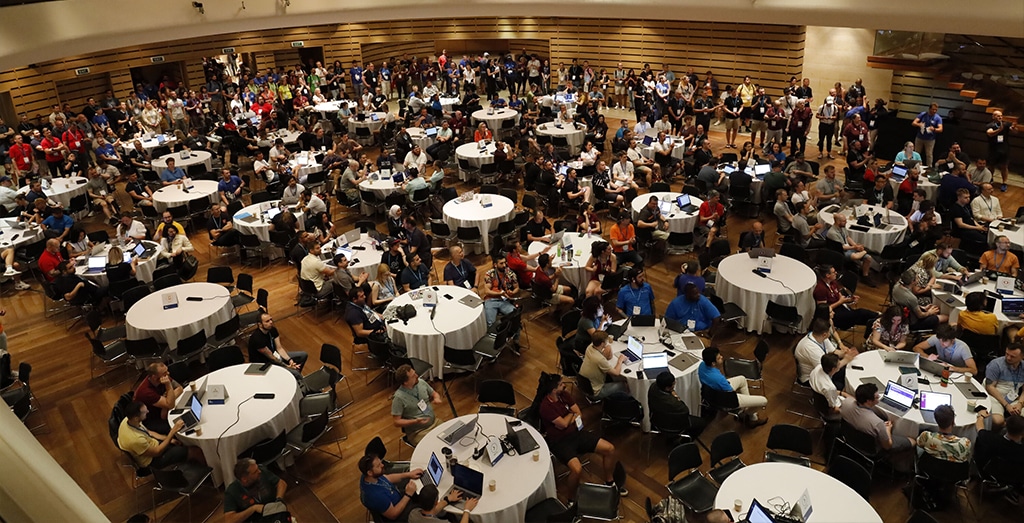
Table of Contents 
Need More Growth & Leads?
We are ready to work with your business and generate some real results…
Let's TalkJoin Our Community: Subscribe for Updates
Get notified of the best deals on our WordPress themes.
WordCamp Europe 2023 took place at the Megaron Athens International Conference Centre from 8 to 10 June, the first time the event landed in Greece. WordCamp Europe is the largest annual gathering for the WordPress community in Europe, organised by volunteers and running since 2013. The Chetaru team attended in person and came back with notes worth sharing for anyone building, running, or marketing WordPress sites.
Key Takeaways: WordCamp Europe 2023 in Athens focused on three themes that have shaped the WordPress year since: Full Site Editing maturing into a real production tool, sustainability and accessibility as community priorities, and the role of WordPress in the open web. The keynotes from Matt Mullenweg (Automattic), Josepha Haden Chomphosy (WordPress Foundation), and Matías Ventura (Gutenberg) all landed on related themes. The networking was as valuable as the talks, because for an agency building WordPress sites, three days of access to the people building the platform is hard to replicate.
What is WordCamp Europe and why does it matter?
WordCamp Europe is the annual continental conference for the WordPress community, organised by the WordPress Foundation and a rotating team of local volunteers. The 2023 edition in Athens drew thousands of attendees from agencies, in-house teams, plugin developers, hosts, and end users across Europe and beyond.
What sets it apart from typical conferences:
- Organised by the community, not a company. Pricing is accessible (early-bird tickets typically £45 to £70); volunteers run logistics; sponsors fund the rest.
- Talks from the people who build WordPress. Matt Mullenweg, Automattic engineers, Gutenberg team members, and core contributors speak directly to attendees.
- A working-agency audience. Many attendees run agencies or in-house teams building WordPress sites for clients. The conversations are practical, not theoretical.
For Chetaru as a WordPress agency, WordCamp Europe is where the platform’s direction becomes visible 6 to 12 months before the rest of the market catches up. The talks define what features matter; the hallway conversations define what is hard.
What were the headline themes at WordCamp Europe 2023?
Three themes dominated the conference, and each one has held up in the 18 months since.
The three themes that mattered most:
- Full Site Editing (FSE) as production-ready. Matías Ventura’s keynote on Gutenberg made the case that FSE had moved from “experimental” to “the default way to build”. The block themes that shipped through 2024 (Twenty Twenty-Four, Twenty Twenty-Five) have continued this direction.
- Community sustainability and accessibility. Josepha Haden Chomphosy’s keynote focused on the long-term health of the WordPress contributor community and the accessibility commitment that the project takes seriously.
- Open web and platform stewardship. Matt Mullenweg’s keynote returned to the long-running themes of democratising publishing and keeping WordPress as an open alternative to closed platforms.
The honest read from Athens: WordPress in 2023 was navigating a real transition from classic-theme building to block-theme building, and the conference framed the case for that transition. The 18 months since have proved the framing largely right.
What were the most useful sessions for agencies?
The session schedule at WordCamp Europe runs across three tracks, and the most valuable agency-focused talks tend to be the workshops and case studies rather than the headline keynotes.
The sessions that had practical agency takeaways:
- Performance and Core Web Vitals workshops. Real measurement on real client sites, showing what gets stores from amber to green on LCP and INP.
- Plugin developer Q&A. Direct conversation with the teams behind ACF, Yoast, RankMath, Elementor, and others.
- Multilingual and accessibility sessions. Practical guides to WPML, Polylang, and meeting WCAG 2.2 standards.
- Hosting and infrastructure deep-dives. Sessions from Kinsta, WP Engine, Pressable, and Cloudways on production-grade WordPress hosting.
The full session archive from WCEU 2023 remains a useful resource. Most talks have video recordings on WordPress TV.
What did we learn about Gutenberg and Full Site Editing?
Matías Ventura’s keynote and the Gutenberg-track sessions made one point clearly: FSE is the future direction of WordPress, and agencies that have not engaged with it will fall behind.
The takeaways that have proved out since 2023:
- Block themes are the default. WordPress core ships block themes (Twenty Twenty-Three, Twenty Twenty-Four, Twenty Twenty-Five) and the Site Editor is now the primary theme-customisation surface.
- Patterns are the new building blocks. Reusable block layouts (now formalised as synced and unsynced Patterns) reduce per-page work for design-led sites.
- Custom blocks are easier to build. The block API has matured enough that custom blocks are a reasonable agency deliverable rather than a major project.
- Performance is built into the architecture. Block-themed sites tend to have better Core Web Vitals out of the box than classic themes loaded with plugins.
What did not happen as fast as the 2023 talks suggested: the wholesale migration of all WordPress sites to block themes. Many production sites in 2026 still run classic themes successfully, especially older content-heavy installs. The right pattern for an agency is to build new sites on block themes while maintaining existing classic-theme sites well.
What did Matt Mullenweg’s keynote actually say?
Matt Mullenweg’s keynotes at WordCamps follow a consistent pattern: a state-of-WordPress update, big-picture themes, and an audience Q&A. The 2023 version in Athens covered three substantial themes.
The three Mullenweg themes:
- Democratising publishing remains the mission. The WordPress.org mission statement has not changed since 2003; the practical implications keep evolving as the open web faces new pressures.
- AI and WordPress. The framing in mid-2023 was cautious: AI tools are useful, but the open-web mission requires that WordPress not become dependent on closed AI APIs.
- Community contribution and the Five for the Future initiative. Five for the Future asks companies that profit from WordPress to contribute 5% of their resources back to the project. Mullenweg used the keynote to encourage more agencies and hosting companies to commit.
The Q&A portion (which often produces the most quotable moments) covered questions about WooCommerce direction, the future of Jetpack, and Mullenweg’s view of competitive platforms like Shopify and Webflow. Notes from attendees and official recap coverage on WP Tavern preserve the substance.
What was the networking actually worth?
The honest answer: for an agency, the networking at WordCamp Europe is often more valuable than the sessions. Three reasons:
The three networking values:
- Direct access to plugin teams. Talking to the Yoast, RankMath, ACF, and Elementor teams in person produces clarity that customer support tickets cannot. Roadmap context, workarounds, and “we know this is a problem” admissions all come out in conversation.
- Cross-agency learning. Other agencies face the same problems differently. Three days of conversations with peers from across Europe produces ideas that internal teams cannot.
- Hosting and infrastructure relationships. The sponsor pavilion hosts every major WordPress-focused host. Relationships that started in Athens have produced support escalation paths, pricing conversations, and beta access since.
For Chetaru, the conversations at WCEU 2023 directly influenced how we build, host, and recommend WordPress in 2026. The session content is available on video; the hallway conversations are not, which is why the conference is worth attending in person.
What changed in WordPress between June 2023 and now?
The 18 months between WordCamp Europe 2023 and the next WordCamp Europe (Portland, USA in 2024, then back to Europe in 2025) brought real changes worth tracking:
| Change | What happened | Why it matters |
|---|---|---|
| WordPress 6.3 to 6.7+ | Multiple releases adding Site Editor features, performance improvements, navigation improvements | Block themes more capable; classic themes still supported |
| Block Patterns library | Public Patterns directory expanded significantly | Reusable building blocks for design-led sites |
| Performance improvements | INP replaced FID as a Core Web Vital; WordPress core optimised for it | Block themes hit Core Web Vitals targets more easily |
| Accessibility focus | WCAG 2.2 compliance work in core themes | Better accessibility out of the box for new sites |
| AI in WordPress conversations | Cautious adoption; Jetpack AI experiments; multiple plugins | AI tools available without lock-in |
The trajectory pointed to by WCEU 2023 has largely played out. The next conference cycle will continue to refine these directions rather than introducing radically new ones.
Why does WordCamp Europe matter for businesses building on WordPress?
For business owners and marketing leads building on WordPress, the question is whether sending someone to the conference is worth the cost. The honest answer depends on what the business does with WordPress.
When attending makes sense:
- The business runs WordPress agencies, freelance practices, or in-house teams. The roadmap visibility and networking produce material agency benefits.
- The business is building or migrating to WordPress in the next 12 months. Vendor and plugin selection benefits enormously from in-person conversations.
- The business actively contributes to WordPress. Five for the Future contributors get more direct contact with core team members.
When attending makes less sense:
- The business uses WordPress as a content tool only. WCEU is for builders, not consumers of finished sites.
- The business is in early-stage product validation. Earlier-stage businesses benefit more from product-focused conferences.
For Chetaru as a UK-based WordPress agency, the conference produces direct ROI within 12 months of every attendance through improved technical decisions, better vendor relationships, and faster adoption of new WordPress capabilities.
Frequently asked questions
When and where is the next WordCamp Europe?
WordCamp Europe 2024 was hosted in Torino, Italy; subsequent editions rotate across European cities. The official WordCamp Europe site lists the upcoming year’s location and dates.
How much does it cost to attend WordCamp Europe?
Early-bird tickets are typically £45 to £70 (€55 to €80). Standard tickets run £80 to £120. Travel and accommodation add the most cost, especially for non-EU attendees. The session content is available free on WordPress TV for those who cannot attend in person.
Is the conference content useful if I don’t go in person?
Yes, partially. Session recordings are published on WordPress TV. The networking and hallway conversations are not recorded, which is the main value attendees miss when watching after the fact.
Should I attend the Contributor Day?
If your team contributes to WordPress core, plugins, themes, accessibility, or any other team, yes. Contributor Day (usually the day before the main conference) is where ongoing contribution work happens in person, with direct mentorship from core team members.
What about WordCamp US or smaller regional WordCamps?
WordCamp US runs annually in a US city; smaller WordCamps run worldwide (city-level events). The smaller WordCamps are more local in flavour, often cheaper, and worth attending for local community connection. Larger events like WCEU and WCUS produce more roadmap-level content and bigger networking opportunities.
What this means in practice
WordCamp Europe 2023 in Athens was a working conference for the people who build and maintain WordPress, and the themes it surfaced (Full Site Editing maturing, community sustainability, accessibility, AI’s cautious place in the WordPress stack) have shaped the platform’s direction since. For Chetaru, three days in Athens produced 12 months of better technical decisions and stronger vendor relationships. For any agency or in-house team building on WordPress, attending the next edition is worth budgeting for.
For related reading, see our guides on how to set the homepage in WordPress, migrating from Squarespace to WordPress, and which SEO plugin is best for WordPress.
Continue reading
Screen Sizes for Web Design: What to Build For in 2026 (Real Data, Not Guesses)

The Ecommerce Sales Funnel Blueprint: Convert More, Grow Faster