What Matters for Local SEO in 2026: 7 Ranking Factors That Move the Needle
46% of Google searches are local (BrightLocal, 2026). The 7 ranking factors that actually decide local pack visibility in 2026, with sourced data.


Table of Contents 
Need More Growth & Leads?
We are ready to work with your business and generate some real results…
Let's TalkJoin Our Community: Subscribe for Updates
Get notified of the best deals on our WordPress themes.
Local SEO is the practice of getting your business into Google’s map pack, Google Maps, and “near me” results when someone nearby searches for what you sell. In 2026, seven factors decide visibility: proximity to the searcher, Google Business Profile completeness, review signals, citation consistency, on-page relevance, local links, and behavioural signals like clicks, calls, and direction requests. Get those right, in that order, and you’ll outrank competitors who spent ten times the budget on the wrong things.
Key Takeaways
- 46% of all Google searches carry local intent and 76% of “near me” searchers visit a business within 24 hours (BrightLocal, 2026).
- Proximity drives roughly 55% of local pack rankings; Google Business Profile signals add another 32% (Whitespark Local Search Ranking Factors, 2026).
- 83% of consumers read Google reviews before deciding, and 89% expect every review to get a reply (BrightLocal Local Consumer Review Survey, 2025).
Why does local SEO matter in 2026?
According to BrightLocal’s 2026 local SEO statistics roundup, 46% of all Google searches carry local intent and 76% of “near me” searchers visit a business within 24 hours (BrightLocal, 2026). For any business with a physical address or service area, that single stat reframes the priority list.
The buying journey for plumbers, dental practices, coffee shops, and law firms now starts on Google Maps far more often than on a homepage. The map pack sits above organic results on mobile, takes up most of the first screen, and offers click-to-call buttons that route the searcher straight to your phone. Miss the top three of the local pack and you’re competing for the much smaller scroll-past audience.
For a primer on the fundamentals, see our guide to what local SEO is.
How does Google actually rank local businesses?
Google’s local algorithm weighs three signals: relevance, distance, and prominence. Whitespark’s 2026 survey of 47 experts puts proximity at roughly 55% of ranking weight, Google Business Profile signals at 32%, and review signals at 16-20% (Whitespark, 2026). On-page signals, citations, backlinks, and behavioural signals split the rest.
| Signal | What Google measures | What you control |
|---|---|---|
| Relevance | Does your business match the query? | Name, categories, services, on-page content |
| Distance | How far is your business from the searcher? | Service-area settings, multiple locations |
| Prominence | How well-known is your business online? | Reviews, citations, backlinks, brand mentions |
You can’t decide where the searcher stands. You can decide everything else. The playbook: maximise prominence and relevance until your profile outranks competitors at similar distance.
What’s changed since 2023?
Two shifts. Behavioural signals (photos uploaded, posts published, direction requests, calls) now carry more weight than they did three years ago. And AI Overviews and Gemini local results pull from the same Google Business Profile data, so a well-optimised profile now feeds two surfaces, not one.
How do you optimise your Google Business Profile?
Your Google Business Profile (formerly Google My Business) is the single biggest lever you control. Whitespark’s 2026 expert panel calls it the number-one driver of visibility in the local pack (Whitespark, 2026), and complete profiles get roughly twice the consumer trust of incomplete ones in Google’s own studies.
Setting up GBP correctly
- Claim and verify. Go to Google Business Profile and search for your business. Claim any unclaimed listing or add a new one. Verification is by video, postcard, email, or phone depending on category.
- Set the primary category exactly. Pick the closest match (“Plumber”, not “Contractor”). Add secondary categories per service.
- Write a 750-character description. Lead with what you do and where. Avoid keyword stuffing.
- Add services and products with prices. 15 priced services beat three vague names.
- Upload 10+ real photos. Premises, team, work in progress. Refresh monthly.
- Set accurate hours, including holidays. Outdated hours trigger negative reviews and demotion.
- Enable messaging and Q&A. Both feed prominence and pre-empt FAQs.
- Post weekly. Use the Posts feature at least four times a month.
Common GBP mistakes that tank rankings
- Adding a keyword to your business name when it isn’t part of the legal name. Google suspends profiles for this.
- Using a virtual office or PO box as the address.
- Letting categories drift from what you actually do today.
- Not replying to reviews for 30+ days.
- Ignoring the Q&A section, where competitors and trolls can post misleading answers.
Why do online reviews matter so much for local SEO?
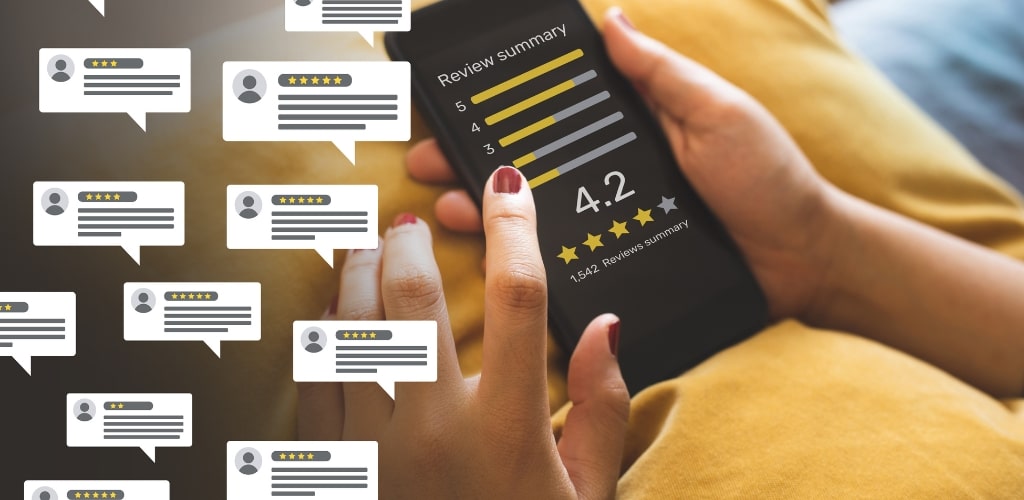
Reviews influence both rankings and conversions. BrightLocal’s 2025 Local Consumer Review Survey found that 83% of consumers use Google to read local business reviews, 71% read reviews regularly while browsing, and 49% trust online reviews as much as personal recommendations (BrightLocal, 2025). Whitespark’s panel pegs review signals (count, velocity, response rate, keyword content) at 16-20% of local pack weight.
What “good” looks like in 2026
- Volume. 33% of consumers need 20-49 reviews before trusting a business (BrightLocal, 2025).
- Star rating threshold. The average minimum rating consumers will consider is 3.6 stars; below 4.0 you lose clicks regardless of ranking.
- Recency. One new review every two weeks beats five in a month then silence for six.
- Response rate. 89% of consumers expect a reply to every review. Aim for 100% response inside 48 hours.
- Keyword content. Reviews mentioning specific services help that service rank.
How to ask for reviews without being annoying
- Ask at the moment of satisfaction. Right after the job is done.
- Make the link short. One click matters.
- Personalise the ask.
- Don’t gate reviews. Google bans gating; the penalty is profile suppression.
- Respond within 48 hours. Never argue in public.
How do you build local citations that actually move rankings?
A citation is any online mention of your business’s name, address, and phone number (NAP). Moz’s local ranking factors guidance ranks citation signals among the top off-site factors for non-pack visibility, with NAP consistency rated a primary trust signal (Moz).
The citation hierarchy that matters
| Tier | Type | Examples | Effort |
|---|---|---|---|
| 1 | Major data aggregators | Foursquare, Data Axle, Localeze, Neustar | One-time setup, propagates widely |
| 2 | Top general directories | Yelp, Bing Places, Apple Business Connect, Facebook | Manual claim per platform |
| 3 | Industry-specific | Healthgrades (doctors), Houzz (contractors), TripAdvisor (hospitality) | Pick 2-3 that match the industry |
| 4 | Local directories | Chamber of Commerce, local newspaper sites | Geo-relevant, high trust |
NAP consistency rules
- Use the exact same business name, address, and phone number on every citation.
- If you move or rebrand, update the major aggregators first.
- Audit annually using BrightLocal’s Citation Tracker or Whitespark’s Local Citation Finder.
How does local link building work for small businesses?
Local link building means earning backlinks from authoritative websites in the geographic area or industry. Backlinks contribute under 10% of local ranking weight (Whitespark, 2026), less than Google Business Profile signals or reviews but still material for competitive keywords.

Local link tactics that still work in 2026
- Sponsor local events, clubs, and charities.
- Get into local press. Pitch a local angle to the local paper.
- Join the Chamber of Commerce.
- Get onto local “best of” lists.
- Partner with non-competing local businesses.
- Create something link-worthy locally.
What doesn’t work: paid link farms, comment spam, mass thin guest-post pitches.
What kind of content ranks for local searches?
On-page signals add roughly 14% to local ranking weight on top of Google Business Profile and reviews (Whitespark, 2026). For local visibility, pages need to tie content to a place.
Three page types that earn local rankings
- Location pages. One per city or service area, with unique content covering local landmarks, neighbourhoods, pricing, and an embedded map.
- Service + location pages. “Boiler repair in Manchester”, “Family law in Bristol”.
- Local resource content. Neighbourhood guides, local how-tos, annual local data.
How to write a location page that ranks
- Open with a one-sentence answer (“[Business name], serving [location] since [year], offering [service]”).
- Embed an interactive Google Map of the service area.
- Include 3-5 customer reviews from the area, with first names and neighbourhoods.
- Link to nearby case studies, projects, or local press mentions.
- Add a NAP block that exactly matches the Google Business Profile.
- Rewrite each opening to reference the specific area.
What this means in practice
Get the Google Business Profile complete and active first; it’s 32% of weight and an afternoon’s work. Build a steady review flow next, since review signals add another 18%. Fix citation consistency across the top 10 platforms for the industry. Then focus on location pages and local links.
Frequently asked questions
Most local SEO changes show movement within 4-8 weeks, with full impact at 3-6 months. Google Business Profile changes reflect in the local pack within days. Review signals build over 60-90 days. Citation and link work takes 90-180 days to be re-crawled and credited.
Continue reading

Screen Sizes for Web Design: What to Build For in 2026 (Real Data, Not Guesses)

The Ecommerce Sales Funnel Blueprint: Convert More, Grow Faster