Why is Blogging So Important to Your SEO Results?
We can’t stress enough how important blogging is to SEO. Blogging is one of the simplest and most cost-effective ways to increase the visibility of your business online.



Table of Contents 
Need More Growth & Leads?
We are ready to work with your business and generate some real results…
Let's TalkJoin Our Community: Subscribe for Updates
Get notified of the best deals on our WordPress themes.
Blogging is one of the cheapest and most reliable ways to lift your SEO results: a well-written blog gives Google fresh content it likes, a place to use your real target keywords, and the kind of article other sites will link to. Done consistently, it is how smaller businesses outrank competitors with bigger marketing budgets. This guide explains why blogging works for SEO, what a “good” SEO blog looks like, and how it pays back in real customer enquiries.
Blogging belongs in your digital marketing strategy
Blogs do three jobs at once. They drive traffic to your website. They give you space to showcase the products or services you sell. And they let you build an authoritative voice in your industry — useful for trust as well as rankings.
It is also one of the few content marketing activities that is genuinely easy to scale: write a brief, write the post, edit, publish, measure, repeat. No production crew, no media buying, no studio booking.
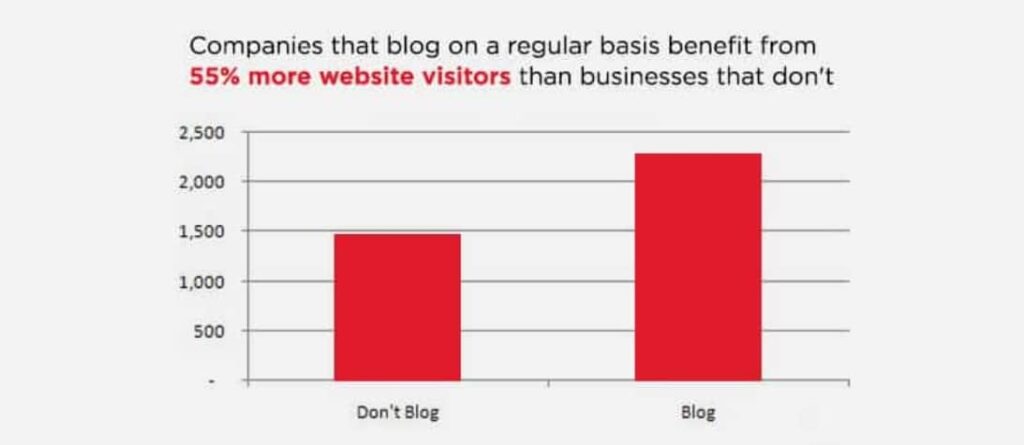
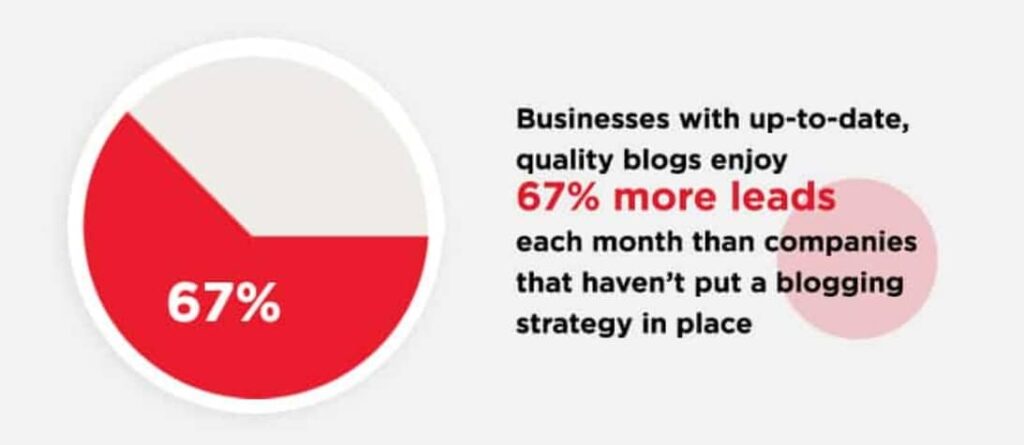
Companies that blog regularly tend to attract more website visitors than companies that do not, generate more leads per month than companies without an active content programme, and build a stronger position in search over time. The biggest competitive moat in SEO is patience — sites that publish consistently for years tend to beat sites that publish heavily for three months and then stop.
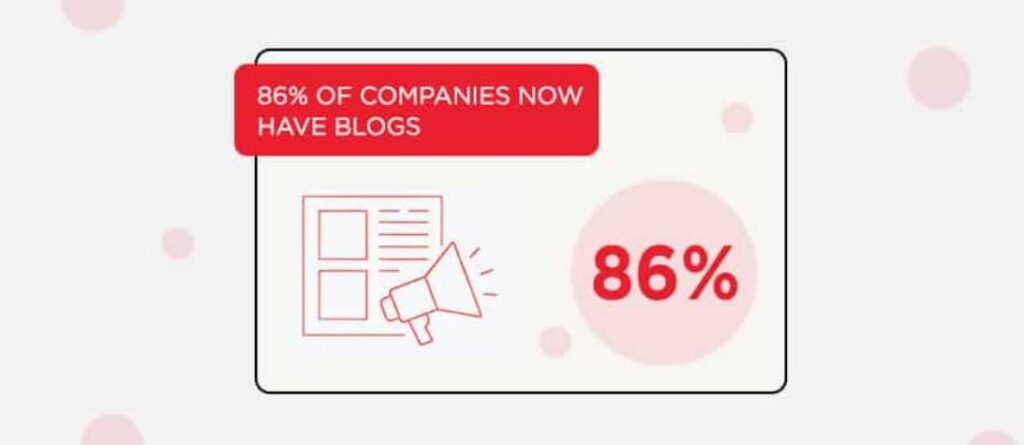
The blogging habit has become standard for businesses with a serious online presence. The question is no longer whether to blog — it is whether you are doing it well enough to actually move rankings.
What is the purpose of SEO?
SEO is the work of making your business findable when people search for what you sell. It is an ongoing digital marketing discipline — keyword research, content production, technical fixes, link building, and measurement — that drives you up the rankings for the searches your customers actually run.
How blogging helps a business stand out
A working example: imagine you own a mid-sized hotel near Durham with strong heritage credentials and independent ownership. How do you attract guests when you are up against international chains with marketing departments measured in dozens?

You will not outspend them. Word-of-mouth will not reliably reach international markets. Traditional PR and leafleting are expensive and hard to measure.
SEO-led blogging is what levels the field. Professional SEO services tend to combine:
- Weaving high-intent commercial keywords into your website copy — for the hotel: “historic Durham hotel”, “cosy hotel North East of England”, “heated swimming pool”, “family-friendly hotel Durham”, “independent Durham hotel”.
- Producing SEO-rich blog content that anticipates what your audience actually searches for — “things to do in Durham”, “places to eat in Durham”, “best walks around Durham”.
- Tuning website foundations like page speed, which Google rewards directly through Core Web Vitals.
- Building backlinks from high-quality, trusted sites — the most technical but also one of the most impactful SEO inputs.
SEO and blogging go hand in hand
Blog posts work for SEO because they:
- Are the natural home for fresh website content — exactly what Google’s freshness signals reward.
- Give you somewhere to use the long-tail keywords and phrases that drive purchase-intent traffic.
- Are the most common kind of content other sites link to — buying guides, comparisons, how-tos.
Fresh content pays dividends in search
Blogs are also the easiest way to keep your site updated. Google rewards sites that publish original, current content because regularly updated pages tend to be more useful for users. Stale sites slowly drop in rankings even when the underlying business has not changed.
Back to the Durham hotel. If a visitor in the US searches “things to do in Durham” while planning a trip, the local tourism board will probably rank first. But your hotel can rank a few positions below it if you have written a thorough, genuinely useful guide on the same topic.
That single article can pay for itself many times over with one direct booking. And it keeps doing that, month after month, for as long as the post stays current. That is the compounding return SEO content delivers and paid ads cannot.
Blogging is an effective way to use keywords
Keywords remain the foundation of any SEO campaign — the words and phrases your customers type into Google when looking for what you offer.
For a joinery firm in Middlesbrough, the obvious keywords are “joiner Middlesbrough” and “Teesside joiner”. But every joinery firm in the region targets those terms, and they are too generic to differentiate on.

The trick is to go specific — to the services people actually search for:
- “Building bookcase Middlesbrough”
- “Install decking Teesside”
- “Fix staircase joiner”
- “Bespoke furniture maker Teesside”
Each of these is a distinct piece of content. Write one focused, useful blog per intent, with images and a clear local angle, and you will start appearing ahead of generalist competitors who only target the broad keyword.
Blog posts attract links from other websites
A core goal of SEO campaigns is earning links from high-authority sites. The more trusted sites that link to you, the more Google rewards you with higher rankings.
The fastest way to earn links is to publish content other people want to cite — original data, useful frameworks, detailed how-to guides, or analysis no one else has done. Sites that become known as authoritative voices in their niche attract links naturally, which feeds back into traffic and more website leads over time.
Blogging increases your overall business visibility
Blogging improves SEO and online visibility, but the benefits go beyond pure SEO:
- A stronger company reputation as an authority in your space.
- A growing social media following — every good post is also social fuel.
- Better lead conversion, because prospects who arrive through quality content trust the brand more than prospects who arrive through ads.
Put your blogging and SEO in expert hands
Publishing words on a page is not the same as publishing SEO content. Google now actively de-ranks sites that stuff keywords into thin or low-value articles. AI-generated filler is increasingly easy to detect and dismiss.
Good SEO blogging is a team discipline: keyword strategists, copywriters who understand the industry, SEO specialists who know technical implementation, and web designers who make sure the page actually loads quickly and reads well. Quality is the only word that matters — Google has spent the last decade improving its ability to tell the difference between content written for readers and content written to game the system.
Consistent, high-quality blog content built around real user intent and supported by sensible internal linking and a healthy backlink profile is what drives sustained ranking growth. There is no shortcut.
Frequently asked questions
How often should I blog for SEO?
Consistency matters more than frequency. A weekly post that is genuinely useful will beat three thin posts a week. For most small and mid-sized businesses, one or two well-researched posts per week is a strong cadence. The minimum useful frequency is once a month — anything less, and Google’s freshness signals do not really kick in.
How long should an SEO blog post be?
Long enough to fully answer the search intent, and no longer. For simple commercial searches (“hotels in Durham”), a focused 800-1200 word post is often ideal. For comprehensive guides (“complete guide to wedding venues in the North East”), 2000-3000 words may be needed. Word count is a side effect of quality, not a target in itself.
Will AI-written blog content rank in 2026?
It can, if it is genuinely helpful and indistinguishable from good human writing — but Google has been steadily improving its ability to detect low-quality AI content, and several core updates since 2023 have specifically targeted “scaled content abuse”. The safer pattern is human-written content (with AI used for research and outlining) that adds real insight or first-hand experience the search results do not already cover.
Do I need a blog if my site already ranks well?
Yes, if you want to keep ranking well. Sites that stop publishing lose ground over time as competitors catch up, freshness signals decay, and topic coverage gets out of date. Blog content is also the most efficient way to expand into adjacent keywords without rebuilding your site structure.
Can blogging replace paid search?
Not entirely — paid search delivers immediate visibility, organic blogging delivers compounding visibility. The best programmes run both: paid search for high-intent commercial keywords where every click counts now, and blog content for everything else, including informational searches that bring buyers in earlier in their decision cycle.
Continue reading

Screen Sizes for Web Design: What to Build For in 2026 (Real Data, Not Guesses)

The Ecommerce Sales Funnel Blueprint: Convert More, Grow Faster