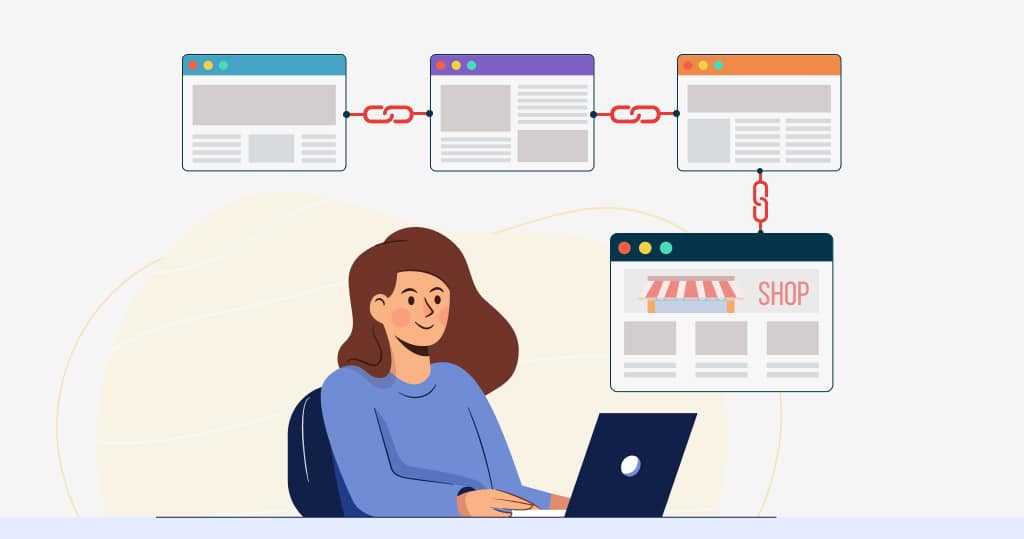
Internal linking is a critical component of a comprehensive SEO strategy. Understanding its importance can help you leverage internal links effectively to enhance your website’s visibility and user experience. Here are the key aspects to consider:
How internal linking impacts search engine optimization (SEO): Internal linking plays a significant role in SEO by helping search engines discover, crawl, and index your website’s content. When search engine bots encounter internal links, they follow them to navigate through different pages on your site, effectively exploring and understanding the structure and relationships between your content. This process allows search engines to determine the relevance and value of your pages, contributing to higher rankings in search results.
The role of internal links in distributing link equity and authority: Link equity, also known as link juice, refers to the value or authority passed from one page to another through hyperlinks. Internal links allow you to distribute this link equity across your website, emphasizing the importance of certain pages and helping search engines understand which content is more valuable. By strategically linking to your key pages and cornerstone content, you can boost their visibility and authority, positively influencing their search rankings.
Enhancing user experience and reducing bounce rates through internal links: Internal links can significantly improve user experience by providing logical pathways for visitors to navigate your website. When users encounter relevant internal links within your content, it helps them discover related information, delve deeper into a topic, or explore additional resources. This improves the overall user engagement and encourages them to spend more time on your site, reducing bounce rates. By guiding users to relevant pages, you enhance their satisfaction and increase the likelihood of conversions or further interactions.
By understanding the impact of internal linking on SEO, the distribution of link equity, and the benefits it brings to user experience, you can develop a well-rounded internal linking strategy. Incorporate relevant and contextual internal links throughout your content, prioritize important pages, and ensure a seamless navigation experience for your website visitors.
The Benefits of Internal Linking for Website Visibility
Internal linking offers several benefits that contribute to your website’s visibility in search engine results and overall user engagement. Let’s explore these benefits in detail:
Improving organic search rankings and visibility in SERPs: Internal linking plays a crucial role in improving your website’s organic search rankings. By strategically linking relevant pages and content within your site, you create a network of interconnected information that search engines can easily crawl and understand. This helps search engines recognize the relevance and authority of your pages, potentially leading to higher rankings in search results. When your website ranks higher, it becomes more visible to users searching for related topics, increasing your chances of attracting organic traffic.
Encouraging search engine crawlers to discover and index new content: When search engine crawlers visit your website, they follow internal links to navigate from one page to another. By incorporating internal links throughout your content, you guide these crawlers to discover and index new pages more efficiently. It ensures that your fresh content, such as new blog posts or product pages, is promptly indexed by search engines, making it visible in search results sooner. Regularly adding internal links to your new content helps improve its visibility and accelerates its inclusion in search engine indexes.
Enhancing website navigation and user engagement: Internal links contribute to an improved user experience by providing clear pathways and intuitive navigation on your website. When users encounter relevant internal links within your content, they are more likely to explore additional pages and spend more time on your site. By guiding users to related or complementary content, you enhance their engagement and encourage them to delve deeper into your website. This can lead to increased page views, reduced bounce rates, and higher user satisfaction, all of which contribute to a positive user experience.
By leveraging internal linking to improve search rankings, facilitate the discovery of new content by search engines, and enhance user engagement, you can significantly boost your website’s visibility. Remember to incorporate relevant and contextual internal links, ensure a seamless navigation experience, and regularly evaluate and optimize your internal linking strategy to maximize its benefits.
Best Practices for Effective Internal Linking
To ensure effective internal linking, it’s important to follow best practices that optimize the placement, structure, relevance, anchor text, and maintenance of your internal links. Let’s delve into each of these best practices:
Strategic Link Placement
Identify key pages for internal linking: Determine the most important and authoritative pages on your website that should receive internal link support. These could be cornerstone content, landing pages, or pages with high conversion potential.
Incorporate relevant anchor text for contextual linking: Use descriptive and relevant anchor text that accurately reflects the destination page’s content. This helps both search engines and users understand the context of the link.
Balance the number of internal links per page: While it’s important to provide sufficient internal links, avoid excessive linking that may overwhelm users or dilute the link equity passed to each page. Aim for a balanced and natural link distribution.
Site Structure and Hierarchy
Create a logical website structure for easy navigation: Organize your website into clearly defined categories and subcategories. This logical hierarchy helps users and search engines understand the relationship between different pages and improves overall site usability.
Utilize categories, tags, and related posts for internal linking: Incorporate categories, tags, and related posts sections to enhance internal linking within your website’s content. This allows users to navigate between related topics and helps search engines identify thematic connections.
Implement breadcrumbs for improved user experience: Breadcrumbs provide a visual representation of the user’s location within your website’s hierarchy. They aid in navigation, provide context, and make it easier for users to backtrack or explore related content.
Linking Relevant and Related Content
Link to relevant articles, blog posts, and resources: Integrate internal links within your content to guide users to related and informative pages. This improves the user experience and encourages further engagement.
Utilize “related posts” or “you may also like” sections: Displaying sections that suggest related content can increase user engagement and encourage exploration of additional pages on your website.
Implement internal linking based on topic clusters and content silos: Group related content together under specific topics or themes. Utilize internal links to connect pages within the same topic cluster or content silo, signaling to search engines the depth and breadth of your expertise.
Optimizing Anchor Text
Use descriptive and keyword-rich anchor text: Optimize anchor text to accurately describe the content of the linked page and include relevant keywords when appropriate. This helps search engines understand the topic relevance and enhances the SEO value of the link.
Avoid generic anchor text like “click here” or “read more”: Generic anchor text provides little context for users or search engines. Instead, use descriptive phrases that indicate what users can expect when they click the link.
Keep anchor text natural and user-friendly: Ensure that the anchor text reads naturally within the surrounding content. Avoid keyword stuffing or over-optimization, as this can negatively impact the user experience and SEO.
Monitoring and Updating Internal Links
Regularly audit and update internal links for accuracy: Periodically review your website’s internal links to identify any broken or outdated links. Fix or remove broken links and update them with the correct URLs to maintain a seamless user experience.
Implement redirects for broken or outdated internal links: If you change the URL structure or remove a page, set up appropriate redirects to ensure that internal links pointing to those pages still lead users to relevant content.
Utilize tools and plugins to automate link management: Use tools and plugins that can assist in managing internal links, such as automatically updating links when URLs change or generating related post sections.
By implementing these best practices, you can create a robust internal linking strategy that improves SEO, enhances user experience, and ensures the accuracy and relevance of your internal links over time.
Bonus Content – Internal Linking Method you can apply
Identify target pages for internal linking
To identify target pages for internal linking, you can utilize a combination of tools like Screaming Frog, Google Analytics 4 (GA4) API, and Ahrefs API. Here’s a step-by-step process:
Crawl the site using Screaming Frog:
Use the Screaming Frog SEO Spider tool to crawl your website and gather data about your pages.
Set up the spider to crawl the entire website or specific sections based on your requirements.
Extract data from Google Analytics 4 (GA4) API:
Utilize the GA4 API to extract data related to pageviews, engagement metrics, and conversion rates.
Retrieve information about the popularity and performance of your website’s pages.
Gather data from Ahrefs API:
Utilize the Ahrefs API to gather data on backlinks, organic traffic, and keyword rankings for your website’s pages.
This data helps identify pages with higher authority or visibility.
Combine the data and analyze:
Merge the data obtained from Screaming Frog, GA4 API, and Ahrefs API into a single dataset for analysis.
Analyze the metrics to identify pages that meet specific criteria, such as high traffic, engagement, conversion rates, backlinks, or keyword rankings.
Prioritize target pages for internal linking:
Based on the analysis, identify the pages that align with your internal linking objectives and have the potential to benefit from increased visibility or authority.
Consider pages that already perform well and pages that could benefit from additional internal link support.
Plan your internal linking strategy:
Once you have identified target pages, determine the relevant anchor text and the context in which the internal links will be placed.
Consider the user journey, logical content connections, and the relevance of the target pages to the linking pages.
By utilizing a combination of tools like Screaming Frog, GA4 API, and Ahrefs API, you can gather data-driven insights to identify target pages for internal linking. This approach helps ensure that your internal linking efforts are focused on pages that have the potential to benefit the most from increased visibility, authority, and user engagement.
Using Ahrefs Audit Report and Internal linking
To leverage Ahrefs for internal linking opportunities and add the “Keyword Context” to your analysis, follow these steps:
Set up an audit project in Ahrefs and let it crawl:
Log in to your Ahrefs account and create an audit project for the website you want to analyze.
Configure the project settings, including the website’s crawl depth and any specific areas you want to focus on.
Access the “Internal Linking Opportunities” report:
Once the project has completed crawling, navigate to the “Site Audit” section in Ahrefs.
Select your project and click on the “Internal Linking Opportunities” report.
Add “Keyword Context” to the report:
In the “Internal Linking Opportunities” report, you will see a list of pages on your website.
Look for the option to add columns or customize the view of the report. Click on it to access the customization options.
Search for the “Keyword Context” or similar column and add it to the report view.
Analyze the “Keyword Context” column:
The “Keyword Context” column provides insights into the keywords and topics associated with each page.
Review the keywords listed to understand the content and context of each page.
Identify relevant keywords that can be used as anchor text when linking internally from other pages.
By adding the “Keyword Context” column to the “Internal Linking Opportunities” report in Ahrefs, you gain a deeper understanding of the keywords and topics associated with each page. This information allows you to make informed decisions when selecting anchor text for internal links. You can prioritize linking from pages with relevant keyword context to maximize the SEO value and improve the user experience of your internal linking strategy.
To search for specific target keywords on a particular website using the “site:” operator on Google, follow these steps:
Open your web browser and go to google.com.
In the search bar, enter the following search query, replacing “{domainname}” with the actual domain name of the website you want to search within: site:https://{domainname} “target keyword” For example: site:https://example.com “internal linking”
Press Enter or click on the search button to perform the search.
Google will display the search results, showing all pages from the specified website that include the target keyword you specified. Note: Keep in mind that Google’s search results may vary based on your location, personalization settings, and other factors.
By using the “site:” operator in combination with the target keyword, you can effectively narrow down the search results to only show pages within the specified website that contain the desired keyword. This approach allows you to quickly identify relevant pages on the website that are associated with the target keyword, which can be helpful when analyzing internal linking opportunities or conducting keyword research.
Search Console Approach
To leverage Google Search Console for identifying relevant pages and adding internal links, follow these steps:
Go to your Google Search Console account.
Select the desired property (website) you want to work with.
Navigate to the “Performance” report or “Search Results” section.
Apply a page filter to narrow down the data to a specific section of your website, such as a blog or a specific category.
In the search or query filter, enter the “Target keyword” that you want to focus on.
You can use variations of the keyword or specific phrases to refine the search.
This filter will show data related to queries containing the target keyword.
Analyze the search performance data and identify pages that are already ranking or receiving impressions for the target keyword.
Look for pages with high impressions or click-through rates that indicate their visibility and relevance.
Add internal links from these relevant pages to your target pages.
Identify opportunities where you can naturally incorporate internal links within the content of these pages.
Link from the relevant pages to your target pages using descriptive anchor text that includes the target keyword or related keywords.
Ensure that the internal links are contextually relevant and provide value to users.
Monitor the performance of the target pages in Google Search Console over time to gauge the impact of the internal links and track any improvements in rankings or visibility.
By utilizing Google Search Console’s page and query filters, you can identify relevant pages and queries associated with your target keyword. This data provides valuable insights for adding internal links from high-performing pages to your target pages, helping to improve their visibility and authority within search results. Monitoring the performance of the target pages allows you to assess the effectiveness of the internal linking strategy and make adjustments as needed.
Incorporating an effective internal linking strategy is essential for improving your website’s visibility, SEO performance, and user experience. If you’re looking to optimize your internal linking or need assistance with other aspects of website development and digital marketing, consider leveraging the professional services offered by Chetaru. Our experienced team can help you create a tailored internal linking strategy that aligns with your business goals and maximizes your website’s potential. Get in touch with us today to explore how Chetaru can elevate your website’s performance through strategic internal linking and comprehensive digital solutions.
In today’s fiercely competitive online landscape, small businesses often struggle to stand out amidst industry giants. However, there’s a powerful strategy that can level the playing field and boost their visibility: link building. Link building is the backbone of search engine optimization (SEO), empowering businesses to increase their website’s authority and improve their rankings in search engine results pages. By acquiring high-quality backlinks from reputable websites, small businesses can enhance their online presence, attract organic traffic, and establish themselves as credible contenders in their respective industries.
This comprehensive guide will take you on a journey through the world of link building, providing valuable insights and practical tips specifically tailored to small businesses. We will explore the fundamentals of link building, demystify the concept of domain authority, highlight effective techniques for acquiring backlinks, and reveal strategies to compete with industry giants. So, whether you’re an aspiring entrepreneur or a seasoned small business owner, fasten your seatbelts and get ready to unlock the secrets of link-building that will catapult your business to new heights in the digital realm.
The challenge of competing with industry giants in the digital landscape
Competing with industry giants in the digital landscape poses a significant challenge for small businesses. These giants often have substantial resources, established brand recognition, and a vast customer base, making it difficult for smaller players to gain a foothold. Moreover, industry giants have the advantage of economies of scale, allowing them to invest in cutting-edge technologies, expansive marketing campaigns, and comprehensive customer experiences. This level of competition can be overwhelming for small businesses with limited budgets and human resources. However, by focusing on niche markets, leveraging innovative strategies, and providing personalized experiences, small businesses can carve out their own space in the digital landscape and find success amidst the giants. However, understanding the challenges and finding effective strategies is crucial for success. Here are some key challenges and ways to address them:
Limited resources: Small businesses often need more financial and human resources than industry giants. This can pose challenges regarding marketing budget, technology infrastructure, and talent acquisition. To address this, small business owners should prioritize strategic resource allocation, leveraging cost-effective digital marketing channels and exploring outsourcing options for specialized tasks.
Brand recognition and trust: Established industry giants have built strong brand recognition and consumer trust. This can make it difficult for small businesses to compete, as customers may be more inclined to choose familiar, trusted brands. Building brand awareness through targeted digital marketing campaigns, showcasing unique value propositions, and providing excellent customer service can help small businesses establish their credibility and gain trust.
Market dominance and competition: Industry giants often have a significant market share, making it challenging for small businesses to penetrate and compete effectively. To address this, small business owners should identify niche markets or untapped customer segments where they can offer specialized products or services. Small businesses can carve out a distinct competitive advantage by focusing on specific customer needs, delivering exceptional quality, and providing personalized experiences.
Technological advancements: Industry giants usually have access to advanced technologies and robust digital infrastructure, enabling them to innovate and optimize their operations. Small businesses may need more resources to keep up with these technological advancements. However, small businesses can streamline processes, enhance efficiency, and deliver an exceptional customer experience without substantial investments by embracing digital tools and platforms that align with their specific needs.
Customer acquisition and retention: Industry giants often have extensive marketing budgets and resources to attract and retain customers. Small businesses must adopt targeted digital marketing strategies to reach their ideal customers. Search engine optimization (SEO), social media marketing, content marketing, and email marketing can help small businesses effectively engage with their target audience, provide personalized experiences, and build long-term customer relationships.
Scalability and growth: Scaling a small business in the digital landscape can be challenging due to intense competition and limited resources. However, small companies can lay a strong foundation for sustainable growth by focusing on customer feedback, adapting to changing market trends, and continuously improving products or services. Collaboration and strategic partnerships with complementary businesses also provide opportunities for expansion and increased market reach.
Agility and adaptability: Industry giants may face challenges adapting to rapidly evolving digital landscapes due to their size and complex organizational structures. This presents an advantage for small businesses, as they can be more agile and responsive to market changes. Small business owners should actively monitor industry trends, leverage data-driven insights, and embrace a culture of innovation and experimentation to stay ahead of the curve.
The importance of link building for small businesses
Link building holds immense importance for small businesses in their digital marketing strategy. It is a crucial driver of search engine visibility, enabling companies to improve their organic rankings and attract valuable traffic. By acquiring quality backlinks from reputable websites, small businesses can establish their credibility and authority within their industry, enhancing their brand reputation and trustworthiness. Moreover, link building facilitates referral traffic, as relevant links from other websites direct users to the business’s website, increasing the chances of lead generation and customer acquisition.
A vital link profile gives small businesses a competitive advantage by differentiating them from competitors and growing their online visibility. By consistently investing in link-building efforts and securing relevant and authoritative backlinks, small businesses can enjoy sustained growth, improved search engine rankings, and increased brand recognition in the digital landscape. Here are some key reasons why link building is crucial for small businesses, along with strategies to enhance its effectiveness:
Enhanced search engine visibility: Link building is vital in search engine optimization (SEO). Search engines consider backlinks from reputable websites as a vote of confidence, indicating that your website offers valuable content. Your small business can improve its search engine rankings by acquiring high-quality backlinks and increasing organic traffic and visibility among potential customers.
Establishing credibility and authority: Building a solid link profile can help develop your small business as a credible and authoritative source within your industry. When reputable websites link to your content, it indicates to users and search engines that your company is trustworthy and knowledgeable.
Referral traffic and lead generation: Link building is about optimizing search engine traffic and driving targeted traffic to your website. When users click on relevant links from other websites and land on your pages, it increases the likelihood of generating qualified leads and potential customers.
Competitive advantage: In a competitive digital landscape, link building can give your small business a distinct advantage. As you acquire quality backlinks, you gain an edge by increasing your online visibility and positioning your business as a go-to resource within your industry.
Long-term business growth: Link building is not a one-time activity but an ongoing process contributing to long-term business growth. The more quality backlinks you acquire over time, the stronger your website’s authority becomes, leading to sustained organic traffic, higher search engine rankings, and increased brand recognition.
Identify Your Target Audience and Niche
Identifying your target audience and niche is crucial for any business looking to thrive in today’s competitive landscape. By understanding your ideal customers and narrowing your focus to a specific place, you can tailor your products or services to meet their unique needs and preferences. This strategic approach allows you to connect with your audience on a deeper level, build strong relationships, and differentiate yourself from the competition.
Whether you’re a small business owner or an aspiring entrepreneur, this guide will take you on a journey of discovery. We will explore the process of identifying your target audience, diving into demographic, psychographic, and behavioral factors that influence consumer behavior. Here are some practical steps to help you in this process:
Conduct market research: Conduct comprehensive market research to deeply understand your industry, competitors, and potential customer base. Identify trends, market gaps, and emerging needs that can help you define your niche.
Analyze customer demographics: Determine the demographics of your target audience, including age, gender, location, income level, and occupation. This information will help you tailor your marketing efforts and product offerings to meet their specific needs.
Define customer psychographics: Explore the psychographic characteristics of your audience, such as their interests, values, lifestyles, and attitudes. This insight will enable you to develop messaging and branding that resonates with their motivations and aspirations.
Identify pain points and needs: Identify your target audience’s challenges, pain points, and needs. By understanding their problems, you can position your business as a solution provider and develop products or services that directly address their needs.
Study competitor strategies: Analyze your competitors’ target audience and niche to gain insights into successful approaches and areas of opportunity. Identify gaps in the market that your business can fill, offering a unique value proposition to differentiate yourself from the competition.
Create buyer personas: Develop detailed buyer personas that represent your ideal customers. Use the gathered data to create fictional characters that embody your target audience’s characteristics, behaviors, and preferences. These personas will serve as reference points throughout your marketing efforts.
Conduct surveys and interviews: Interact directly with your existing customers or potential target audience through surveys, interviews, or focus groups. Ask open-ended questions to gather qualitative feedback on their needs, preferences, and pain points. This firsthand information will provide valuable insights for refining your target audience and niche.
Monitor analytics and feedback: Continuously monitor website analytics, social media engagement, and customer feedback to gather quantitative data about your audience’s behaviors, preferences, and responses to your marketing efforts. Adjust your strategies to align with your target audience’s preferences and expectations.
Refine and iterate: Identifying your target audience and niche is ongoing. As your business evolves, regularly revisit and refine your understanding of your audience. Stay updated on market trends, technological advancements, and shifts in customer preferences to ensure your business stays relevant and responsive to your target audience’s needs.
Understanding your ideal customers and industry segment
Understanding your ideal customers and industry segment is vital to a successful business. You can create tailored products or services that resonate with them by gaining deep insights into your target audience’s needs, preferences, and behaviors. Similarly, comprehending your industry segment allows you to position your business effectively and capitalize on emerging trends and opportunities. Now, we will delve into the process of understanding your ideal customers and industry segment, providing you with the tools and knowledge necessary to make informed decisions. We will explore various research techniques, including surveys, interviews, and data analysis, to gather valuable information about your customer’s demographics, psychographics, and buying habits.
Additionally, we will investigate market trends, competition, and consumer demands within your industry to identify untapped niches and develop a competitive edge. By the end of this guide, you will clearly understand your ideal customers and industry segment, enabling you to craft targeted marketing strategies, refine your product offerings, and foster strong customer relationships. So, let’s embark on this enlightening journey and unlock the key insights that will drive your business’s success in understanding your ideal customers and industry segment.
Tailoring your content and outreach efforts for relevancy and quality
Tailoring your content and outreach efforts for relevancy and quality is crucial to success in today’s digital landscape. With countless businesses vying for attention, creating content that resonates with your target audience is essential. By understanding their needs, interests, and pain points, you can deliver valuable, engaging content that captures their attention. Moreover, maintaining high-quality standards in your range establishes your credibility and builds trust with your audience. When it comes to outreach, personalization is critical. Crafting tailored messages that address your target audience’s interests and challenges increases the likelihood of meaningful connections and conversions.
Explore strategies to ensure your content is relevant and compelling, including conducting audience research, developing buyer personas, and implementing SEO best practices. We will also explore personalized outreach, segmentation, and customized email marketing techniques. By implementing these practices, you can elevate your content and outreach efforts to new heights, attracting and engaging your audience while driving tangible results for your business. So, let’s dive in and discover the secrets of tailoring your content and outreach efforts for relevancy and quality.
Create Exceptional Content
In today’s information-saturated world, standing out requires more than just producing generic content; it demands originality, value, and a touch of brilliance. Premium content goes beyond surface-level information—it educates, entertains, and inspires. It provides unique perspectives, expert insights, and actionable advice that resonates with your audience. By investing time and effort into crafting unique content, you can establish yourself as a trusted authority, foster strong connections with your readers, and ultimately drive meaningful results for your business.
Here, we will explore the fundamental principles of creating unique content, including understanding your audience, conducting thorough research, developing a unique voice, and mastering the art of storytelling.
We will also provide practical tips and techniques to elevate the quality of your writing, enhance visual appeal, and optimize for search engines. So, if you’re ready to unlock the secrets of creating content that leaves a lasting impact, embark on this journey of creativity and discover how to produce unique content that sets you apart from the competition.
The Role of High-quality Content in link building
When earning backlinks from authoritative websites, valuable, informative, and engaging content is more likely to attract attention and generate organic links. High-quality content provides value to your target audience and establishes your credibility and expertise within your industry. When other websites discover your unique content, they are more inclined to reference and link to it as a valuable resource for their readers.
Organic link-building improves your website’s visibility and search engine rankings and enhances its overall authority and trustworthiness. To create high-quality content for link building, it is crucial to conduct thorough research, provide unique insights, present information visually appealingly, and ensure that the content is well-written and optimized for search engines. Hiring professional link-building services is also very helpful in growing a business. By consistently producing exceptional content, you can attract natural backlinks, strengthen your online presence, and establish valuable relationships with other industry influencers and authoritative websites.
Tips for creating valuable and engaging content
Creating valuable and engaging content is essential to capture the attention and interest of your target audience. Here are some tips to help you craft content that stands out:
Understand your audience: Research and analyze your target audience to understand their needs, interests, and pain points. Tailor your content to address their specific challenges and provide solutions that resonate with them.
Offer unique perspectives: Bring a fresh and unique angle to your content. Provide insights, opinions, or data others may have yet to cover extensively. This helps differentiate your content and makes it more compelling for readers.
Provide practical value: Make your content actionable and valuable. Offer step-by-step guides, tutorials, or tips your audience can implement immediately. This helps them see real-world benefits and establishes you as a reliable source of information.
Use storytelling techniques: Weave narratives and stories into your content to make it relatable and engaging. Storytelling captures emotions, creates connections, and helps your audience connect with your message more deeply.
Use visual elements: Incorporate eye-catching visuals such as images, infographics, or videos to enhance the visual appeal of your content. Visuals break up the text and make it more engaging and shareable.
Make it easy to read: Structure your content with clear headings, subheadings, and bullet points. Use short paragraphs and concise sentences to improve readability. Incorporate white space to give your content room to breathe.
Incorporate multimedia: Explore different formats, such as podcasts, videos, or interactive content, to cater to diverse preferences and provide a multi-dimensional experience for your audience.
Encourage interaction and conversation: Include calls-to-action that invite your audience to comment, share their opinions, or ask questions. Respond to comments and engage in discussions to foster a sense of community.
Continuously improve: Monitor your content’s performance and analyze your audience’s feedback. Adapt and refine your approach based on what resonates best with your target audience.
Leverage Local SEO
In this digital age, where consumers increasingly rely on online searches to find local products and services, optimizing your online presence for local searches is essential. Local SEO enables you to boost your visibility in search engine results for location-based queries, helping you connect with potential customers right when they’re searching for businesses like yours in their area.
Now, we will explore the strategies and techniques to leverage local SEO effectively. From optimizing your website with location-specific keywords to creating and optimizing your Google My Business profile, we’ll cover all the essential steps to ensure your business appears prominently in local search results. We’ll also dive into the world of online reviews, local directories, and location-specific content, uncovering the ways to enhance your local online presence and reputation. So, whether you’re a small business owner with a physical storefront or a service provider catering to a specific region, get ready to harness the power of local SEO and attract a steady stream of customers from your local community.
The benefits of local search engine optimization for small businesses
Local search engine optimization (SEO) benefits small businesses looking to establish a solid online presence in their local community. By focusing on optimizing your website and online assets for local searches, you can unlock the following advantages:
Enhanced Local Visibility:Local SEO services and techniques ensure your business appears prominently in local search results. This increased visibility means that when potential customers search for products or services in your area, your business will be among the top results they see, increasing the chances of attracting local customers.
Targeted Traffic: Local SEO allows you to target specific geographic areas, ensuring that your website receives traffic from individuals more likely to convert into customers. By optimizing your content with local keywords and location-specific information, you can attract relevant and targeted traffic to your website.
Increased Brand Awareness: Appearing in local search results helps build brand awareness within your community. When people repeatedly see your business listed for local queries, it fosters trust and recognition, positioning your brand as a reputable and reliable choice in the local market.
Higher Conversion Rates: Local searches often indicate higher intent to purchase or visit a physical store. By optimizing your website for local SEO, you can attract motivated customers who are actively seeking your products or services, resulting in higher conversion rates and more sales.
Competitive Edge: Small businesses can leverage local SEO to compete with more giant corporations. By targeting specific local keywords and optimizing for local searches, you can carve out a niche and establish your business as a viable alternative to larger competitors.
Online Reviews and Reputation Management: Local SEO involves managing and encouraging online reviews from satisfied customers. Positive reviews enhance your online reputation and influence potential customers’ decisions, increasing your business’s trust and credibility.
Optimizing your website for local keywords and directories
When potential customers in your area search for products or services, you want your business to appear prominently in their search results. By incorporating location-specific keywords and ensuring your business is listed in relevant local directories, you increase your website’s visibility and attract individuals actively seeking your offer. Here are some critical steps to enhance your website’s local optimization:
Keyword research: Conduct thorough keyword research to identify relevant local keywords that align with your business and target audience. Focus on keywords with location-specific terms, such as city names or neighborhood identifiers. Use keyword research tools and analyze search trends to determine your business’s most valuable local keywords.
On-page optimization: Optimize your website’s meta tags, headers, and content with local keywords. Incorporate them naturally within your website’s pages, including the homepage, service or product pages, and blog posts. Ensure that the content remains informative and engaging while targeting local search intent.
Google My Business listing: Claim and optimize your Google My Business (GMB) listing, as it is crucial for local SEO. Provide accurate and up-to-date information, including your business name, address, phone number, hours of operation, and website URL. Encourage customers to leave reviews on your GMB listing to build credibility and improve your local search rankings.
Online directories and citations: Create consistent business listings on reputable online directories such as Yelp, Yellow Pages, and industry-specific directories. Ensure your business name, address, and phone number (NAP) are consistent across all listings. This consistency helps search engines understand and validate your business’s location, improving local search visibility.
Location-specific landing pages: If your business serves multiple locations, create location-specific landing pages optimized for each target area. Customize the content to include relevant local keywords, testimonials or case studies from customers in those areas, and information specific to each location’s unique attributes.
Localized content: Develop content tailored to your local audience’s interests and needs. Consider creating blog posts, articles, or guides highlighting local events, attractions, or news. Engage with the local community by featuring partnerships or collaborations with other businesses or organizations in your area.
Mobile optimization: Ensure your website is mobile-friendly and responsive, as many local searches are conducted on mobile devices. Optimize your website’s loading speed, design, and navigation for a seamless user experience on smartphones and tablets.
Schema markup: Implement schema markup on your website to provide search engines with structured data about your business, including your name, address, phone number, business hours, and customer reviews. This structured data enhances your website’s visibility in local search results and improves your chances of appearing in rich snippets or local map packs.
Encourage local reviews: Actively encourage satisfied customers to leave reviews on platforms like Google, Yelp, or industry-specific review sites. Positive reviews build trust and credibility and influence local search rankings.
Monitor and adapt: Monitor your website’s performance in local search results using tools like Google Analytics and Search Console. Track your rankings for local keywords and analyze user behavior to identify areas for improvement. Adjust your optimization strategies based on data insights and changing local search trends.
Guest Blogging and Thought Leadership
Guest blogging involves writing and publishing articles on other websites or blogs, while thought leadership focuses on positioning yourself as an expert and sharing valuable insights within your field. These approaches offer numerous benefits, including expanding your reach, building credibility, and attracting a larger audience. By contributing high-quality content to reputable publications, you can tap into their existing readership, gaining exposure to new potential customers or clients.
Furthermore, thought leadership allows you to showcase your expertise, share innovative ideas, and contribute to industry conversations. This can lead to valuable networking opportunities, partnerships, and speaking engagements. This guide will explore strategies for successful guest blogging and thought leadership, including identifying relevant platforms, crafting compelling content, and nurturing relationships with publishers and influencers. By incorporating these tactics into your marketing strategy, you can enhance your online reputation, increase brand visibility, and position yourself as a go-to resource in your industry. So, let’s delve into the world of guest blogging and thought leadership and unlock the potential for growth and influence in your field.
Establishing yourself as an industry thought leader
As a thought leader, you become a go-to resource for industry insights, trends, and expertise, positioning yourself as an authority that others trust and seek guidance from. Focusing on key strategies is essential to establish yourself as a thought leader. First, identify your niche and areas of expertise within your industry. This allows you to discover a unique space to provide valuable insights and perspectives. Next, create and share high-quality content that showcases your knowledge and expertise. This can include blog posts, articles, whitepapers, case studies, videos, or podcasts. Consistency is vital, so regularly publish and share your content across relevant platforms and channels.
Additionally, actively engage in industry discussions and networks. Participate in conferences, webinars, and panel discussions. Contribute to industry publications or invite guest speaking opportunities. Engage with your audience through social media and respond to comments and inquiries. Building relationships and collaborations with other thought leaders can expand your reach and credibility. By consistently demonstrating your expertise, providing valuable insights, and engaging with your industry community, you can establish yourself as an industry thought leader and gain recognition as a trusted and influential voice.
Tips for successful guest blogging and obtaining backlinks
Successful guest blogging is a valuable strategy for expanding your reach, building backlinks, and establishing your authority in your industry. Here are some tips to help you maximize the benefits of guest blogging and obtain valuable backlinks:
Identify relevant and reputable websites: Look for websites or blogs in your industry that have a strong readership and align with your target audience. Ensure they have a track record of publishing high-quality content and engaging with their readers.
Research their guest blogging guidelines: Carefully review the guest blogging guidelines of each website you’re considering. Please consider their content requirements, writing style, and submission process. Adhering to these guidelines increases your chances of getting published.
Craft compelling and unique content: Create well-researched, informative, and engaging content that provides value to the readers of the target website. Offer fresh perspectives, insights, or actionable tips that have yet to be extensively covered. Aim to demonstrate your expertise and provide practical takeaways.
Customize your pitch: When reaching out to websites, personalize your pitch to showcase your familiarity with their content and explain why your article would fit their audience well. Highlight your unique value and how it aligns with their readers’ interests.
Include relevant and contextual backlinks: When writing your guest post, strategically incorporate relevant backlinks to your website or other authoritative sources supporting your content. Ensure the links are contextually relevant and add value to the readers.
Engage with readers and respond to comments: Once your guest post is published, actively engage with the readers by responding to comments and answering questions. This shows your willingness to provide further insights and builds your credibility.
Promote your guest post: Share your guest post on your website, social media channels, and email newsletters. This helps drive traffic to the host website and increases your visibility as a guest contributor.
Nurture relationships with website owners: Maintain a positive relationship with the website owners or editors you collaborate with. Offer to contribute more articles in the future or provide assistance when needed. Building lasting connections can lead to more guest blogging opportunities.
Build Relationships and Networking
In an interconnected world, fostering meaningful connections with others in your industry is essential for opening doors to opportunities, gaining support, and expanding your knowledge. By actively engaging in networking activities, attending industry events, and nurturing relationships with like-minded individuals, you can tap into a vast network of professionals who share your interests and goals. These relationships provide a support system, a platform for collaboration, and a source of valuable insights and mentorship.
Exploring the art of building relationships and effective networking strategies. From attending events and engaging on social media to offering assistance and staying connected, we will cover practical tips and techniques to help you build strong connections within your industry. Investing in relationships and networking can unlock a world of possibilities, discover new opportunities, and forge lasting connections that will contribute to your long-term success. So, let’s embark on this journey of building relationships and networking together and embrace the power of meaningful connections in shaping your personal and professional growth.
The power of networking in link building
Networking allows you to connect with website owners, bloggers, influencers, and content creators who have the potential to provide backlinks to your website. You can establish a network of individuals willing to support your link-building endeavors through meaningful interactions, collaborations, and partnerships.
Networking helps you obtain backlinks directly and expands your reach and visibility, as your connections may introduce your content to their networks. Building relationships within your industry can also lead to guest blogging opportunities, joint ventures, and referrals, further amplifying your link-building efforts.
To harness the power of networking in link building, actively participate in industry events, engage on social media, attend conferences, and join relevant online communities. Seek collaborations and partnerships, and foster genuine relationships based on mutual support and shared interests. By building a solid network of connections, you can tap into many link-building possibilities and propel your website’s visibility and authority to new heights.
Engage on social media: Actively participate in industry-specific social media platforms and communities. Share valuable insights, comment on posts, and engage with other users to establish connections and build relationships.
Attend industry events: Attend conferences, seminars, webinars, and meetups relevant to your industry. Network with professionals, exchange ideas and build connections that may lead to collaboration opportunities and backlink possibilities.
Collaborate with influencers: Identify influencers or thought leaders in your niche and contact them for collaboration opportunities. Offer to provide value through content contributions, joint webinars, or interviews, which can result in backlinks from their platforms.
Participate in online communities: Join online forums, discussion boards, and niche-specific communities. Share your expertise, provide helpful insights, and engage in conversations to establish yourself as a knowledgeable and trustworthy resource within the community.
Offer testimonials or case studies: If you’ve had positive experiences with products, services, or tools related to your industry, offer to provide testimonials or case studies to the respective companies. They may feature your feedback on their websites, including a backlink to your website.
Build partnerships with complementary businesses: Identify businesses that complement your own offerings but are not direct competitors. Explore partnership opportunities to cross-promote each other’s content or products, potentially resulting in backlinks from their websites.
Write guest posts: Reach out to reputable blogs or websites in your industry and offer to write guest posts. Provide valuable content that aligns with their audience’s interests, including a backlink to your website in the author bio or within the content.
Offer interviews or expert insights: Offer yourself as an interviewee or industry expert to media outlets, podcasts, or blogs. Share your expertise, insights, and unique perspectives, gaining exposure and potential backlinks from those platforms.
Attend local networking events: Explore local networking events or business associations relevant to your industry. Connect with fellow professionals, exchange business cards, and establish meaningful relationships that may lead to backlink opportunities.
Engage in influencer outreach: Identify influencers or content creators who align with your brand values and target audience. Reach out to them with personalized messages, expressing your admiration for their work, and explore collaboration opportunities that can result in backlinks.
Strategies for building relationships with influencers and other businesses
Building relationships with influencers and other businesses can significantly expand your reach, gain credibility, and access new opportunities. Here are some effective strategies for building relationships with influencers and companies:
Identify relevant influencers and businesses: Research and identify influencers and companies in your industry or niche that align with your brand and target audience. Look for those with a significant following and actively engage with their audience.
Engage with their content: Start engaging with their content by liking, sharing, and commenting on their posts. Provide thoughtful insights, ask questions, or offer compliments. This shows your genuine interest and helps you establish a connection.
Collaborate on content: Explore opportunities to collaborate on content creation. You can propose guest blog posts, co-host webinars or podcasts, or create joint videos or social media campaigns. Collaborative efforts allow you to tap into each other’s audience and leverage shared expertise.
Offer value and support: Find ways to provide value to influencers and businesses. Share their content with your audience, promote their products or services, or offer to help them with their projects or initiatives. Show genuine support and generosity, and they will be more inclined to reciprocate.
Attend industry events and conferences: Networking events and conferences provide valuable opportunities to meet influencers and business professionals in person. Engage in conversations, exchange contact information, and follow up afterward to nurture the relationship.
Personalize your approach: Personalize your communication when contacting influencers or businesses. Reference specific content or projects they’ve worked on, express your admiration for their work, and explain how you believe a partnership or collaboration could be mutually beneficial.
Build genuine relationships: Build authentic relationships based on trust and mutual support. Take the time to understand their needs and goals, and find ways to contribute and genuinely provide value. Show interest in their success and foster long-term connections.
Maintain consistent communication: Regularly engage with influencers and businesses through various channels, such as social media, email, or direct messaging. Stay up-to-date with their latest activities and initiatives, and continue finding opportunities for collaboration and support.
Monitor Competitors and Replicate Successful Strategies
By closely monitoring your competitors’ activities, you gain valuable insights into their tactics, strengths, and weaknesses. This knowledge empowers you to make informed decisions and adapt your strategies for better results. Understanding what works for your competitors allows you to replicate and implement their successful strategies within your business model. Studying your competitors, from marketing campaigns and pricing strategies to product innovations and customer engagement techniques, provides inspiration and ideas.
Exploring the importance of monitoring competitors, the process for practical competitor analysis, and how to replicate successful strategies while adding your unique touch. By mastering the art of competitor monitoring and strategy replication, you can enhance your competitive edge, identify new growth opportunities, and ultimately drive the success of your business. So, let’s dive in and discover the power of keeping a watchful eye on your competitors and leveraging their successful strategies for your business success.
Analyzing competitor link-building strategies
By examining the link profiles of your competitors, you can gain valuable insights into their backlink sources, anchor text usage, and overall link-building tactics. This analysis helps you understand the strategies contributing to their online visibility and search engine rankings. By identifying their most successful link-building efforts, you can replicate and improve upon them to enhance your backlink profile. Moreover, analyzing competitor link-building strategies allows you to uncover potential gaps and untapped opportunities in your industry. By identifying websites that link to your competitors but not your own, you can prioritize outreach efforts and secure valuable backlinks to boost your website’s authority and visibility.
We will analyze competitor link-building strategies, including tools and techniques to identify their backlink sources, evaluate the quality of their links, and extract actionable insights. By leveraging this knowledge, you can develop a well-informed link-building strategy that positions your business for success in the digital landscape. So, let’s explore the world of competitor link analysis and unlock the secrets to building a robust and impactful backlink profile.
Identifying potential backlink opportunities and replicating their success
You can carefully analyze the backlink profiles of high-ranking websites in your industry and discover valuable sources that have contributed to their success. These sources may include industry directories, authoritative blogs, resource pages, or competitor websites. By replicating their backlink strategies, you can increase your chances of obtaining similar high-quality backlinks and improving your website’s visibility and authority. However, it’s important to note that more than simply replicating backlinks is required. It would be best to strive to add value and offer unique content or resources to entice websites to link to you.
Explore strategies and tools to identify potential backlink opportunities, evaluate their relevance and authority, and devise a plan to replicate their success. We will also discuss the importance of creating unique content that stands out and attracts organic backlinks. Combining research, analysis, and creativity can effectively replicate successful backlink strategies and strengthen your website’s presence in search engine rankings. Here are the points for identifying potential backlink opportunities and additional strategies for building quality backlinks:
Conduct competitor analysis: Analyze your competitors’ backlink profiles to identify websites linking to them. Reach out to these websites and pitch your content or offerings as an alternative or complementary resource.
Engage in influencer outreach: Identify influential individuals or thought leaders in your industry and build relationships with them. Offer to collaborate on content, provide guest posts, or request that they share your content with their audience, potentially earning valuable backlinks.
Explore broken link building: Find websites in your niche that have broken links on their pages. Offer alternative resources or content that can replace those broken links, providing value to the website owner while gaining a backlink.
Leverage social media platforms: Promote your content on social media platforms and engage with industry influencers. You may attract attention and earn backlinks from relevant sources by sharing valuable insights and actively participating in discussions.
Build relationships through networking: Attend industry conferences, webinars, or networking events to connect with professionals in your field. By establishing genuine relationships, you may gain opportunities for guest blogging, collaboration, or obtaining backlinks.
Create and distribute high-quality infographics: Develop visually appealing infographics with valuable information relevant to your niche. Share them on your website and encourage others to embed them, providing a backlink whenever the infographic is used.
Collaborate with industry publications or news outlets: Contribute expert opinions or unique insights to industry publications or news outlets. These contributions often include links to your website, generating exposure and valuable backlinks.
Seek guest blogging opportunities: Identify authoritative websites and blogs in your industry that accept guest posts. Create high-quality, informative content for these platforms, including a relevant backlink to your website in the author bio or within the range itself.
Create linkable assets: Develop valuable resources, such as in-depth guides, comprehensive tutorials, or industry reports. These linkable assets can attract backlinks from websites referencing reliable and informative content.
Provide free tools or resources: Develop and offer free tools or resources related to your industry. These tools can attract organic backlinks as other websites find them valuable and link to them as a helpful resource for their audience.
Monitor and reclaim unlinked brand mentions: Use tools to monitor comments of your brand or products online. Reach out to the website owners or content creators who say your brand but still need to provide a backlink. Politely request them to add a link to your website, increasing your backlink profile.
Monitor for lost links: Regularly check your backlink profile and monitor for any lost links. If a previously existing backlink has been removed or broken, contact the website owner to address the issue and request them to reinstate the connection.
Conclusion
link building is a critical component for the success of small businesses in the online world. By investing in effective link building strategies, such as guest blogging, influencer collaborations, and creating high-quality content, small businesses can boost their search engine rankings, increase organic traffic, build brand authority, and drive referral traffic and lead generation.
Don’t miss out on the benefits of link building for your small business. Take the next step and explore professional link building services provided by Chetaru. With their expertise and experience, they can help you develop a robust link building strategy tailored to your business needs.
Ready to supercharge your online presence? Check Chetaru’s Link Building Services and discover how our expert team can elevate your small business through effective link building. Don’t wait; take action now and unlock the full potential of your business in the digital landscape.