Shopify Performance Optimisation & Ongoing Technical Support
Project Overview

Quick Facts
Client: The Acacia Tree
Industry: Premium Furniture — Solid Australian Timber
Location: Australia (Melbourne, Brisbane, Gold Coast)
Website: Visit Live Site →
Platform: Shopify
Services Delivered:
- Core Web Vitals Optimisation
- Page Speed Optimisation
- Ongoing Shopify Technical Support
Engagement Type: Ongoing Technical Support Retainer

The Challenge
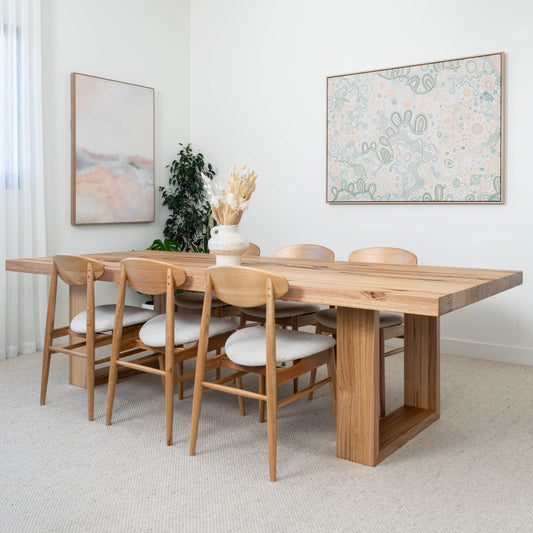
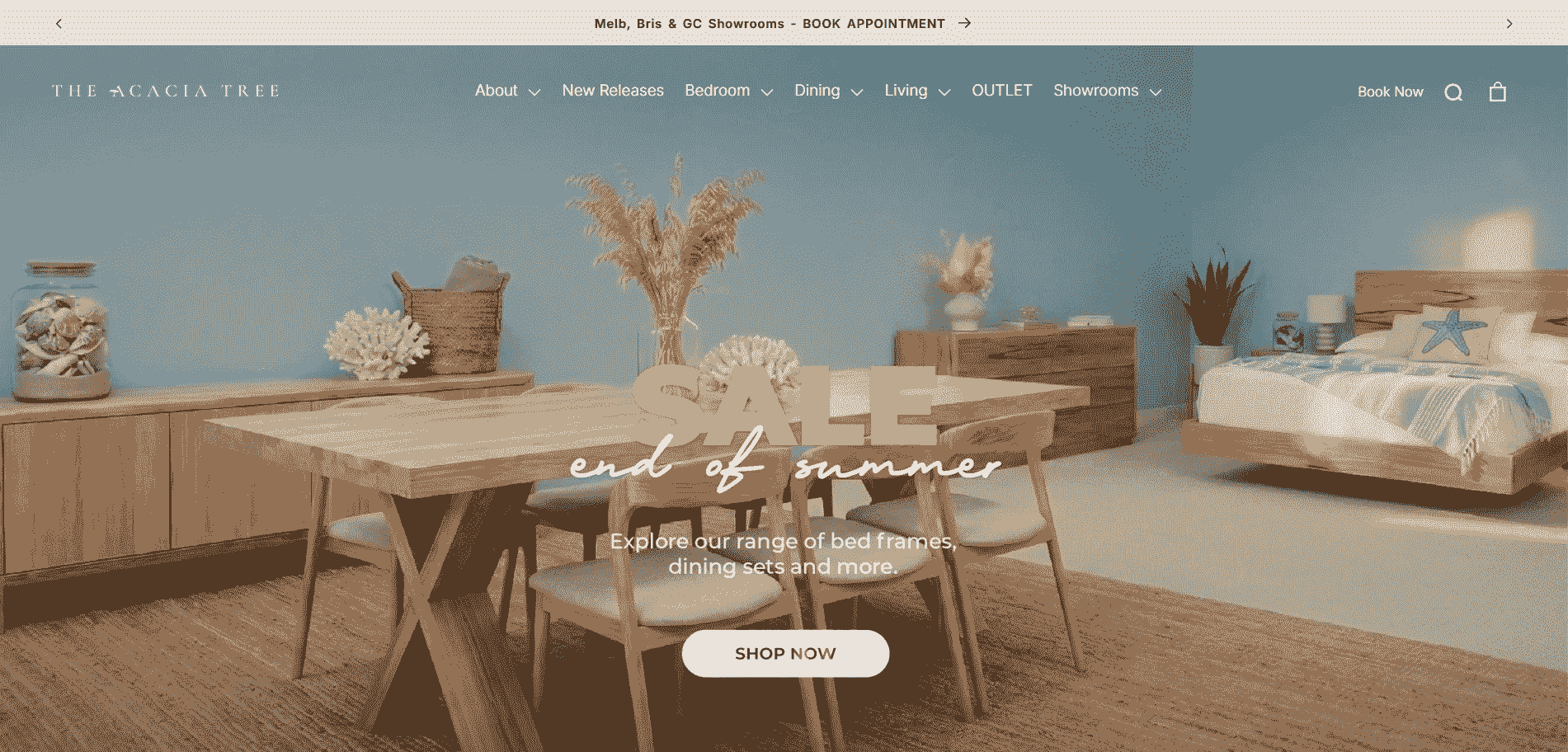
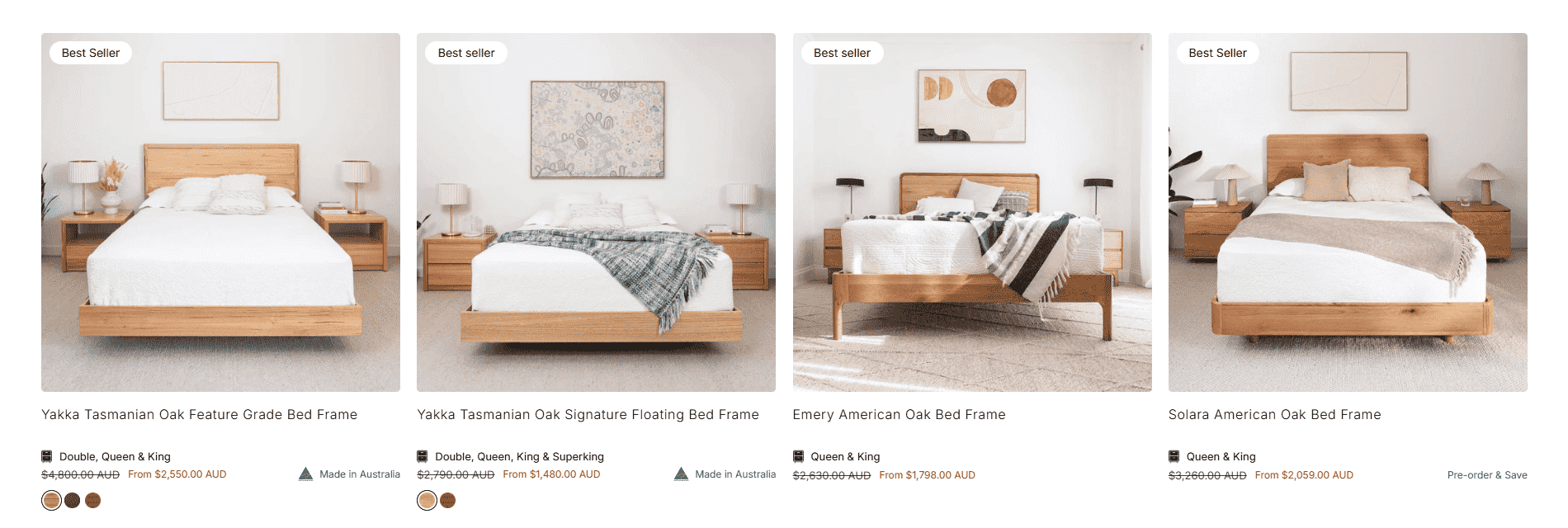
The Acacia Tree is a premium Australian solid timber furniture brand — selling handcrafted, Australian-made bedroom, dining, and living furniture through their Shopify store and three physical showrooms in Melbourne, Brisbane, and Gold Coast. With 5,000+ customer ratings, a strong sustainability ethos, and a growing product catalog spanning bed frames, dining tables, sofas, and accessories, their Shopify store carries significant visual weight through high-resolution product imagery.
What They Needed:
- Core Web Vitals improvements to meet Google’s performance standards — important for both search rankings and customer experience
- Page speed optimisation to ensure fast load times despite a high-imagery, feature-rich furniture store
- Reliable ongoing Shopify technical support to keep the store running smoothly as the product range and features evolve
A premium furniture store lives and dies on the quality of its product presentation — high-resolution imagery is non-negotiable. The challenge was delivering fast load times and strong Core Web Vitals without compromising the visual quality that sells premium timber furniture.
The Work We Did

Core Web Vitals Optimisation
What We Did:
Google’s Core Web Vitals (LCP, INP, CLS) are both a ranking factor and a direct measure of customer experience. For a premium furniture store with large product images, achieving “Good” scores across all three metrics required targeted, systematic work.
Audit & Assessment:
- Full Core Web Vitals audit across key pages (homepage, collection pages, product pages)
- Google PageSpeed Insights analysis (mobile and desktop)
- Chrome User Experience Report (CrUX) data review
- Identification of specific elements failing Core Web Vitals thresholds
- Waterfall analysis of page loading sequence
Largest Contentful Paint (LCP) — Improving Largest Element Load Time:
LCP measures how quickly the largest visible element (typically a hero image on a furniture store) loads. On The Acacia Tree, large hero and product images were the primary LCP challenge.
Fixes Implemented:
- Hero image preloading — <link rel=”preload”> for above-fold images
- Critical image prioritisation (fetchpriority=”high” on hero images)
- Image format conversion to WebP across hero and product imagery
- Correct image dimensions — serving appropriately sized images per device (srcset implementation)
- Elimination of render-blocking resources delaying LCP element display
- Server response time improvements
- Removal of unused third-party scripts delaying initial render
Interaction to Next Paint (INP) — Improving Responsiveness:
INP measures how quickly the page responds to user interactions — clicks, taps, and keyboard inputs. On a Shopify furniture store with cart functionality, quick add buttons, and collection filters, poor INP creates a sluggish feel.
Fixes Implemented:
- Long task identification and reduction in main thread JavaScript
- Third-party script deferral (non-critical apps and widgets)
- Input delay reduction on interactive elements
- Event handler optimisation on add-to-cart and product variant selection
- Shopify app script audit — deferred loading of non-essential app scripts
- Reduced JavaScript execution time on key user interaction paths
Cumulative Layout Shift (CLS) — Eliminating Visual Instability:
CLS measures unexpected layout shifts as the page loads — when elements move around as images and fonts load in. This is particularly problematic on furniture stores where product grid images load asynchronously.
Fixes Implemented:
- Explicit width and height attributes added to all product images (prevents layout shift as images load)
- Font loading optimisation (font-display: swap) to prevent text layout shifts
- Reserved space for lazy-loaded images (aspect ratio containers)
- Banner and promotional bar height fixed to prevent content jumping
- Navigation layout stabilised during font load
- Third-party widget reserved space (chat widgets, cookie banners)

Page Speed Optimisation
What We Did:
Beyond Core Web Vitals, we implemented broader page speed improvements to reduce overall page weight and improve loading across all pages — particularly important for mobile shoppers browsing a high-imagery furniture store.
Image Optimisation:
- Full image audit across homepage, collection pages, and product pages
- WebP format conversion across all product and lifestyle photography
- Compression applied without visible quality loss
- Lazy loading implemented for all below-fold images
- Correct image sizing (mobile, tablet, desktop variants via Shopify’s responsive image system)
- Navigation category images optimised (small, lazy-loaded)
- Cart and quick-view product thumbnails compressed
Code Optimisation:
- Unused CSS identification and removal
- JavaScript minification and deferral
- Render-blocking resource elimination
- Theme code review for unnecessary Liquid template renders
- Font subset loading (only characters used)
- Google Fonts self-hosting or preconnect optimisation
Shopify App Script Management:
- Full audit of installed apps contributing to page weight
- Non-critical app scripts deferred to post-load
- Removal of residual code from previously uninstalled apps
- App load order optimised (critical first, non-critical deferred)
Third-Party Script Optimisation:
- Calendly booking widget (showroom appointments) — deferred loading
- Social media scripts (Facebook, Instagram, TikTok pixels) — optimised loading
- Chat widget deferred until after page interactive
- Review app scripts deferred
Caching & Delivery:
- Shopify CDN configuration review
- Browser caching headers reviewed
- Preconnect hints for critical third-party origins
Key Pages Optimised:
- Homepage (highest traffic, hero images)
- Collection pages (Bedroom, Dining, Living — product grids)
- Individual product pages (multiple high-res images)
- Outlet / Sale page
- Showroom pages

Ongoing Shopify Technical Support
What We Do:
We provide ongoing technical support for The Acacia Tree’s Shopify store — handling day-to-day issues, monitoring performance, and supporting the team as the store grows and evolves.
Regular Technical Support:
Theme & Platform Maintenance:
- Shopify platform change monitoring and adaptation
- Theme update management and compatibility testing
- Post-update performance regression checks (ensuring speed improvements maintained)
- Liquid template fixes and adjustments
App & Integration Management:
- App conflict identification and resolution
- New app integration support and testing
- App performance monitoring
- Calendly showroom booking integration maintenance
Bug Fixes & Troubleshooting:
- Display issues across devices and browsers
- Cart and checkout flow issues
- Mobile layout fixes
- Collection and product page anomalies
- Navigation issues
Performance Monitoring:
- Ongoing Core Web Vitals monitoring
- PageSpeed regression checks after theme or app changes
- Proactive alerts if performance drops below threshold
- Regular performance health checks
Store Updates Support:
- New collection setup assistance
- Promotional and seasonal banner updates
- Homepage section updates
- New product listing support
- Outlet / sale section management
Showroom & Booking Integration:
- Calendly showroom appointment booking support
- Showroom page updates (Melbourne, Brisbane, Gold Coast)
Responsive Support:
- Prompt response to technical queries from The Acacia Tree team
- Clear communication on issue status and resolution timelines
- Proactive flagging of potential issues before they affect shoppers
What Was Delivered

LCP
Hero image preloading, WebP, fetchpriority, render-blocking removal

INP
Long task reduction, script deferral, interaction optimisation

CLS
Image dimensions, font loading, reserved spaces throughout

Page Speed
Images, code, app scripts, third-party scripts all optimised

Ongoing Support
Technical support retainer — monitoring, fixes, updates

Platform
Shopify
Technologies Used

Platform
- Shopify
- Liquid templating language

Performance Tools
- Google PageSpeed Insights
- Google Search Console (Core Web Vitals report)
- Chrome User Experience Report (CrUX)
- GTmetrix
- WebPageTest
- Shopify Speed Report

Optimisation
- WebP image format
- srcset responsive images
- Shopify CDN
- Resource preloading and preconnecting
- JavaScript deferral and minification

Integrations
- Calendly (showroom appointment booking)
- Google Analytics 4
- Meta Pixel
- TikTok Pixel
- Google Tag Manager
- Shop Pay / Apple Pay / Google Pay
ACT, The Acacia TreeOur store carries a lot of high-quality product imagery which is important for selling premium furniture online — but it was hurting our load times and Core Web Vitals scores. Chetaru worked through the performance issues systematically and made a real difference to our PageSpeed scores, particularly on mobile. The ongoing support gives us confidence that performance is being maintained and any issues get picked up quickly.
Is Your Shopify Store Slow
or Failing Core Web Vitals?
Slow Shopify stores lose customers and rankings. If your Core Web Vitals are in the red or your PageSpeed scores are dragging — we can audit and fix the issues systematically, then keep things performing through ongoing support.
What We Can Help With:
- Core Web Vitals audit and optimisation (LCP, INP, CLS)
- Page speed and image optimisation
- Shopify app script management
- Ongoing Shopify technical support
- Performance monitoring and maintenance


"*" indicates required fields