Magento vs WooCommerce in 2026: The Honest Comparison and When Each Wins
WooCommerce is the right choice for most stores under £2M annual GMV; Magento (now Adobe Commerce) starts to win above that, with the crossover often landing between £2M and £10M depending on catalogue complexity and integration load. According to BuiltWith’s ecommerce platform tracker, WooCommerce powers more than 30% of all online stores by URL count […]


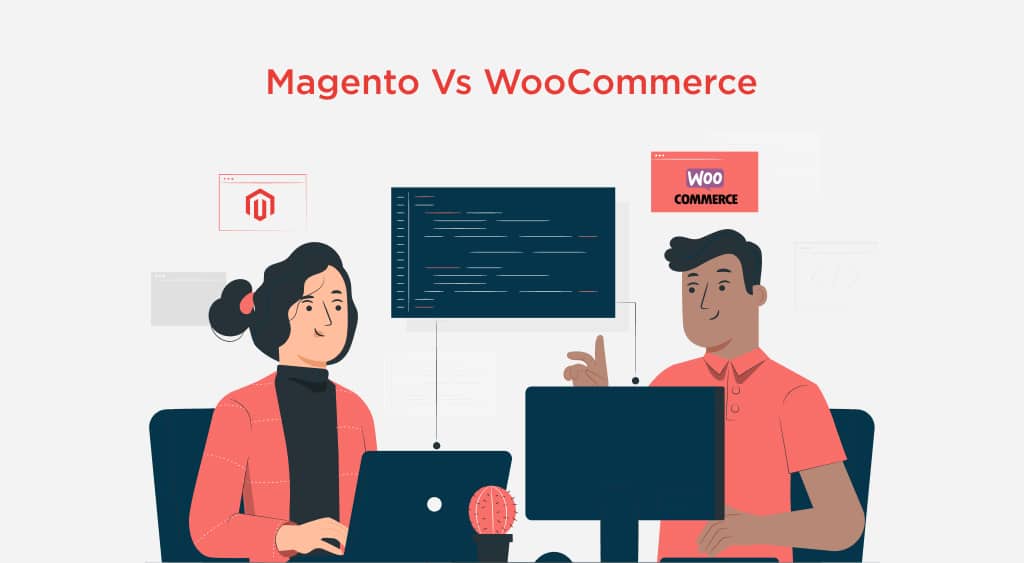
Table of Contents 
More Growth? > More leads...
We are ready to work with your business and generate some real results…
Let's TalkJoin Our Community: Subscribe for Updates
Get notified of the best deals on our WordPress themes.
WooCommerce is the right choice for most stores under £2M annual GMV; Magento (now Adobe Commerce) starts to win above that, with the crossover often landing between £2M and £10M depending on catalogue complexity and integration load. According to BuiltWith’s ecommerce platform tracker, WooCommerce powers more than 30% of all online stores by URL count in 2026, while Magento and Adobe Commerce together hold a far smaller share by URL but a disproportionate share of mid-market and enterprise GMV. According to Adobe’s Commerce documentation, Adobe Commerce is now the supported enterprise SKU; Magento Open Source remains free but with reduced ecosystem investment. The framing in older articles (Magento for big stores, WooCommerce for small) is still directionally right, but the dividing lines have shifted in 2026.
Key Takeaways: WooCommerce wins for stores under £2M GMV, simple catalogues, single-store setups, and teams already on WordPress. Magento (Adobe Commerce) wins for stores above £5M GMV, complex catalogues (10,000+ SKUs), multi-store/multi-region operations, and B2B with custom pricing. The £2M to £5M range is the contested middle, where catalogue complexity, integration count, and roadmap matter more than GMV alone. Total cost of ownership for a serious WooCommerce build (£15k to £50k) is roughly 30 to 60% of an equivalent Magento build. The wrong choice in either direction adds 12 to 24 months of friction.
What is the actual difference between Magento and WooCommerce in 2026?
The two platforms solve the same problem (run an online store) with different architectural assumptions. The core differences:
The structural differences:
- WooCommerce is a WordPress plugin. It bolts ecommerce onto a content-management system. Strengths: low setup cost, large theme/plugin ecosystem, simple for content-heavy stores. Trade-off: every WordPress decision (hosting, page builder, plugin stack) becomes a commerce decision.
- Magento (Adobe Commerce) is a dedicated ecommerce platform. It is built from the ground up for commerce: catalogue, pricing rules, inventory, B2B workflows, multi-store. Trade-off: higher complexity, more expensive hosting, longer build timelines.
- WooCommerce extends through plugins. Most features arrive as third-party extensions. Quality varies; integration stacking adds maintenance overhead over time.
- Magento includes most features natively. Multi-store, advanced pricing, customer segmentation, B2B accounts, and complex catalogue rules are built-in. Less plugin sprawl, more configuration overhead.
The 2026 line: the choice is not really “Magento or WooCommerce”. It is “do you need a dedicated commerce platform, or is commerce a feature added to a content site?” Stores where content drives commerce (editorial, niche brands, services with a small product side) lean WooCommerce. Stores where commerce is the whole business (catalogue-heavy retail, B2B, multi-region) lean Magento.
What does each platform actually cost to build and run in 2026?
The cost ranges below are honest UK ranges for production-grade builds. Cheap end is freelancer or low-tier agency; high end is mid-market agency with proper discovery and architecture.
UK build cost by platform and scope:
| Scope | WooCommerce build | Magento (Adobe Commerce) build | Timeline |
|---|---|---|---|
| Small store (under 200 SKUs, single site) | £5,000 to £15,000 | £20,000 to £45,000 | 4 to 10 weeks |
| Mid-market (200 to 2,000 SKUs, some integrations) | £15,000 to £50,000 | £40,000 to £120,000 | 8 to 20 weeks |
| Complex (2,000+ SKUs, multi-store, B2B, ERP integration) | £40,000 to £100,000 (with limits) | £80,000 to £300,000+ | 16 to 40+ weeks |
Annual running costs in 2026:
- WooCommerce. £1,500 to £8,000 per year for hosting, plugin licences, SSL, and security/maintenance retainer. Can be lower for very small stores; higher with premium hosting like Kinsta or WP Engine on bigger catalogues.
- Magento Open Source. £6,000 to £25,000 per year. No licence fee, but hosting (typically dedicated or cloud), security patches, and maintenance retainer cost more.
- Adobe Commerce (licensed). £25,000 to £200,000+ per year in licence alone, depending on GMV and edition. Plus hosting and maintenance.
What people forget to budget for:
- Maintenance retainers. Both platforms need ongoing developer time. WooCommerce typically £200 to £1,000 per month; Magento typically £1,000 to £5,000+ per month.
- Plugin/extension churn. WooCommerce stores accumulate 30 to 80 plugins over time; some go unmaintained or paid-tier. Audit annually.
- Hosting upgrades. Both platforms outgrow shared hosting fast. Budget for moves up the hosting tier as GMV grows.
The honest framing: WooCommerce costs less to build and run, but accumulates technical debt faster on complex stores. Magento costs more upfront, but absorbs complexity better. Pick the cost model that matches the trajectory of the business.
When does WooCommerce actually win?
WooCommerce is the right answer in more cases than enterprise-Magento marketing admits. Five clear-win scenarios:
The WooCommerce-wins:
- Content-led commerce. Editorial sites, niche brand sites, service businesses with a small product range. WordPress is the natural choice; commerce is the bolt-on.
- Sub-£2M GMV with simple catalogues. Under 500 SKUs, single store, simple pricing. WooCommerce handles this comfortably with proper hosting.
- Solo founders or small teams. WooCommerce’s lower setup cost and shallower learning curve match founder-led businesses. Magento usually needs a developer on retainer from day one.
- Existing WordPress investment. Companies already running WordPress for marketing or content extend naturally to WooCommerce. Migrating to Magento means running two CMSs.
- B2C with standard product types. Physical goods, digital downloads, simple subscriptions. WooCommerce native or with proven extensions like WooCommerce Subscriptions or WooCommerce Bookings.
What makes a WooCommerce store fail:
- Catalogue exceeding 5,000 SKUs without serious database optimisation.
- Plugin sprawl. Too many extensions stacking on each other creates fragile builds. Audit and prune annually.
- Cheap hosting. Shared WordPress hosting hits its limits fast under commerce load. Move to dedicated WooCommerce hosts like Kinsta, WP Engine, or WooCommerce-specific hosts above £500k annual GMV.
- Trying to bend WooCommerce into B2B with custom pricing. Possible but painful; Magento is purpose-built for this.
The 2026 reality: most UK SMB ecommerce stores should run on WooCommerce. The crossover to Magento happens later than agency sales conversations imply.
When does Magento (Adobe Commerce) actually win?
Magento earns its higher cost when the store has structural complexity that WooCommerce cannot absorb cleanly. Five clear-win scenarios:
The Magento-wins:
- GMV above £5M with growth ahead. At scale, Magento’s architecture pays back. Below £5M, the cost premium is hard to justify.
- 10,000+ SKUs or complex catalogue structures. Configurable products with many variants, bundled products, tiered pricing, hierarchical category trees. Magento handles these natively.
- Multi-store, multi-region, multi-language operations. One Magento admin can manage multiple storefronts with shared catalogues and currency-specific pricing. WooCommerce can do this with plugins but the seams show.
- B2B with custom pricing, account hierarchies, quote workflows. Adobe Commerce’s B2B features (company accounts, shared catalogues, negotiable quotes, requisition lists) are best-in-class.
- Heavy ERP/PIM/OMS integration. Magento’s API-first architecture and mature integration patterns handle enterprise integration loads better than WooCommerce.
What makes a Magento store fail:
- Under-resourcing the development team. Magento needs a dedicated developer or agency. Solo founders building Magento usually stall.
- Cheap hosting. Magento on under-spec hosting performs badly. Use dedicated Magento hosts like Adobe Commerce Cloud, Sonassi, or Magento-specific cloud setups.
- Skipping the upgrade roadmap. Magento versions need active maintenance; falling 2+ versions behind creates upgrade hell.
- Choosing Magento for a simple store. £40k build for a £400k GMV store rarely pays back; WooCommerce would do the job.
The 2026 reality: Magento is the right answer for the top 5 to 10% of stores by complexity. For the rest, it is over-engineered.
How do the two platforms compare on the things that matter most?
A side-by-side on the dimensions that drive actual outcomes:
The honest comparison:
- Setup time. WooCommerce: 1 to 4 weeks for a simple store. Magento: 8 to 20 weeks for mid-market. Speed-to-launch usually favours WooCommerce.
- Total cost of ownership over 3 years. WooCommerce: 30 to 60% of equivalent Magento for stores under £2M GMV. Above £5M GMV, the gap narrows; above £10M, Magento can be cheaper because plugin sprawl on WooCommerce overtakes Magento’s licence cost.
- Performance under load. Magento purpose-built for high catalogue/traffic combinations; WooCommerce with strong hosting handles up to mid-market loads. Performance audits matter more than platform choice.
- SEO. Roughly equal. Both can produce strong technical SEO with proper configuration. WooCommerce inherits WordPress SEO ecosystem (Yoast, Rank Math). Magento has solid built-in SEO features.
- Security. Both platforms have strong security when maintained. Both create risk when neglected. WooCommerce’s plugin model creates more attack surface; Magento’s complexity creates more configuration risk.
- Customisation ceiling. Magento higher; WooCommerce lower but adequate for most use cases. The bottleneck is usually developer skill, not platform limit.
- Future-proofing. Both are actively developed in 2026. WooCommerce roadmap is community-driven; Adobe Commerce roadmap is enterprise-vendor-driven. Different risk profiles.
The 2026 line on platform comparison: neither is technically “better”. The right platform is the one whose architecture matches the business shape. Picking based on feature lists usually leads to expensive mismatches.
How do you actually decide which one to use?
A decision framework that reflects 2026 realities:
The five-question decision matrix:
- What is your current and forecast 24-month GMV? Under £2M and stable → WooCommerce. £2M to £5M and growing → contested middle; needs deeper analysis. Above £5M → Magento likely.
- How many SKUs and how complex is the catalogue? Under 500 simple SKUs → WooCommerce comfortable. 500 to 5,000 mixed → either, with WooCommerce needing good hosting. 5,000+ or complex variants → Magento.
- Are you running multi-store/multi-region/B2B? Yes → Magento heavily favoured. No → WooCommerce often enough.
- What is the team’s technical capacity? Strong dev team or agency budget → either works. Solo founder or small team → WooCommerce.
- What is the existing tech stack? Already on WordPress → WooCommerce is the path of least resistance. Greenfield → either, decide on the other questions.
What the score means:
- Strong WooCommerce signals across the board. Build on WooCommerce. Invest in good hosting and a focused plugin stack.
- Mixed signals. Map the 24-month roadmap; if growth or complexity is coming, lean Magento. Otherwise, WooCommerce with a planned migration option.
- Strong Magento signals. Magento (or Adobe Commerce) is the right call. Budget realistically and resource the team.
The mistake that creates 24 months of friction: choosing Magento for a small store because it sounds “more professional”, or choosing WooCommerce for a complex store because it is cheaper. Both are recoverable, but only at significant migration cost.
How does AI change the platform choice in 2026?
AI tools are improving the ergonomics of both platforms but not changing the underlying choice. Three shifts worth naming:
The three AI-shifts:
- AI-assisted theme and template generation. Both platforms now have AI tools that generate themes faster. Effect: WooCommerce setup time drops further; Magento setup time drops less because the bottleneck is configuration, not design.
- AI-driven personalisation features. Adobe Commerce’s AI personalisation (via Adobe Sensei) is more mature than WooCommerce’s plugin-driven AI options. Magento gains a marginal edge for personalisation-heavy stores.
- AI-generated product content. Same impact on both: faster product descriptions, faster SEO copy, faster category content. The platform is incidental.
What AI does not change:
- The structural fit between platform and business size/complexity.
- The cost gap between WooCommerce and Magento builds.
- The maintenance burden of plugin sprawl.
The 2026 line on AI and platform choice: AI improves both platforms; it does not collapse the choice between them. Pick on structural fit, then layer AI on top.
Frequently asked questions
Is Magento dead? Did Adobe kill it?
No. Adobe rebranded Magento Commerce as Adobe Commerce in 2021 and continues active development. Magento Open Source is also still maintained, though community contribution has slowed. Both are supported through at least 2027.
Can WooCommerce handle a £10M store?
Yes, with proper hosting, performance optimisation, and a tight plugin stack. The friction increases above this level, but stores up to £25M GMV on WooCommerce are not rare in 2026.
Should we migrate from WooCommerce to Magento?
Only if you have hit a structural wall: catalogue complexity WooCommerce cannot absorb, performance issues that hosting alone cannot fix, or B2B requirements WooCommerce plugins handle badly. Otherwise, optimise WooCommerce first. Migrations cost £30k to £150k+ and take 4 to 9 months; not undertaken lightly.
Should we migrate from Magento to WooCommerce?
Rarely the right move. Most Magento stores migrate because they over-engineered upfront, but the migration cost usually exceeds the long-term savings. The exception: simple Magento stores under £500k GMV where the platform is genuinely the wrong fit.
Shopify is also an option. Why is this comparison just Magento vs WooCommerce?
Fair point. In 2026, Shopify is the obvious third option, especially Shopify Plus for mid-market. The Shopify vs Magento vs WooCommerce comparison deserves its own piece. The short version: Shopify wins on speed and simplicity; the trade-off is less customisation and ongoing platform fees.
What this means in practice
The Magento vs WooCommerce decision in 2026 comes down to structural fit, not feature lists. WooCommerce wins for under-£2M GMV, content-led commerce, and teams already on WordPress. Magento (Adobe Commerce) wins for above-£5M GMV, complex catalogues, multi-store, and B2B. The contested middle (£2M to £5M) is where catalogue complexity, integration load, and 24-month roadmap matter more than current GMV. TCO favours WooCommerce at small scale and starts to converge at enterprise scale. Pick on structural fit and the platform supports the business; pick on price or marketing claims and the business carries the platform.
For related reading, see our guides on pros and cons of Magento, pros and cons of WooCommerce, and the risks of neglecting Magento maintenance.
Continue reading

Screen Sizes for Web Design: What to Build For in 2026 (Real Data, Not Guesses)

The Ecommerce Sales Funnel Blueprint: Convert More, Grow Faster