Understanding Cumulative Layout Shift (CLS): A Comprehensive Guide

What is Cumulative Layout Shift (CLS)?

Cumulative Layout Shift (CLS) is a metric that measures how much a webpage’s content moves around while it loads. This movement, called “layout shift,” can happen when elements like images, ads, or fonts load at different times. When these elements load and shift the position of other content on the page, it cannot be enjoyable for users.

Imagine you are reading an article online. Suddenly, an ad pops up, causing the text to jump, and you lose your place. This is an example of a layout shift. CLS helps us measure how often and how much these shifts happen on a webpage.

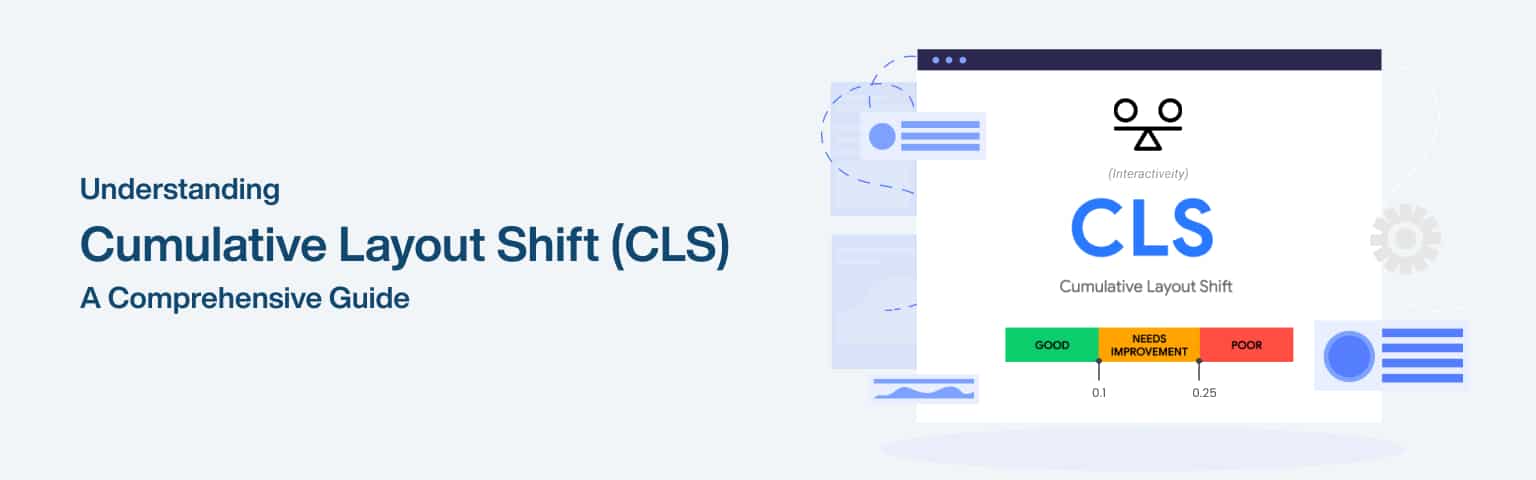
A good CLS score means the page is stable and doesn’t have many shifts. Google recommends a CLS score of 0.1 or less for a good user experience. A higher score means the page has more unexpected movements, which can frustrate visitors.

Here’s how CLS works:

  • Every time content moves, it adds to the CLS score.
  • More prominent movements have a higher impact on the score.
  • More frequent movements also increase the score.

Keeping the CLS score low ensures your webpage is smooth and stable, making it easier for people to read and interact with your content.

How CLS is Measured?

Cumulative Layout Shift (CLS) is measured by how many visible elements on a webpage move around while the page is loading. Here’s a simple way to understand how CLS is calculated:

Start with Layout Shift Events: 

When a webpage loads, any visible element, such as text, images, or buttons, can move. Each time an element moves, it creates a layout shift event.

Measure Impact Fraction: 

We measure the “impact fraction for each layout shift event.” This is the area of the screen that is affected by the movement. For example, if an image moves down and takes up half the screen, the impact fraction is 0.5.

Measure Distance Fraction: 

Next, we measure the “distance fraction.” This is how far the element has moved relative to the screen size. If the image moves down by 25% of the screen height, the distance fraction is 0.25.

Calculate Layout Shift Score: 

We multiply the impact fraction by the distance fraction to get the layout shift score for each event. For example, if the impact fraction is 0.5 and the distance fraction is 0.25, the layout shift score for that event is 0.125 (0.5 * 0.25).

Sum Up the Scores: 

The CLS score is the sum of all layout shift scores for a webpage. If multiple shifts exist, we add their scores to get the total CLS score.

Here’s a quick example:

  • An image moves down and affects 50% of the screen (impact fraction = 0.5).
  • The image moves down by 25% of the screen height (distance fraction = 0.25).
  • The layout shift score is 0.125 (0.5 * 0.25).
  • If another element moves and has a score of 0.05, the total CLS score is 0.175 (0.125 + 0.05).

A good CLS score is 0.1 or less. Keeping your CLS score low ensures your webpage is stable and user-friendly.

Common Causes of High CLS

High Cumulative Layout Shift (CLS) scores happen when elements on your webpage move around unexpectedly while the page is loading. Here are some common causes of high CLS:

Images Without Dimensions: 

When you add photos to your page without specifying their width and height, the browser must know how much space to reserve. As a result, the layout can shift when the images finally load.

Ads, Embeds, and Iframes Without Dimensions: 

Similar to images, if you don’t set dimensions for ads, embedded content, or iframes, they can cause sudden layout shifts when they load. This is especially true for ads, which load slower than other elements.

Dynamically Injected Content: 

Adding new content to the page via JavaScript, such as pop-ups, banners, or new sections, can push other content around. If this content is added above existing content, it can create a significant shift.

Web Fonts Causing FOIT/FOUT: 

When web fonts load, text can appear differently than when the page initially loads. This can lead to a Flash of Invisible Text (FOIT) or a Flash of Unstyled Text (FOUT), which can cause layout shifts.

Slow Server Responses:

If your server is slow to respond, elements on your page may load at different times, causing page parts to move around as they load.

Content Loading Late: 

Sometimes, elements like images, ads, or iframes load slower than the rest of the page, causing layout shifts when they finally appear.

By understanding these common causes, you can take steps to reduce CLS and create a more stable and enjoyable user experience on your website.

Best Practices to Improve CLS

Improving Cumulative Layout Shift (CLS) is essential for a smooth and stable webpage. Here are some best practices to help you achieve a low CLS score:

Include Size Attributes for Images and Videos: 

Always set the width and height for your images and videos. This helps the browser allocate the right amount of space for these elements, preventing unexpected shifts when they load.

Reserve Space for Ads and Embeds: 

Allocate space for ads, embeds, and iframes before they load. Use CSS to define the height and width of these elements. This prevents them from pushing other content around when they appear.

Avoid Inserting Content Above Existing Content:

When adding new content to your page, place it below existing content whenever possible. This way, you avoid pushing the content down and causing layout shifts.

Use Transform Animations: 

For animations and transitions, use CSS properties like transform instead of properties that cause reflows, like width or height. Transform animations don’t affect the layout and are smoother.

Load Web Fonts Efficiently: 

Use font-display: swap in your CSS. This ensures that text is displayed with a fallback 

font while the custom font loads, reducing the risk of layout shifts caused by font changes.

Preload Important Resources: 

Preload essential resources like fonts and images. This ensures they load quickly and reduces the chance of layout shifts caused by slow-loading elements.

Use tools like Google PageSpeed Insights and Lighthouse to check your CLS score regularly. Make adjustments as needed to keep your score low.

Following these best practices ensures that your webpage remains stable and provides a better user experience.

Tools to Measure and Analyze CLS

To ensure your webpage has a low Cumulative Layout Shift (CLS) score, you need the right tools to measure and analyze it. Here are some valuable tools to help you:

Google PageSpeed Insights:

This tool analyzes your webpage and provides a detailed report on its performance, including the CLS score. It also suggests ways to improve your page’s stability.

Lighthouse in Chrome DevTools: 

Lighthouse is a powerful tool built into Chrome DevTools. It provides an in-depth audit of your webpage, including CLS. To use it, open Chrome DevTools, go to the “Lighthouse” tab and run an audit.

Web Vitals Chrome Extension: 

This browser extension gives real-time feedback on your web page’s Core Web Vitals, including CLS. It’s a handy tool for quick checks and immediate insights while you browse.

Google Search Console:

The Core Web Vitals report in Google Search Console shows you how your website performs based on user data. It highlights pages with high CLS and provides insights on where to focus your improvements.

WebPageTest: 

This tool allows you to run detailed performance tests on your website. It provides a breakdown of CLS and other metrics, helping you understand and fix issues causing layout shifts.

GTmetrix: 

GTmetrix analyzes your webpage and offers a comprehensive report, including the CLS score. It also provides actionable recommendations to improve your page’s performance and stability.

Using these tools, you can regularly monitor and analyze your webpage’s CLS score, ensuring your site remains user-friendly and stable.

Step-by-Step Guide to Fixing CLS Issues

Fixing Cumulative Layout Shift (CLS) issues is essential for a stable and user-friendly webpage. Here’s a simple step-by-step guide to help you:

Identify CLS Issues

Use tools like Google PageSpeed Insights, Lighthouse, or the Web Vitals Chrome Extension to check your CLS score. Look for specific elements causing layout shifts in the reports provided by these tools.

Set Size Attributes for Images and Videos

Ensure all images and videos have defined width and height attributes in your HTML or CSS. This helps the browser reserve suitable space while the elements load.

Reserve Space for Ads and Embeds

Using CSS, define the dimensions for ads, iframes, and other embedded content. Allocate enough space to prevent these elements from pushing other content around when they load.

Avoid Content Insertion Above Existing Content

When adding new content, place it below the existing content whenever possible. This prevents pushing down the content that users are already viewing.

Use Transform for Animations

Use CSS transform properties for animations instead of properties like width, height, or margin. Transform animations do not cause reflows and help keep the layout stable.

Optimize Web Fonts

Use the font-display swap property in your CSS. This ensures the text is visible with a fallback font until the custom font loads. This prevents layout shifts caused by font loading.

Preload Key Resources

Preload necessary resources like fonts and large images to ensure they load quickly. Use the <link rel= “preload”> tag in your HTML.

Monitor and Test Regularly

Check your CLS score regularly using the tools mentioned earlier. Test your site after making changes to ensure the improvements are adequate.

Fix Issues Highlighted by Tools

Follow the specific recommendations provided by tools like Google PageSpeed Insights and Lighthouse. Address each issue methodically to reduce your CLS score.

Following these steps can reduce your CLS score, ensuring your webpage remains stable and user-friendly.

The Impact of CLS on SEO and Conversions

Cumulative Layout Shift (CLS) affects both SEO and conversions on your website. Here’s how:

User Experience

High CLS means the page shifts unexpectedly, which frustrates users. Frustrated users are likelier to leave your site quickly, leading to a higher bounce rate.

SEO Rankings

Google considers user experience to be a ranking factor. A good CLS score helps improve your website’s overall performance in Google’s Core Web Vitals. Better scores can increase search engine rankings, making your site more visible to potential visitors.

Conversions

Stable pages provide a better user experience, making visitors more likely to stay and interact with your content. Fewer layout shifts mean users can easily click buttons and links, reducing the chance of misclicking. A pleasant browsing experience increases the chances of visitors converting into customers.

Trust and Credibility

A stable and well-performing website builds trust with your visitors. Users are more likely to return to a site that offers a smooth and reliable experience.

Maintaining a low CLS score enhances your site’s user experience, positively impacting 

SEO and conversion rates. A stable site ranks better and keeps visitors happy, encouraging them to stay longer and engage more with your content.

Improving Largest Contentful Paint (LCP) for Faster Website Loading

Website performance is crucial in the digital age. One key metric to focus on is Largest Contentful Paint (LCP). LCP measures how quickly the most significant content on your page loads, such as an image, a video, or a large block of text.

Good LCP improves user experience. Users prefer sites that load quickly. A fast-loading site keeps users engaged and reduces bounce rates.

What is the Largest Contentful Paint (LCP)?

The Largest Contentful Paint (LCP) measures how long a web page’s primary content loads. This leading content is usually the most significant visible element on the page, such as an image, video, or large text block.

LCP is crucial because it shows how quickly users see valuable content on their screens. Users 

might leave the site before it loads if the main content takes less time. A fast LCP helps keep users engaged and improves their overall experience.

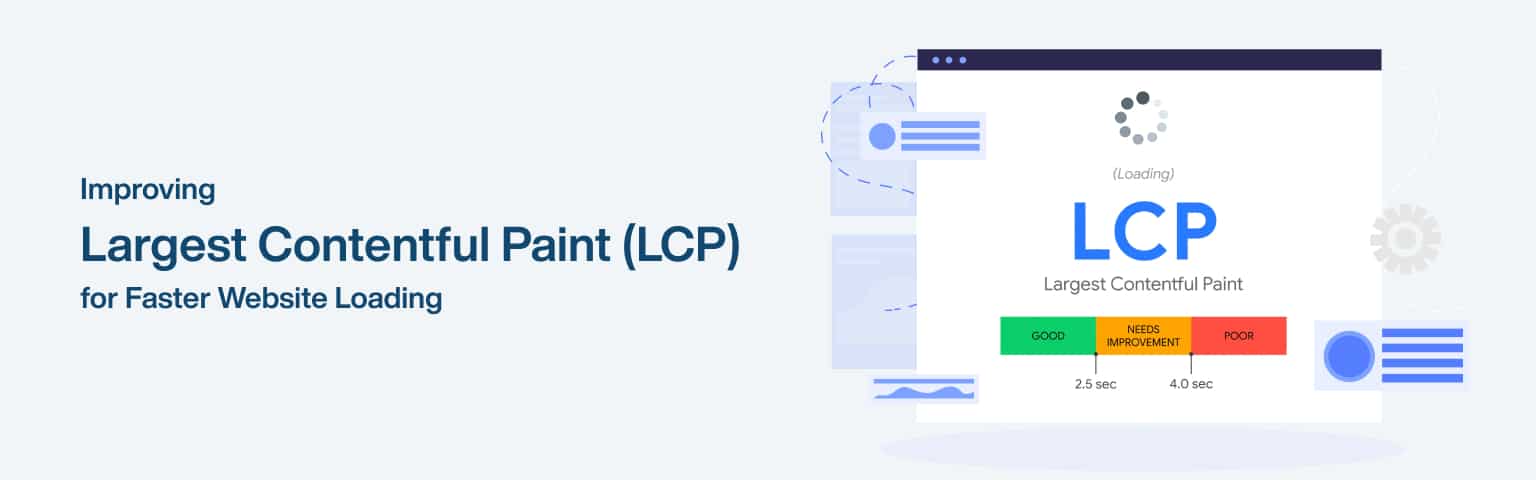
For a good user experience, aim for an LCP of 2.5 seconds or less. The main content should appear quickly, making the site feel fast and responsive.

How LCP is Measured

Measuring Largest Contentful Paint (LCP) helps us understand how quickly the main content of a page loads. Here’s how it works:

Identify the Largest Content: 

LCP looks for the most significant visible element on the page. This could be a large image, video, or a big block of text.

Track Loading Time: 

It measures when the page starts loading and when this most significant element is evident on the screen.

Use the Right Tools: 

To measure LCP, you can use tools like:

  • Google PageSpeed Insights: This tool gives you a detailed report on your website’s performance, including LCP.
  • Lighthouse: Built into Chrome DevTools, it helps you run performance audits.
  • Web Vitals Chrome Extension: This provides real-time feedback on LCP and other Core Web Vitals.
  • Google Search Console: It offers a Core Web Vitals report that tracks LCP scores over time.

Understand the Scores:

  • Good: LCP under 2.5 seconds.
  • Needs Improvement: LCP between 2.5 and 4 seconds.
  • Poor: LCP over 4 seconds.

By measuring LCP, you can see how long it takes for the most essential part of your page to load. This helps you find areas for improvement and makes your website faster and more user-friendly.

Factors Affecting LCP

Several factors can affect your web page’s Largest Contentful Paint (LCP). Here are the key ones:

Server Response Time:

  • Explanation: Slow server response times delay the loading of your content.
  • Solution: Use a fast and reliable server. Consider using a Content Delivery Network (CDN) to speed up delivery.

Resource Load Times:

  • Explanation: Large images, videos, or heavy CSS and JavaScript files take longer to load.
  • Solution: Optimize and compress images. Minify CSS and JavaScript files to reduce their size.

Client-Side Rendering:

  • Explanation: Heavy JavaScript processing can delay the rendering of your page.
  • Solution: Reduce the amount of JavaScript and use efficient coding practices.

Render-Blocking Resources:

  • Explanation: CSS and JavaScript files that block the main content from loading can increase LCP time.
  • Solution: Load critical CSS inline and defer non-essential JavaScript.

Addressing these factors can improve your LCP score, ensure your main content loads quickly, and provide a better user experience.

Strategies to Improve LCP

Improving Largest Contentful Paint (LCP) is critical to enhancing your website’s user experience. Here are some effective strategies:

Optimize Server Performance:

  • Explanation: Fast server response times reduce delays in loading content.
  • Solution: Use a Content Delivery Network (CDN) to distribute content faster. Optimize your server settings for better performance.

Optimize and Load Resources Efficiently:

  • Explanation: Large images, videos, and files can slow your page.
  • Solution: Compress and optimize images to reduce their size. Minify CSS and JavaScript files to make them load faster. Preload essential resources to ensure they are ready quickly.

Reduce Client-Side Rendering Times:

  • Explanation: Heavy JavaScript processing can delay content rendering.
  • Solution: Optimize JavaScript code and reduce the use of heavy frameworks. Use efficient coding practices to speed up client-side rendering.

Eliminate Render-Blocking Resources:

  • Explanation: CSS and JavaScript files that block the main content from loading can increase LCP time.
  • Solution: Load critical CSS inline to make it available quickly. Defer non-essential JavaScript to prevent it from blocking the main content.

Tools and Resources for Monitoring and Improving LCP

Monitoring and improving Largest Contentful Paint (LCP) is essential for a fast and user-friendly website. Here are some tools and resources to help you:

Google PageSpeed Insights

  • Explanation: This tool analyzes your website and provides a detailed report on its performance, including LCP.
  • How to Use: Enter your URL, and PageSpeed Insights will give you a score and suggestions for improvement.

Lighthouse

  • Explanation: Built into Chrome DevTools, Lighthouse runs performance audits on your website.
  • How to Use: Open Chrome DevTools, go to the “Lighthouse” tab and run an audit to get insights on your LCP and other metrics.

Web Vitals Chrome Extension

  • Explanation: As you browse, this extension provides real-time feedback on Core Web Vitals, including LCP.
  • How to Use: Install the extension, showing you the LCP score for any page you visit.

Google Search Console

  • Explanation: Search Console tracks your website’s performance over time and offers a Core Web Vitals report.
  • How to Use: Access the “Core Web Vitals” report in the Search Console to see your LCP scores and identify pages that need improvement.

Image Optimization Tools

  • Explanation: Tools like TinyPNG or ImageOptim help reduce image sizes without losing quality.
  • How to Use: Upload your images to these tools to compress them before adding them to your website.

Minification Tools

  • Explanation: Tools like UglifyJS and CSSNano help minify your JavaScript and CSS files.
  • How to Use: Use these tools to reduce the size of your files, making them load faster.

Using these tools and resources, you can effectively monitor and improve your LCP. This will help your website load faster, enhance the user experience, and boost your search engine rankings.

How To Start A Business Without Investment

Starting a business without investment may seem daunting, but it’s possible with the right approach and mindset. Many successful entrepreneurs have launched their ventures with little to no initial funding, relying instead on creativity, resourcefulness, and strategic planning. Whether you want to turn a passion into a profitable venture or explore new opportunities, this guide will provide practical steps to kickstart your business journey without financial constraints. From finding the perfect business idea to building a brand and pre-selling your products or services, we’ll walk you through the essentials to get your business off the ground without breaking the bank.

Find a Free Business Idea

Finding a free business idea is the first step toward launching a successful venture without significant upfront costs. By leveraging your skills, passions, and resources, you can identify opportunities requiring minimal financial investment. Explore innovative and low-cost business concepts that can be started from home or online, setting the foundation for your entrepreneurial journey.

Service-Based Ideas

Freelance Writing

Use your writing skills to create blog content, articles, and websites. Many businesses need good writers to help them share their message and reach more people. You can work from home and set your own hours.

Virtual Assistant

Support businesses by handling tasks like scheduling, email management, and data entry from your home. As a virtual assistant, you help busy professionals stay organized and focus on what they do best. You only need a computer and internet connection to get started.

Social Media Management

Help small businesses manage their social media accounts. Create posts, respond to comments, and build online communities for them. This service is in high demand as many businesses want to improve their online presence but lack the time or skills to do it themselves.

Online Business Ideas

Affiliate Marketing

Promote products from other companies on your website or social media. When someone buys through your referral link, you earn a commission. This way, you can make money by recommending products you like and trust without creating or stocking anything yourself.

Dropshipping

Start an online store and sell products without keeping any inventory. You partner with suppliers who ship products directly to your customers. This means you don’t need to worry about storing or shipping items, making it a low-cost way to start a business.

Creative Business Ideas

Graphic Design

Use your artistic skills to create logos, websites, and business marketing materials. Many companies need eye-catching designs to attract customers. You can offer your services online and work with clients from anywhere.

Photography

Provide photography services for events, portraits, or product photos. Capture special moments at weddings or take professional pictures for businesses to use in their marketing. You can start offering your services locally or online with a good camera and some practice.

Consulting and Coaching Ideas

Business Consulting

Offer expert advice and strategies to help businesses improve their operations. Use your experience and knowledge to guide them in marketing, management, and efficiency. Businesses often need outside perspectives to see where they can grow and improve.

Life Coaching

Support individuals in achieving their personal or professional goals. As a life coach, you listen, guide, and motivate people to reach their full potential. Your guidance can make a big difference whether they want to advance in their careers or improve their personal lives.

Educational and Training Ideas

Online Tutoring

Teach subjects or skills to students or professionals over the internet. Share your knowledge in areas like math, languages, or computer skills. You can help learners from anywhere improve and succeed with video calls and online resources. This flexible and rewarding job lets you work from home and set your own schedule.

Create a Business Blueprint

Creating a business blueprint is essential for turning your idea into a successful venture. This detailed plan outlines every aspect of your business, from market analysis to financial projections, guiding you through each step of the process. By developing a comprehensive blueprint, you set a strong foundation for your business, helping you stay focused, organized, and prepared for future growth. 

Executive Summary

Provide a brief overview of your business idea and goals. This section should summarize your business and what you aim to achieve. Keep it concise and clear to give readers a quick understanding of your vision.

Business Description

Give a detailed description of your business. Explain what products or services you offer, your target customers, and what makes your business unique. This section should paint a clear picture of your business for anyone reading it.

Market Analysis

Research and present findings on industry trends, your target market, and competitors. This section helps you understand where your business fits in the market and how you can stand out. Include data and insights that support your business idea.

Organization and Management

Outline your business’s structure. List key leadership roles and their responsibilities. Explain how your team is organized and how it will help your business succeed.

Marketing and Sales Strategy

Detail your plan for attracting and retaining customers. Explain which marketing channels you will use and what sales tactics you will implement. This section should show how you plan to grow your customer base and increase sales.

Product Line or Services

Describe your products or services in detail. Explain their benefits and what makes them unique. This section should help readers understand your offering and why customers would choose your business over others.

Financial Plan

Present your budget, financial projections, and funding requirements. This section should include details on how much money you need, where it will come from, and how you plan to use it. Clear financial planning is crucial for your business’s success.

Operational Plan

Explain your daily operations, production processes, and logistics. This section should show how your business will run daily, including how you will produce your products or deliver your services efficiently.

SWOT Analysis

Identify your business’s strengths, weaknesses, opportunities, and threats. This analysis helps you understand the internal and external factors that could impact your business. Use it to plan strategies that leverage strengths and opportunities while addressing weaknesses and threats.

Appendices

Include additional information such as resumes, permits, and legal documents. This section provides supporting documents that give more context and credibility to your business plan.

Connect with a Self-Made Entrepreneur

Seek mentorship and advice from a successful self-made entrepreneur. Follow and connect with entrepreneurs who have started their businesses with low or zero investment. Learn from their experiences, challenges, and strategies to gain valuable insights to help you navigate your business journey. Their guidance can provide practical advice and inspiration, helping you avoid common pitfalls and accelerate your path to success.

Select a Business Name

Choosing a unique and memorable name for your business is crucial in building your brand identity. A good business name should clearly reflect what your company does, be easy for customers to remember and pronounce, and be distinctive enough to stand out in the market.

To help you with this process, consider using a Free AI Business Name Generator. These tools are designed to generate creative and relevant name suggestions based on the keywords you provide. 

Create a Brand

Developing your brand identity is essential for making a lasting impression on your customers. Your brand should tell the story of who you are and what you stand for. Here’s how to create a strong and cohesive brand:

  1. Logo: Design a simple and memorable logo that reflects your business. Your logo is the visual representation of your brand, so it should be unique and easily recognizable.
  2. Colors: Choose a color palette that represents your brand’s personality. Colors evoke emotions and can influence how customers perceive your brand. Stick to a few core colors to maintain a consistent look.
  3. Messaging: Develop clear and concise messaging communicating your brand’s values and mission. This includes your tagline, key messages, and the tone of voice you use in all your communications.

Launch a Website

Build and launch a professional website to establish your online presence. Here’s how to do it:

  1. Choose a Domain Name: Pick a domain name that reflects your business name and is easy to remember. Make sure it’s short and simple.
  2. Select a Website Builder: Use a website builder like WordPress, Wix, or Squarespace. These platforms offer user-friendly templates and tools to help you create a professional-looking site without needing advanced technical skills.
  3. Design Your Site: Create a clean and attractive design. Use your brand colors and logo to maintain a consistent look. Ensure your site is easy to navigate, with clear menus and well-organized content.
  4. Add Essential Pages: Include key pages such as Home, About, Services or Products, Contact, and a Blog if applicable. Each page should provide valuable information and be easy to read.
  5. Optimize for Mobile: Ensure your website looks good and functions well on mobile devices. Many people browse the internet on their phones, so a mobile-friendly site is crucial.
  6. SEO Optimization: Use basic SEO practices to make your site easy to find on search engines. This includes using relevant keywords, optimizing images, and ensuring fast load times.
  7. Launch and Promote: Once your site is ready, launch it and promote it through your social media channels, email marketing, and other platforms. Keep your content updated and engage with visitors regularly.

Following these steps, you can build and launch a website that effectively represents your business and attracts customers.

Pre-Sell Your Product or Service

Test the market and generate initial sales by pre-selling your product or service. Pre-selling allows you to gauge interest and secure early customers before fully launching. Here’s how to do it:

  1. Create a Landing Page: Build a simple page explaining your product or service. Highlight its benefits and why it’s unique. Include high-quality images or mockups to make it appealing.
  2. Offer Pre-Order Incentives: Encourage early sales by offering special incentives, such as discounts, exclusive access, or bonus features for pre-orders. This creates urgency and motivates customers to act quickly.
  3. Collect Customer Information: Use a form on your landing page to collect pre-order information and customer details. This helps you build a list of interested buyers and communicate with them directly.
  4. Promote Your Pre-Sale: Use social media, email newsletters, and other marketing channels. Ask your network to share the news. Use engaging content to attract attention.
  5. Engage with Early Customers: Communicate regularly with your pre-order customers. Keep them updated on the progress and any developments. This builds trust and keeps them excited about your product or service.

By pre-selling, you can validate your business idea, generate initial revenue, and build a loyal customer base before your official launch. This approach reduces risk and helps you refine your offering based on real feedback.

Source Funding to Grow

Explore funding options to scale your business and support growth. Finding the right funding is crucial for expanding your operations and reaching new markets. Consider bootstrapping by using your own savings or reinvesting profits to maintain full control of your business. Seek support from friends and family who believe in your idea, or launch a crowdfunding campaign on platforms like Kickstarter to gather small contributions from many backers. Apply for business grants and enter competitions that offer financial prizes, or look for angel investors who can provide capital and mentorship in exchange for equity. For larger funding needs, approach venture capital firms, though be prepared to give up a share of your business. By exploring these varied funding options, you can secure the capital needed to support your business’s growth and achieve your long-term goals.

Some of the Free Business Tools

Idea Generation

  1. ChatGPT (OpenAI Free Version): Use ChatGPT to brainstorm business ideas and get advice on various aspects of starting and running a business.
  2. Google Trends: Analyze trending topics and search terms to understand market demand and interest over time.
  3. AnswerThePublic: Discover people’s questions and queries about specific topics to gain insights into market demand.
  4. MindMeister (Free Plan): Create mind maps for brainstorming sessions to visually organize your thoughts and ideas.
  5. IdeaFlip (Free Trial): Capture and organize spontaneous thoughts on a virtual whiteboard to refine and expand on initial concepts.

Business Name Generation

  1. NameMesh: Generate business name ideas based on keywords with suggestions categorized by themes like common, new, short, and fun.
  2. Oberlo Business Name Generator: Input keywords to instantly receive creative business name ideas.
  3. Shopify Business Name Generator: Enter a keyword to get unique business name suggestions tailored for e-commerce.
  4. Namelix: Use AI to generate short, brandable business names with customizable design options.
  5. Wordoid: Create unique, catchy names by generating random words based on your input criteria.

Market Analysis

  1. Google Trends: Analyze trending topics and search terms to understand market demand and interest over time.
  2. AnswerThePublic: Discover people’s common questions and queries around specific topics to gain insights into market demand.
  3. Ubersuggest: Get insights into keyword volume, competition, and related keywords, along with competitor strategies.
  4. SimilarWeb: Access basic analytics about website traffic and performance to understand your competitors and market dynamics.

Logo and Branding

  1. Hatchful by Shopify: Create professional logos using customizable templates tailored to different industries and styles.
  2. Canva: Design logos, social media graphics, and other branding materials with various templates and design elements.
  3. Looka (Free Tier): Use AI to generate and customize unique logos and branding elements based on your input.
  4. DesignEvo: Create and customize logos with thousands of templates, icons, and fonts suitable for various branding needs.
  5. LogoMakr: Design your logo from scratch or use an extensive library of icons and shapes, with options to download for free.

Website Building

  1. Wix: Use the drag-and-drop website builder and customizable templates to create a professional-looking website without coding skills.
  2. WordPress.com: Build a website or blog with various themes and plugins, offering flexibility and ease of use.
  3. Weebly: Create a website with drag-and-drop tools, customizable templates, and integrated SEO and analytics features.
  4. Google Sites: Quickly build simple, functional websites with drag-and-drop editing and seamless integration with other Google services.
  5. Zoho Sites: Design professional websites using drag-and-drop functionality and customizable templates, with integration to other Zoho applications.

Content Creation

  1. Canva: Create visually appealing graphics, social media posts, presentations, and more using various templates and design elements.
  2. Grammarly (Free Version): Improve your writing by checking grammar, spelling, and punctuation, ensuring clear and error-free content.
  3. Hemingway Editor: Enhance readability by highlighting complex sentences, passive voice, and adverbs to make your writing clear and concise.
  4. Google Docs: Write, edit, and collaborate on documents in real time with built-in features like comments, revision history, and voice typing.
  5. Piktochart: Design engaging infographics, presentations, and reports with easy-to-use templates and visual elements to simplify complex data.

Social Media Management

  1. Buffer (Free Plan): Schedule and manage posts for multiple social media accounts, track engagement, and analyze performance from a single dashboard.
  2. Hootsuite (Free Plan): Schedule and manage posts across various social media platforms with basic analytics to measure campaign success and monitor activity.
  3. Later (Free Plan): Plan and schedule visual content, especially for Instagram, with a content calendar and feed preview to optimize your social media strategy.
  4. TweetDeck: Manage multiple Twitter accounts, schedule tweets, and customize your Twitter feed with real-time tracking and various columns.
  5. Zoho Social (Free Plan): Schedule posts, monitor social media interactions, and analyze performance across different platforms, ideal for small businesses.

Communication and Collaboration

  1. Slack (Free Plan): Facilitate team messaging and collaboration with channels for different projects, file sharing, and integrations with other tools.
  2. Microsoft Teams (Free Plan): Enable chat, video conferencing, and file sharing for seamless team collaboration and organization.
  3. Trello (Free Plan): This tool organizes tasks and projects with boards, lists, and cards, allowing teams to track progress and collaborate effectively.
  4. Zoom (Free Plan): This plan allows you to host video meetings with up to 100 participants for 40 minutes per session, ideal for virtual meetings and remote communication.

Starting a business without investment is entirely possible with the right strategies and tools. You lay a strong foundation by finding a free business idea, creating a comprehensive business blueprint, and connecting with self-made entrepreneurs. Selecting a memorable business name, creating a cohesive brand, and launching a professional website establish your presence. Pre-selling your product or service helps test the market, while sourcing funding options ensures you have the necessary capital to grow. Each step, from planning to execution, is crucial in turning your vision into a successful reality. With determination and the right approach, you can build a thriving business from the ground up without significant initial investment.

How to Start a Business from Home

Starting a home-based business is becoming increasingly popular due to its flexibility and potential for success. Working from home creates a comfortable work environment, saves on commuting costs, and better balances your work and personal life. Home-based businesses enable you to leverage your skills and passions to generate income. Many successful companies, like Apple and Amazon, started in a home setting. With the internet, reaching customers worldwide has never been easier. This guide will walk you through the essential steps to set up your home-based business, from identifying your business idea to launching and growing your venture.

Identifying Your Business Idea

Assessing Your Skills and Passions

Start by thinking about what you are good at and what you enjoy doing. Your skills and passions can guide you toward a business idea that you will find fulfilling and enjoyable. Make a list of your talents, hobbies, and areas of expertise. This list will help you see potential business ideas that align with what you love and are skilled at.

Researching Market Needs and Opportunities

Next, look at the market to see what people need and want. Search online, read industry reports, and talk to potential customers. Find out what problems people face and how you can solve them. Look for gaps in the market where your skills and passions can meet demand. This research will help you understand what products or services are in demand and where you can fit in.

Evaluating the Feasibility of Your Business Idea

Once you have an idea, consider whether it can work as a business. Ask yourself a few key questions:

  • Can you make money from this idea?
  • Do you have the resources to start?
  • Is there a market for your product or service?

Consider the costs involved and the time to start and run your business. Look at your competition and think about what makes your idea unique. If your idea seems feasible, you are ready to move forward with planning and starting your home-based business.

Online Business Ideas to Consider

The digital age has made reaching customers easier, managing operations, and growing a business without leaving your house. Whether you’re looking to sell products, offer services, or create content, there are many options to explore. Below are some online business ideas that can help you leverage your skills, passions, and market demand to create a successful home-based business.

E-commerce Store: Selling Products Online

Starting an e-commerce store is a great way to sell products from home. You can use platforms like Shopify or Amazon or create your own website. Begin by choosing products you are passionate about and have market demand. Research suppliers to find reliable sources for your inventory.

Once you have your products, set up your online store. Shopify and Amazon make this easy with their user-friendly interfaces. If you create your website, make sure it is simple to navigate and visually appealing. Add high-quality photos and detailed descriptions of your products.

Next, focus on marketing. Use social media, email marketing, and search engine optimization (SEO) to attract customers to your store. Engage with your audience and provide excellent customer service to build trust and loyalty.

Running an e-commerce store requires regular updates and management. Monitor your sales, track inventory, and respond to customer inquiries promptly. Your e-commerce store can become a successful home-based business with dedication and effort.

Digital Art

Creating and selling digital art is a fantastic way to start a home-based business. You can turn your passion into income if you enjoy drawing, painting, or designing. Begin by creating a portfolio of your work. Showcase a variety of styles and subjects to attract different customers.

You can sell your digital art on platforms like Etsy, Redbubble, or your website. These platforms make it easy to reach a global audience. You can offer your art as digital downloads or on products like prints, mugs, and T-shirts.

Marketing is key to success in digital art. Use social media to share your creations and connect with potential buyers. Engage with your audience by posting regularly and responding to comments. Join online communities and participate in art challenges to increase your visibility.

Keep improving your skills and experimenting with new techniques. The more unique and high-quality your art, the more likely you are to attract loyal customers. With creativity and dedication, your digital art business can thrive from the comfort of your home.

Freelance Services

Offering freelance services is a great way to start a home-based business. You can use your writing, graphic design, or programming skills to help clients with their projects.

Begin by building a portfolio that showcases your best work. This will help potential clients see what you can do. You can create a simple website or use platforms like Upwork, Fiverr, or LinkedIn to find clients.

When starting out, setting clear rates and creating contracts to protect yourself and your clients is important. Communicate well with your clients to understand their needs and deliver high-quality work promptly.

Marketing yourself is key. Use social media to share your projects and connect with potential clients. Join online communities related to your field to network and learn about new opportunities.

Freelancing offers flexibility and the chance to work on diverse projects. You can build a successful freelance business from home with dedication and good client relationships.

Online Tutoring

Online tutoring is a rewarding home-based business that lets you share your knowledge and help others learn. If you are skilled in a particular subject, you can offer tutoring services to students of all ages.

Start by identifying the subjects you excel in and the level of students you want to teach. Create a profile on tutoring platforms like Tutor.com, Wyzant, or VIPKid. You can also create your own website to attract students directly.

Prepare lesson plans and materials to ensure the effectiveness of your tutoring sessions. To make your lessons engaging, use tools like video calls, interactive whiteboards, and screen sharing.

Market your tutoring services through social media, local community boards, and word-of-mouth. Encourage satisfied students and parents to leave positive reviews and refer others to you.

Set clear rates and schedules that work for both you and your students. Be patient and adaptable, as each student will have different learning needs and styles.

With dedication and good teaching skills, online tutoring can become a successful and fulfilling home-based business.

Blogging/Vlogging

Blogging or vlogging is great for sharing your passions and expertise with a wide audience. If you enjoy writing or making videos, you can turn your hobby into a home-based business.

Start by choosing a niche topic that you are passionate about and knowledgeable in. This could be anything from cooking and travel to technology and personal finance. Consistency is key, so plan a content schedule and stick to it.

For blogging, create a website using platforms like WordPress or Blogger. For vlogging, set up a YouTube channel. Focus on producing high-quality content that provides value to your audience.

Once you have a steady stream of content, you can start monetizing. Sign up for ad networks like Google AdSense to earn money from ads displayed on your site or videos. Seek out sponsorships from brands related to your niche. Many companies are willing to pay for product reviews or mentions in popular blogs and vlogs.

Promote your content through social media and engage with your audience. The more followers you have, the more attractive you will be to advertisers and sponsors.

With dedication and quality content, blogging or vlogging can become a profitable home-based business.

Handmade Jewelry

Creating and selling handmade jewelry is a wonderful home-based business. If you have a passion for crafting and a good eye for design, you can turn your creativity into income.

Start by designing a collection of unique pieces. Use high-quality materials to make your jewelry stand out. Take clear, attractive photos of your work to showcase online.

You can sell your handmade jewelry on platforms like Etsy, eBay, or create a jewelry website. Ensure your online store is easy to navigate and includes detailed descriptions of each piece.

Marketing is key to your success. Use social media to share your designs and connect with potential customers. Participate in local craft fairs and markets to gain exposure and build your brand.

Provide excellent customer service by responding quickly to inquiries and shipping orders promptly. Encourage satisfied customers to leave reviews and refer others to your shop.

You can build a successful handmade jewelry business from home with creativity and dedication.

Virtual Assistant

Becoming a virtual assistant is a great way to start a home-based business. As a virtual assistant, you provide administrative support to businesses and professionals from your home.

Begin by identifying the administrative tasks you excel at, such as email management, scheduling, data entry, or social media management. To find clients, create a profile on platforms like Upwork, Fiverr, or LinkedIn.

Set up a home office with the necessary tools, such as a computer, internet connection, and any specific software you need for your tasks.

Offer competitive rates and create clear contracts outlining your services. Communicate effectively with your clients to understand their needs and deliver quality work on time.

Market your services through social media, professional networks, and online communities. Good reviews and referrals from satisfied clients can help you grow your business.

You can build a successful virtual assistant business from home with organization and strong communication skills.

Print-on-Demand

Print-on-demand is a fantastic home-based business idea. You can design and sell custom merchandise like T-shirts, mugs, and posters without holding any inventory.

Start by creating unique and appealing designs. Focus on trends and themes that resonate with your target audience. Use design software or online tools to bring your ideas to life.

Choose a print-on-demand platform like Printful, Teespring, or Redbubble. These platforms handle production, shipping, and customer service for you. Upload your designs and set your prices.

Create an online store or integrate with your existing website. Make sure your store is easy to navigate and showcases your products well. Use high-quality images and detailed descriptions.

Promote your merchandise through social media, email marketing, and online ads. Engage with your audience and encourage them to share your products with others.

Monitor your sales and customer feedback to improve your designs and marketing strategies. You can build a successful print-on-demand business from home with creativity and good marketing.

Online Courses

Creating and selling online courses is an excellent way to share your knowledge and make money from home. You can turn that expertise into a profitable online course if you are skilled in a particular area.

Start by choosing a topic you know well and that others want to learn about. Plan your course by breaking down the topic into easy-to-follow lessons. Create clear and engaging content using videos, slides, and quizzes.

Host your course on platforms like Udemy or Teachable. These platforms make it easy to upload content, set prices, and reach a wide audience.

Promote your course through social media, email marketing, and your website. To attract students, offer discounts and free previews. Engage with your students by responding to questions and updating your course regularly.

Collect feedback to improve your courses and create new ones. With dedication and quality content, you can build a successful online course business from home.

Dropshipping

Dropshipping is a popular home-based business model. It allows you to sell products without holding inventory by partnering with storage and shipping suppliers.

Start by choosing a niche market that interests you and has demand. Research products within this niche and find reliable suppliers through platforms like AliExpress, Oberlo, or Sprocket.

Set up an online store using platforms like Shopify or WooCommerce. List the products from your suppliers in your store, and set your prices. Make sure your store is user-friendly and visually appealing.

Market your store through social media, email marketing, and online ads. Focus on attracting customers to your website and converting them into buyers.

When a customer purchases, your supplier ships the product directly to them. You don’t have to worry about inventory or shipping, allowing you to focus on marketing and customer service.

Monitor your sales and adjust your strategies as needed. Dropshipping can become a successful home-based business with effective marketing and good supplier relationships.

Developing a Business Plan

Creating a solid business plan is crucial for your success. It helps you stay focused and organized. Here are the key steps:

Defining Your Business Goals and Objectives

Start by setting clear goals. What do you want to achieve with your business? Your objectives should be specific, measurable, and time-bound. For example, aim to gain 100 customers in the first six months or earn a certain amount of revenue by the end of the year.

Outlining Your Products or Services

Describe what you are selling. Be detailed about your products or services. Explain how they solve a problem or meet a need. Highlight any unique features or benefits. This helps you and your customers understand what makes your business special.

Identifying Your Target Market

Know who your customers are. Research their age, location, interests, and buying habits. Create a customer profile or persona. This will help you tailor your products and marketing to better meet their needs.

Developing a Marketing and Sales Strategy

Plan how you will reach and sell to your customers. Decide on your marketing channels, such as social media, email, or ads. Outline your sales process, from attracting leads to closing sales. Set strategies for promotions, discounts, and customer engagement.

Financial Planning and Budgeting

Budgeting is crucial for managing your business finances. List all your expected expenses, including production, marketing, and operation costs. Estimate your revenue based on your sales goals. Create a financial plan that shows how you will manage your money, track your expenses, and ensure profitability.

By following these steps, you can create a strong business plan that guides your home-based business toward success.

Setting Up Your Home Office

Creating an efficient home office is key to running a successful home-based business. Here’s how to set up a productive workspace:

Choosing the Right Location Within Your Home

Pick a quiet spot with minimal distractions. Ideally, choose a room with a door you can close to keep work separate from home life. Ensure it has enough space for your desk, chair, and any necessary equipment.

Essential Equipment and Supplies

Equip your office with the necessary tools. You’ll need a good computer, a reliable internet connection, and a phone. Invest in a comfortable chair and a sturdy desk. Stock up on basic supplies like pens, paper, and a printer. Depending on your business, you might need special equipment, like a graphic tablet or video camera.

Setting Up a Comfortable and Productive Workspace

Arrange your workspace to enhance comfort and efficiency. Position your desk near a window for natural light. Keep your area organized with shelves and storage solutions. Personalize your space with items that inspire you, like artwork or plants. Ensure your setup promotes good posture to avoid strain.

Importance of Work-Life Balance and Separating Work from Home Life

Maintaining a balance between work and personal life is vital. Set clear boundaries by defining work hours and sticking to them. Take regular breaks to avoid burnout. When you’re done for the day, shut down your computer and leave your workspace. This helps you mentally switch off from work and enjoy your personal time.

By setting up a well-organized and comfortable home office, you create an environment that supports productivity and well-being.

Legal and Financial Considerations

Taking care of legal and financial matters is crucial for your home-based business. Here’s what you need to do:

Registering Your Business and Choosing a Business Structure

First, register your business with the appropriate government authority. Choose a business structure that suits your needs, such as a sole proprietorship, partnership, or limited liability company (LLC). Each structure has different legal and tax implications, so consult a professional for advice.

Understanding Local Zoning Laws and Regulations

Check local zoning laws to ensure you can run a business from your home. Some areas have restrictions on home-based businesses, especially if you expect a lot of traffic or deliveries. Complying with these laws will prevent legal issues down the road.

Obtaining Necessary Licenses and Permits

Depending on your business type, you might need specific licenses or permits. These could include health permits, sales tax permits, or professional licenses. Contact your local government offices to find out what you need and how to apply.

Setting Up a Business Bank Account and Managing Finances

Open a separate bank account for your business to keep personal and business finances apart. This makes it easier to track income and expenses. Choose a bank that offers good business banking services. Use accounting software to manage your finances, monitor cash flow, and generate financial reports.

Understanding Taxes and Bookkeeping

Learn about the taxes you need to pay, such as income tax, sales tax, and self-employment tax. Keep detailed records of all your transactions. Consider hiring an accountant or using bookkeeping software to help you stay organized and compliant with tax laws.

Taking these legal and financial steps ensures your home-based business operates smoothly and within the law.

Building Your Online Presence

Creating a strong online presence is essential for your home-based business. Here’s how to get started:

Creating a Professional Website

Your website is your online storefront. Make sure it looks professional and is easy to navigate. Use a clean design with clear menus. Include essential pages like Home, About, Products/Services, and Contact. Use high-quality images and write clear, engaging content. Ensure your site is mobile-friendly and loads quickly.

Setting Up Social Media Profiles

Social media helps you connect with customers. Choose platforms where your target audience spends time, like Facebook, Instagram, or LinkedIn. Create profiles that reflect your brand. Use consistent logos, colors, and messaging. Post regularly and engage with your followers by responding to comments and messages.

Importance of Search Engine Optimization (SEO)

SEO helps people find your website on search engines like Google. Use keywords related to your business in your website content. Optimize your site’s titles, headers, and meta descriptions. Ensure your site is fast and mobile-friendly. Create valuable content that answers your audience’s questions. Building backlinks from other reputable sites can also boost your SEO.

Utilizing Online Marketing Strategies

Use various online marketing strategies to attract and retain customers:

  • Content Marketing: Create valuable content like blog posts, videos, and infographics that provide useful information to your audience. Share this content on your website and social media.
  • Email Marketing: Build an email list and send regular newsletters. Include updates, promotions, and helpful tips. Personalize your emails to make your audience feel valued.
  • Social Media Marketing: Run campaigns and promotions on your social media platforms. Use ads to reach a broader audience. Engage with your followers through posts, stories, and live sessions.

By building a strong online presence, you can effectively reach more customers and grow your home-based business.

Sourcing Products and Services

Finding reliable suppliers and managing your inventory are crucial for your home-based business. Here’s how to do it effectively:

Identifying Reliable Suppliers or Manufacturers

Start by researching suppliers and manufacturers for your products. Look for those with good reviews and a track record of reliability. You can find suppliers on platforms like Alibaba, ThomasNet, or local directories. Contact multiple suppliers to compare prices, quality, and delivery times. Build strong relationships with them to ensure a steady supply of products.

Managing Inventory and Storage

Proper inventory management is key to meeting customer demands. Use inventory management software to track stock levels and sales. This helps you know when to reorder products and avoid overstocking or running out. Store your inventory in a clean, organized space. If you have limited space at home, consider using a fulfillment center or a storage unit.

Implementing a System for Order Fulfillment and Shipping

An efficient order fulfillment system ensures your customers receive their products on time. Set up a process for packing and shipping orders. Use reliable shipping services like USPS, FedEx, or UPS. Automate the fulfillment process as much as possible using software that integrates with your online store. Provide customers with tracking information to keep them informed about their orders.

You can run a smooth and successful home-based business by sourcing reliable suppliers, managing your inventory well, and having a solid order fulfillment system.

Launching Your Business

Launching your business is an exciting step. A successful launch can set the tone for your business’s future. Here’s how to do it:

Creating a Launch Plan and Timeline

Start by creating a detailed launch plan. Outline the tasks you need to complete before the launch. Set clear deadlines for each task to keep you on track. Include tasks like finalizing your website, setting up social media profiles, and preparing marketing materials. A well-organized plan helps ensure everything is noticed.

Promoting Your Business Launch Through Various Channels

Promote your business launch through multiple channels to reach a wide audience. Use social media to create a buzz with countdown posts, teasers, and engaging content. Send out email newsletters to your contacts announcing the launch date. Consider using online ads to reach new customers. Collaborate with influencers or bloggers in your niche to spread the word.

Engaging With Your Target Audience

Engage with your target audience before and during the launch. Respond to comments and messages on social media. Host live sessions or Q&A events to interact with potential customers and answer their questions. Encourage people to share their excitement about your launch with their networks.

Tracking and Measuring the Success of Your Launch

After your launch:

  1. Track and measure its success.
  2. Use analytics tools to monitor website traffic, social media engagement, and sales.
  3. Look at key metrics like the number of visitors, conversion rates, and customer feedback.

This data helps you understand what worked well and what needs improvement. Based on these insights, adjust your strategies to keep your business growing.

By creating a detailed launch plan, promoting your business through various channels, engaging with your audience, and tracking your success, you can have a successful business launch and build a strong foundation for future growth.

Managing and Growing Your Home-Based Business

Once your business is up and running, managing and growing it effectively is important. Here’s how:

Customer Relationship Management (CRM) Strategies

Building strong relationships with your customers is key. Use CRM software to keep track of customer interactions, preferences, and purchase history. This helps you provide personalized service and build loyalty. Follow up with customers to ensure satisfaction and encourage repeat business. Respond promptly to inquiries and resolve any issues quickly.

Utilizing Data Analytics to Track Performance

Data analytics can provide valuable insights into your business performance. Use analytics tools to monitor sales, website traffic, and customer behavior. Track key metrics like conversion rates, average order value, and customer retention. Analyzing this data helps you understand what’s working and where to improve. Make data-driven decisions to optimize your strategies.

Adapting and Scaling Your Business

As your business grows, be ready to adapt and scale. Look for opportunities to expand your product line or enter new markets. Invest in technology and tools that streamline operations and improve efficiency. Hire additional help if needed to manage the increased workload. Continuously assess and adjust your business plan to stay on track with your goals.

Networking and Continuing Education for Business Growth

Networking is vital for business growth. Join online communities, attend industry events, and connect with other entrepreneurs. Networking can lead to valuable partnerships and new opportunities. Additionally, invest in continuing education to keep your skills and knowledge up to date. Take courses, read industry publications, and stay informed about trends and best practices.

Implement CRM strategies, utilize data analytics, adapt and scale your business, and invest in networking and education to effectively manage and grow your home-based business.

Starting a home-based business involves key steps: identifying your business idea, developing a solid business plan, setting up your home office, handling legal and financial matters, building an online presence, sourcing products, launching effectively, and managing growth. Each step is crucial for success. Take the first step confidently, knowing many have succeeded before you. Home-based businesses offer immense potential, providing flexibility, financial independence, and personal fulfillment. Dedication and hard work can turn your passion into a thriving business. Embrace the journey, and enjoy the rewards of being your own boss.
Website Design for Jewelry

For any jewelry business, having an engaging and well-designed website is crucial. Your website is often the first place a potential customer visits to check out your products. It serves as your digital storefront, showcasing your jewelry collection.

Why Website Design for Jewelry Businesses

A good website design can make a big difference for a jewelry business. Here’s why it matters:

  1. Attracts More Visitors: A visually appealing website draws people in. When your website looks good, it grabs attention and makes visitors want to explore your collections.
  2. Builds Trust: Professional website design helps build trust. Customers feel more comfortable buying jewelry from a polished and secure website.
  3. Enhances User Experience: An effective design is not just about looks; it’s also about how easy it is for visitors to use your website. A well-organized layout lets customers find what they are looking for without hassle, making their shopping experience enjoyable.
  4. Supports Your Brand: Your website reflects your brand. Through consistent colors, fonts, and style, it communicates the uniqueness of your jewelry and tells your brand’s story.

Importance of Responsive Website Design

Responsive website design is essential in today’s digital world. It means making your website work well on any device, be it a desktop, a tablet, or a mobile phone. Here’s why it’s crucial, especially for mobile users:

  1. Reaches More Customers: Many people browse the internet on their phones. If your website is easy to use on a phone, you can reach more potential customers.
  2. Improves User Experience: A responsive design adjusts to any screen size. This flexibility makes it easier for users to navigate your website, read product descriptions, and purchase from their devices.
  3. Boosts Website Speed: Websites that are optimized for mobile load faster. Quick loading times keep customers happy and reduce the chance they will leave your site out of frustration.

The Role of Mobile-Friendly Design 

A mobile-friendly website design keeps your customers engaged and drives sales. Here’s how it helps:

  1. Increases Engagement: When users find your website easy to navigate on their phones, they will likely spend more time exploring your products and services. This higher engagement can lead to more sales.
  2. Enhances Shopping Experience: A mobile-friendly site makes shopping convenient. From their smartphones, customers can browse and buy your jewelry anytime, anywhere.
  3. Google’s Mobile-First Indexing: After July 5, 2024, Google won’t index sites that don’t work on mobile devices. If your site’s content is inaccessible with a mobile device, it will no longer be indexable. This change means that having a mobile-friendly website is not just nice; it’s necessary if you want people to find your site through Google.

By ensuring your jewelry website is responsive and mobile-friendly, you improve the shopping experience and boost your chances of appearing in search results, attracting more visitors, and increasing sales.

Responsive UI/UX Design Tips for Jewelry Websites

Creating a responsive and user-friendly website is key to success in the competitive jewelry market. Investing in bespoke jewelry website design is a smart strategy for businesses aiming to stand out.

Simplicity and Focus

When designing your jewelry website, keep the layout clean and simple. A clutter-free design lets your jewelry shine and helps visitors focus on what’s important—your products. Use clear, easy-to-read fonts and organize products neatly. This straightforward approach makes it easy for customers to quickly browse and find what they want, enhancing their overall shopping experience. A focused layout looks professional and guides visitors smoothly from browsing to buying.

High-Quality Images

Using high-resolution photos on your jewelry website is crucial. Clear, detailed images show off the beauty and craftsmanship of your products. However, it’s important to optimize these high-resolution images because unoptimized HD photos can increase your website’s loading speed. Slow loading times may frustrate visitors and potentially drive them away. Always focus on balancing high-quality visuals with optimized file sizes to ensure your website remains fast and user-friendly, making it easy for customers to explore and purchase your jewelry without delays.

Effective Call-to-Actions

To help guide your visitors toward making a purchase, strategically place call-to-action (CTA) buttons on your jewelry website. Use clear, direct language like “Buy Now,” “Add to Cart,” or “Explore Collection.” Position these CTAs where they are easily seen, like next to your best-selling products or at the bottom of product descriptions. This makes it easy for customers to take the next step without searching. A well-placed CTA can significantly increase your sales by directing customers exactly where they need to go to complete their purchases.

Streamlined Navigation

Ensuring your jewelry website is easy to navigate is key to a great user experience. Organize your menus clearly and logically so visitors can find what they are looking for quickly. Use simple headings like “Rings,” “Necklaces,” and “Contact Us.” Keep your navigation bar visible at the top of each page, and consider adding a search bar to help users directly find specific items or categories. Streamlined navigation helps customers move smoothly through your site, from browsing products to making a purchase, which can lead to higher satisfaction and more sales.

Optimized Content Structure

Aim for a balanced number of pages that cover all necessary information without overwhelming your visitors. Typically, essential pages include Home, About Us, Shop (with subcategories for different types of jewelry), FAQ, and Contact Us. Each page should have clear sections that are easy to read and navigate.

For SEO benefits, ensure each page has enough content to be valuable but not so much that it confuses search engines or visitors. About 300 to 500 words per page is a good target. This helps improve your site’s visibility on search engines and makes it easier for customers to find you online. By structuring your content well, you ensure visitors have a positive experience on your site and that search engines can easily understand and rank your pages.

Aesthetic Considerations

Choosing the right colors, media, and graphics is crucial for your jewelry website because they reflect your brand and appeal to your target audience. Select colors that represent the quality and style of your jewelry. For example, gold and silver tones can suggest luxury, while soft pastels might appeal to those looking for delicate pieces.

Include high-quality images and graphics that showcase your products in the best light. Make sure these visuals are consistent with your brand’s style and values. This consistency helps build a strong brand identity that resonates with your audience.

Finally, think about who your customers are and what they like. Using visuals and colors that appeal to their tastes will make your website more attractive and engaging to them. By carefully considering these aesthetic elements, you can create a website that looks beautiful and connects effectively with your visitors.

E-commerce Functionality in Jewelry Web Design

Effective e-commerce website design should offer a seamless, intuitive shopping experience. It should allow customers to browse products, view detailed descriptions, add items to their cart, and easily proceed to checkout.

Enhanced Shopping Cart Experience

Simplifying your shopping cart is essential to reduce cart abandonment and make the buying process smoother. Here are some tips to enhance the shopping cart experience on your jewelry website:

  1. Keep it Simple: Use a clean layout for the cart page. Show item details clearly, including price, quantity, and a small product image. This helps customers review their choices easily.
  2. Streamline the Checkout Process: Limit the number of steps to check out. Allow customers to edit their cart easily—like changing the quantity or removing items—without navigating away from the checkout page.
  3. Offer Multiple Payment Options: Include various payment methods like credit cards, PayPal, and digital wallets. More options mean more convenience, encouraging customers to complete their purchase.
  4. Provide Clear Calls to Action: Use clear, compelling calls to action like “Proceed to Checkout” or “Continue Shopping” to guide users intuitively through the buying process.
  5. Display Security Badges: Show security badges at checkout to reassure customers that their transactions are secure. Trust is a huge factor in reducing cart abandonment.

By implementing these strategies, you can make the shopping cart experience more user-friendly, encouraging customers to complete their purchases and enjoy their shopping experience.

Product Pages Design

Designing compelling product pages is key to converting visitors into buyers on your jewelry website. Here are some guidelines to make your product pages effective:

  1. Use High-Quality Images: Display clear, high-resolution photos from multiple angles. Include a zoom feature so customers can see the fine details of your jewelry.
  2. Write Clear Descriptions: Provide concise, informative descriptions that highlight each piece’s key features. Mention materials, dimensions, and any special care instructions.
  3. Keep the Layout Clean: Organize information in an easy-to-read format. Use headings, bullet points, and short paragraphs to help visitors quickly absorb the details.
  4. Include Price and Availability: Clearly show the price and availability of the product. If an item is out of stock, offer options to be notified when it’s available again.
  5. Add a Prominent Call to Action: Place a clear, easy-to-find button like “Add to Cart” or “Buy Now.” Make sure it stands out so visitors can’t miss it.
  6. Offer Customer Reviews: Include a section for customer reviews on each product page. Reviews can provide valuable insights and boost potential buyers’ confidence.

Investing in a professional and customized website design for your jewelry business is not just a luxury—it’s a necessity in today’s digital marketplace. Chetaru is adept at crafting bespoke website designs tailored specifically for jewelry brands. Understanding the unique needs of the jewelry industry, Chetaru focuses on creating visually stunning and highly functional websites that highlight the beauty and detail of each piece. With a strong emphasis on user experience, Chetaru ensures that your website is aesthetically pleasing and easy to navigate, making it simple for customers to browse and purchase your products.

Chetaru integrates advanced features such as high-resolution image galleries, secure e-commerce functionalities, and mobile-friendly designs, which are crucial for attracting and retaining today’s tech-savvy consumers. Additionally, Chetaru’s SEO-optimized website designs help improve your visibility on search engines, drawing more potential customers to your site. Whether you’re looking to launch a new jewelry website or revamp an existing one, Chetaru can provide the expertise and innovation needed to elevate your online presence.

The Impact of Core Web Vitals on SEO Rankings

Introduction

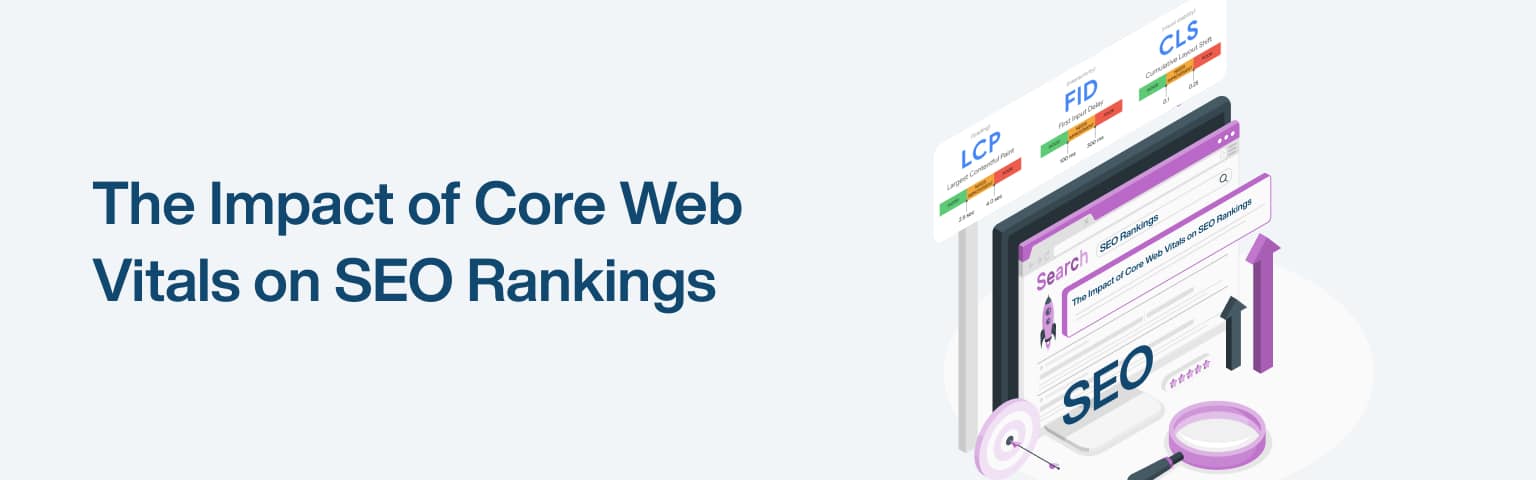
Search Engine Optimization (SEO) is crucial for any website attracting visitors. One essential aspect of SEO that often gets overlooked is the user experience. This is where Core Web Vitals come into play. Core Web Vitals are specific metrics that Google uses to measure the quality of user experience on a webpage. They focus on three main areas: loading performance, interactivity, and visual stability. Understanding and optimizing these metrics can significantly impact your site’s search rankings.

SEO success requires thorough planning and execution. This means paying attention to every detail that can enhance your site’s performance and user experience. By focusing on Core Web Vitals, you ensure that your website ranks higher in search results and provides a better experience for your visitors.

Regular performance monitoring and optimizing content delivery also play crucial roles. By focusing on these areas, you create a better user experience and achieve higher search engine rankings.

Understanding Core Web Vitals

Core Web Vitals are vital factors that Google uses to measure the quality of a website’s user experience. These metrics are essential for SEO because they directly affect how Google ranks your website in search results. Let’s break down these metrics and see how they impact SEO.

Largest Contentful Paint (LCP)

Largest Contentful Paint measures how long a page’s primary content takes to load. Google wants this to happen within 2.5 seconds. A fast LCP means users can see and use your content quickly. If your LCP is slow, users might leave your site before it loads, hurting your search rankings.

First Input Delay (FID)

First, Input Delay measures how quickly your website responds to user actions, like clicking a button or a link. Google recommends an FID of less than 100 milliseconds. A fast FID means that your website feels responsive and interactive. If the FID is slow, users might get frustrated and leave, negatively affecting your SEO.

Cumulative Layout Shift (CLS)

Cumulative Layout Shift (CLS) measures how much a page’s layout shifts while it’s loading. Google looks for a CLS score of less than 0.1. A low CLS means that elements on your page stay stable as it loads, making it easier for users to interact with your site. High CLS can be annoying and confusing for users, leading to a poor user experience and lower rankings.

Impact on SEO

Google uses these metrics to decide how user-friendly your website is. If your site scores well on these Core Web Vitals, Google is more likely to rank it higher in search results. This means more visibility and traffic for your website. On the other hand, scores can lead to higher rankings, reducing your site’s visibility and visitor count.

Understanding and improving your Core Web Vitals can enhance your website’s performance, provide a better user experience, and improve your SEO rankings.

The Importance of Core Web Vitals in SEO

User Experience

Core Web Vitals focuses on user experience by measuring loading speed, interactivity, and visual stability. A good user experience keeps visitors on your site longer, and when users stay longer, they engage more with your content. Google rewards sites that provide a positive experience with higher search rankings. Prioritizing Core Web Vitals helps ensure that your website is easy to use and enjoyable, leading to better SEO performance.

Search Engine Rankings

Google considers Core Web Vitals to be a ranking factor. This means websites with better Core Web Vitals scores can rank higher in search results. Higher rankings lead to more visibility and traffic. By optimizing Core Web Vitals, you improve your chances of appearing at the top of search results. This is crucial for attracting more visitors and growing your online presence.

Mobile Performance

Many users access websites through mobile devices. Core Web Vitals are especially important for mobile performance. Google uses mobile-first indexing, meaning it primarily uses the mobile version of a site for ranking. Ensuring your site meets Core Web Vitals standards on mobile devices enhances your SEO. This helps attract and retain mobile users, boosting your overall site traffic.

Reduced Bounce Rates

A high bounce rate occurs when users leave your site quickly. Poor Core Web Vitals can lead to high bounce rates. Users may go if a page takes too long to load or shifts unexpectedly. By improving your Core Web Vitals, you create a smoother experience, reducing bounce rates. Lower bounce rates can lead to higher engagement and better search rankings.

Better Engagement

Engaging content keeps users on your site longer and encourages interaction. Good Core Web Vitals ensure your content loads quickly and is easy to interact with. This leads to better engagement metrics, such as longer session durations and more page views. You have improved engagement signals to Google that your site is valuable, positively impacting your SEO.

Competitive Advantage

Websites that excel in Core Web Vitals can gain a competitive edge. In a crowded market, having a fast, responsive, and stable website sets you apart. Users are more likely to choose your site over competitors with poor performance. This competitive advantage translates into higher search rankings, traffic, and conversion rates.

Enhanced Credibility

A well-performing website enhances your credibility and trustworthiness. Users associate fast, stable websites with reliability. When your site performs well, it builds trust with your audience. This trust can lead to more backlinks, social shares, and positive reviews, improving your SEO. Enhanced credibility also encourages repeat visits and customer loyalty.

Higher Conversion Rates

Core Web Vitals directly impact conversion rates. A fast-loading, easy-to-use website increases the likelihood of conversions, whether purchasing, signing up for a newsletter, or filling out a contact form. Improved conversion rates boost your bottom line and send positive signals to search engines, helping improve your SEO rankings.

Compliance with Google’s Standards

Google continuously updates its algorithms to improve user experience. Core Web Vitals are part of these updates. By optimizing your site according to Core Web Vitals, you ensure compliance with Google’s standards. Staying compliant helps maintain and improve your search rankings. It also prepares your site for future updates, keeping it competitive in search results.

Long-term SEO Strategy

Focusing on Core Web Vitals is part of a long-term SEO strategy. These metrics are not just trends; they reflect the ongoing importance of user experience. You maintain a high-performing website by regularly monitoring and improving your Core Web Vitals. This long-term commitment to user experience ensures sustained SEO success and keeps your site relevant and competitive.

By understanding and addressing the importance of Core Web Vitals, you can significantly improve your website’s SEO performance, attract more visitors, and enhance overall user satisfaction.

Competitive Edge in SEO

Core Web Vitals give your website a competitive edge in SEO. By focusing on these metrics, you can improve your site’s performance and user experience, making it stand out from competitors. Here’s how:

Faster Load Times

Websites that load quickly attract and retain more visitors. When your Largest Contentful Paint (LCP) is fast, users can immediately see your content. This reduces bounce rates and keeps users engaged. Faster load times also mean better rankings on Google, giving you an advantage over slower sites.

Better Interactivity

A low First Input Delay (FID) ensures your site responds quickly to user actions, like clicks and taps. This makes your website feel more responsive and interactive. Users who interact smoothly with your site are more likely to stay longer and explore more pages. This increased engagement signals to Google that your site is valuable, improving your search rankings.

Stable Layouts

A low Cumulative Layout Shift (CLS) means your website’s layout remains stable as it loads. Users find it frustrating when elements move around unexpectedly. A stable layout enhances the user experience by making your site easier to navigate and more trustworthy. This positive experience can lead to more repeat visitors and higher search rankings.

Improved User Experience

Core Web Vitals focuses on creating a great user experience. Websites that offer fast, responsive, and stable experiences are more likely to attract and retain visitors. A better user experience translates to higher engagement, lower bounce rates, and more conversions. Google rewards these positive metrics with higher search rankings.

Higher Search Rankings

Google uses Core Web Vitals as a ranking factor. Websites that perform well on these metrics are more likely to rank higher in search results. Higher rankings increase your site’s visibility, bringing in more organic traffic. This is crucial for avoiding competitors who might not prioritize these metrics.

Increased Trust and Credibility

A well-optimized website builds trust and credibility with users. Your site’s performance signals users that you care about their experience. This trust can lead to more positive reviews, social shares, and backlinks, improving your SEO. Trustworthy sites are also more likely to convert visitors into loyal customers.

Long-term Success

Focusing on Core Web Vitals is a long-term strategy. As Google continues prioritizing user experience, sites that optimize for these metrics will remain competitive. Investing in Core Web Vitals ensures your website stays relevant and performs well in search rankings.

By optimizing Core Web Vitals, you give your website a significant competitive edge. This leads to better performance, higher rankings, and a superior user experience, helping you stay ahead in the competitive digital landscape.

How to Implement Core Web Vitals on SEO

Implementing Core Web Vitals is crucial for improving your website’s SEO and user experience. Here’s a simple guide to help you get started.

Measure Your Current Performance

Start by measuring your website’s current Core Web Vitals. Use tools like Google PageSpeed Insights, Google Search Console, and Lighthouse. These tools will provide scores for Largest Contentful Paint (LCP), First Input Delay (FID), and Cumulative Layout Shift (CLS). Identify which areas need improvement.

Optimize Largest Contentful Paint (LCP)

To improve LCP, focus on speeding up your page’s load time:

  • Optimize Images: Compress and resize images to reduce load time.
  • Improve Server Response Time: Use a reliable hosting service and consider a Content Delivery Network (CDN).
  • Minimize Render-blocking Resources: Reduce the use of JavaScript and CSS that delay page loading.

Enhance First Input Delay (FID)

To reduce FID, ensure your website responds quickly to user interactions:

  • Minimize JavaScript Execution: Break up long tasks and reduce the amount of JavaScript.
  • Optimize Third-party Scripts: Limit the use of third-party scripts that can slow down your site.
  • Use Web Workers: Offload tasks to web workers to keep the main thread free for user interactions.

Improve Cumulative Layout Shift (CLS)

To achieve a low CLS, make sure your page elements are stable:

  • Set Size Attributes for Images and Videos: Specify height and width for all media.
  • Reserve Space for Ads: Allocate fixed spaces for ads to prevent layout shifts.
  • Avoid Late Content Insertion: Ensure that content does not appear unexpectedly.

Use Modern Web Technologies

Utilize modern web technologies to enhance your site’s performance:

  • Lazy Loading: Implement lazy loading for images and iframes to speed up initial load times.
  • AMP (Accelerated Mobile Pages): Consider using AMP to create fast-loading mobile pages.
  • HTTP/2: Use HTTP/2 to improve load times by enabling multiplexing and reducing latency.

Regular Monitoring and Testing

Continuously monitor your Core Web Vitals scores using tools like Google Search Console. Regularly test your website’s performance to ensure ongoing improvements. Keep an eye on Google updates, as Core Web Vitals and SEO best practices can evolve.

Optimize Mobile Experience

Since mobile users are a significant portion of web traffic, ensure your site performs well on mobile devices:

  • Responsive Design: Use responsive web design to provide a good device experience.
  • Mobile-first Approach: Prioritize mobile performance and usability during development.

Simplify Website Design

A more straightforward website design can enhance performance:

  • Reduce Complexity: Avoid excessive animations and complex layouts.
  • Streamline Navigation: Ensure your website is easy to navigate with a clean design.

Keep Content Simple

Well-structured content can improve the user experience:

  • Readable Fonts: Use fonts that are easy to read on all devices.
  • Clear Structure: Organize content with headings, bullet points, and short paragraphs.

Implementing these strategies can improve your Core Web Vitals scores, enhance user experience, and boost your SEO performance. Regularly optimizing and monitoring your website ensures that you stay ahead in search rankings and provide the best experience for your visitors.

SEO Strategies with Core Web Vitals

Integrating Core Web Vitals into your SEO strategies can significantly improve your website’s performance and ranking. Here are some effective SEO strategies that focus on Core Web Vitals.

Improve Page Load Speed

Fast page load times enhance user experience and are a critical factor in SEO:

  • Optimize Images and Videos: Compress and resize images to reduce loading time.
  • Leverage Browser Caching: Store static resources locally in the user’s browser to speed up future visits.
  • Use a Content Delivery Network (CDN): Distribute your content across multiple servers to reduce load times.

Enhance Mobile Friendliness

A mobile-friendly site is crucial for SEO, especially with Google’s mobile-first indexing:

  • Responsive Design: Ensure your website adapts to different screen sizes and devices.
  • Touch-Friendly Elements: Make sure buttons and links are easy to tap on mobile devices.
  • Fast Mobile Loading: Optimize for mobile by reducing file sizes and using faster mobile frameworks.

Reduce Server Response Time

Quick server response times contribute to a better user experience and higher SEO rankings:

  • Optimize Server Performance: Use fast, reliable hosting and optimize server settings.
  • Use Efficient Caching: Implement caching strategies to serve content faster.
  • Minimize HTTP Requests: Reduce your site’s requests by combining files and using CSS sprites.

Minimize Render-Blocking Resources

Render-blocking resources can delay your page’s loading time:

  • Asynchronous Loading: Load JavaScript and CSS files asynchronously to prevent delays.
  • Inline Critical CSS: Embed critical CSS directly in the HTML to speed up rendering.
  • Defer Non-Critical JavaScript: Postpone loading non-essential JavaScript until after the main content loads.

Optimize User Interactivity

Quick responses to user actions are essential for a good user experience:

  • Reduce JavaScript Execution Time: Break up long tasks and optimize JavaScript to improve responsiveness.
  • Minimize Main Thread Work: Offload heavy tasks to web workers to keep the main thread free for user interactions.
  • Prioritize User Input: Ensure your site responds immediately to user inputs, like clicks and taps.

Ensure Visual Stability

Avoid unexpected layout shifts to enhance user experience:

  • Set Size Attributes: To prevent layout shifts, define width and height for all images and videos.
  • Reserve Space for Ads: Allocate fixed spaces for ads to avoid content shifting when ads load.
  • Use CSS for Animations: Prefer CSS animations over JavaScript to maintain layout stability.

Regular Performance Monitoring

Consistently monitor your website’s performance to keep Core Web Vitals in check:

  • Use Google Search Console: Regularly check the Core Web Vitals report to track performance.
  • Utilize PageSpeed Insights: Get detailed insights and recommendations to improve your site’s performance.
  • Conduct Regular Audits: Perform frequent audits using tools like Lighthouse to identify and fix issues.

Optimize Content Delivery

Efficient content delivery is critical to a fast-loading website:

  • Lazy Loading: Implement lazy loading for images and videos to speed up initial page loads.
  • Prefetch Important Resources: Use resource hints to load critical assets in advance.
  • Optimize Fonts: Use modern web fonts and optimize their loading to reduce delays.

Enhance Overall User Experience

A focus on user experience can indirectly boost your SEO:

  • Straightforward Navigation: Ensure your site is easy to navigate with a logical structure.
  • Engaging Content: Create high-quality, engaging content that keeps users on your site.
  • Accessible Design: Make your website accessible to all users, including those with disabilities.

By incorporating these SEO strategies and focusing on Core Web Vitals, you can create a fast, responsive, and stable website. This improves user experience and boosts your search engine rankings, leading to more traffic and better engagement.

Core Web Vitals: A Beginner’s Guide

What are Core Web Vitals?

Core Web Vitals are three key metrics that assess a webpage’s speed, interactivity, and visual stability. They play a crucial role in search engine optimization (SEO), and enhancing these metrics can improve your website’s search ranking and user experience.

These metrics are essential ranking factors for search engine optimization (SEO). Improving Core Web Vitals can help your website rank higher in search results and provide a better user experience. Focusing on these areas makes your website faster, more responsive, and easier to use, making it more attractive to users and search engines.

Core Web Vitals are specific factors that Google considers essential for a web page’s overall user experience. They are part of Google’s larger initiative to ensure that web pages provide a great user experience. Core Web Vitals are a subset of Web Vitals, metrics related to speed, responsiveness, and visual stability.

In the digital world, things change quickly. Keeping up with the latest trends helps you know what new tools and techniques are available to improve your website’s performance. It also enables you to understand what users expect from websites in your industry. Staying updated with industry trends is essential because it helps keep your website relevant and effective. As Google updates its algorithms and user expectations evolve, knowing the latest trends ensures you can adapt quickly. This enables you to maintain a solid online presence, attract more visitors, and keep your audience engaged.

The Three Core Web Vitals

Core Web Vitals comprise three primary metrics that help measure a website’s performance. The first is the Largest Contentful Paint (LCP), which measures how quickly the main content of a page loads. The second is the First Input Delay (FID), which looks at how quickly the page responds to the first user interaction. The third is Cumulative Layout Shift (CLS), which checks the visual stability of the page, ensuring elements don’t move around unexpectedly as the page loads.

Largest Contentful Paint (LCP)

LCP measures how long a page’s primary content takes to load. This is important because users want to see something functional quickly. If a page takes too long to load, users might leave. A good LCP score is under 2.5 seconds.

First Input Delay (FID)

FID measures the time it takes for a page to respond to a user’s first interaction, like clicking a link or tapping a button. Quick response times make the website feel more interactive and smooth. A good FID score is less than 100 milliseconds.

Cumulative Layout Shift (CLS)

CLS measures how much the page layout shifts as it loads. Unexpected movements can be annoying and lead to a poor user experience. For example, it can be frustrating if you are about to click a button and it moves. A good CLS score is less than 0.1.

These three metrics are essential for providing a good user experience. By focusing on LCP, FID, and CLS, you can ensure your website is fast, responsive, and stable.

Why Google Included Core Web Vitals

  • Enhancing User Experience: Google aims to promote websites that provide an excellent user experience. Core Web Vitals focus on critical aspects like loading speed, interactivity, and visual stability, directly impacting how users perceive and interact with a site.
  • Performance Metrics: Core Web Vitals provide quantifiable metrics (LCP, FID, CLS) that help web admins measure and improve their site’s performance in a standardized way.
  • Mobile Web Performance: With the increasing use of mobile devices, ensuring good performance and user experience has become crucial. Core Web Vitals address critical aspects of mobile performance.
  • Data-Driven Improvements: By integrating these metrics into its ranking algorithm, Google encourages webmasters to prioritize data-based improvements, which leads to a better overall web ecosystem.
  • Alignment with SEO Goals: Core Web Vitals align with broader SEO goals by ensuring that websites are content-rich and technically optimized for performance, leading to better search rankings and user satisfaction.

History & Journey of Core Web Vitals

Developing and implementing Core Web Vitals are part of Google’s ongoing efforts to improve web performance and user experience. Here’s a detailed timeline tracing the evolution of these metrics:

Early Efforts in Web Performance

  • Page Speed Insights (2010): Google launched Page Speed Insights to help web admins understand and improve page loading times. This tool provided insights into various aspects of web performance and suggested improvements.
  • Mobile-Friendly Update (2015): Known as “Mobilegeddon,” this update prioritized mobile-friendly websites in search results, reflecting the growing importance of mobile web performance and user experience.
  • Introduction of Lighthouse (2016): Google introduced Lighthouse, an open-source automated tool for improving the quality of web pages. Lighthouse audits web performance, accessibility, SEO, and adherence to best practices, providing a comprehensive overview of a website’s quality.

Growing Emphasis on Speed and User Experience

  • Speed Update (2018): Google’s Speed Update made page speed a ranking factor for mobile searches. This update highlighted the critical role of fast-loading pages in delivering a good user experience.

Introduction and Evolution of Core Web Vitals

  • Core Web Vitals Announcement (May 2020): Google introduced Core Web Vitals as a set of specific metrics designed to measure critical aspects of user experience on the web. These metrics included: Largest Contentful Paint (LCP)First Input Delay (FID)Cumulative Layout Shift (CLS).
  • Page Experience Update Announcement (May 2020): Alongside the introduction of Core Web Vitals, Google announced the Page Experience Update, which would incorporate Core Web Vitals into its ranking signals. This update aimed to highlight pages that offer a great user experience in search results.
  • Page Experience Update Rollout (June 2021): Google began rolling out the Page Experience Update, officially integrating Core Web Vitals into its ranking algorithm. This update reinforced the importance of user experience in SEO and encouraged web admins to prioritize these metrics.

Continuous Improvement and Tools

  • Web Vitals Extension and Tools (Ongoing): Google released various tools and extensions, such as the Web Vitals Chrome extension, to help developers and web admins measure and improve their Core Web Vitals scores.
  • Ongoing Adjustments and Updates: Google continues to refine and adjust Core Web Vitals metrics and thresholds based on evolving web standards and user expectations. Regular updates to tools like Lighthouse and PageSpeed Insights provide the latest recommendations and best practices.

Why is Core Web Vital Needed? 

  • Improved Search Rankings: Google uses Core Web Vitals as a ranking factor. Websites with good scores are more likely to appear higher in search results, which means more visibility and traffic from search engines.
  • Better User Experience: Core Web Vitals measure critical aspects of user experience. By optimizing these metrics, your website will load faster, respond quicker, and be more stable, keeping users happy and engaged.
  • Reduced Bounce Rates: Users leave quickly when a website loads slowly or is hard to interact with. Good Core Web Vitals scores can reduce bounce rates by providing a smoother and more enjoyable experience.
  • Higher Conversion Rates: A better user experience leads to higher conversion rates. If your website loads quickly and is easy to use, visitors are likelier to take desired actions, like purchasing or signing up.
  • Competitive Advantage: Websites with excellent Core Web Vitals stand out from the competition. If your site performs better than others in your industry, you can attract and retain more visitors.
  • Increased Mobile Usability: Core Web Vitals are especially important for mobile users. Mobile devices often have slower connections and less processing power. Optimizing for Core Web Vitals ensures your site works well on all devices.
  • Enhanced Brand Perception: A fast and reliable website enhances your brand’s reputation. Users associate positive experiences with professional and trustworthy brands, which can lead to greater loyalty and word-of-mouth referrals.
  • Better Engagement Metrics: Suitable Core Web Vitals lead to better engagement metrics, such as longer session durations and more pages viewed per visit. This indicates that users find your site valuable and enjoyable to use.
  • Compliance with Google’s Best Practices: Following Core Web Vitals guidelines ensure compliance with Google’s best practices for web performance. This helps with SEO and aligns your site with industry standards.
  • Long-Term Benefits: Investing in Core Web Vitals provides long-term benefits. As user expectations and search algorithms evolve, having a well-optimized site ensures you stay ahead of changes and maintain strong performance.

How to Improve Core Web Vitals

Improving Core Web Vitals is critical to making your website faster and more user-friendly. Here’s how to enhance each of the three primary metrics: LCP, FID, and CLS.

Improve Largest Contentful Paint (LCP)

To make your website load faster, focus on these areas:

  • Optimize Images: Compress images and use the correct size. This helps them load quickly.
  • Upgrade Hosting: To speed up your site, choose a faster server or use a Content Delivery Network (CDN).
  • Remove Render-Blocking Resources: Minimize or defer JavaScript and CSS files that slow down your page loading.
  • Optimize Fonts: Use modern font formats and load them efficiently.

Enhance First Input Delay (FID)

For better interactivity, consider these tips:

  • Minimize JavaScript: Reduce the amount of JavaScript on your site to make it respond faster to user actions.
  • Optimize Third-Party Scripts: Limit and optimize third-party scripts to prevent delays.
  • Use Browser Caching: Store frequently accessed data in the browser to speed up load times.
  • Break Up Long Tasks: Split long tasks into smaller chunks to keep the page responsive.

Improve Cumulative Layout Shift (CLS)

To ensure visual stability, follow these steps:

  • Set Size Attributes: Specify size attributes for images, videos, and other elements to prevent unexpected shifts.
  • Reserve Space for Ads: Allocate space for ads and embeds to avoid layout changes when they load.
  • Avoid Adding Content Above Existing Content: Ensure new content is added below the fold to maintain layout stability.
  • Use Transform Animations: I prefer using transform animations over layout changes to keep elements stable.

Implementing these strategies can significantly improve your Core Web Vitals, leading to a better user experience and higher search rankings. Regularly monitor your site’s performance using tools like Google PageSpeed Insights and Lighthouse to keep your site optimized.

Tools to Measure and Optimize Core Web Vitals

You must measure and optimize Core Web Vitals regularly to keep your website 

performing well. Here are some tools that can help:

Google PageSpeed Insights 

Google PageSpeed Insights is a free tool that analyzes your website’s performance. It provides a detailed report on LCP, FID, and CLS, along with suggestions for improvement. Enter your website URL, and the tool will show you how well your site performs and how you can improve it.

Lighthouse 

Lighthouse is an open-source tool from Google that helps you improve the quality of your web pages. It runs a series of tests on your site and provides a report on various performance metrics, including Core Web Vitals. You can access Lighthouse through Chrome DevTools or as a standalone tool.

Web Vitals Extension 

The Web Vitals Chrome Extension is a handy tool for real-time monitoring of Core Web Vitals. Once installed, it provides instant feedback on LCP, FID, and CLS as you browse your website, allowing you to spot and fix issues quickly.

Google Search Console 

Google Search Console includes a Core Web Vitals report that shows how your site performs over time. It highlights pages that need improvement and provides insights into specific issues affecting LCP, FID, and CLS. This tool is essential for ongoing website optimization.

GTmetrix 

GTmetrix analyzes your website’s speed and performance. It offers insights into various metrics, including Core Web Vitals, and provides actionable recommendations to enhance your site. GTmetrix also allows you to test your site from different regions and devices.

WebPageTest

WebPageTest is another powerful tool for measuring website performance. It provides in-depth analysis and visualizes Core Web Vitals metrics. You can test your site from multiple locations and browsers, helping you understand how different users experience your website.

Using these tools, you can monitor your Core Web Vitals and make necessary improvements. Regular monitoring and optimization ensure your website remains fast, interactive, and stable, leading to a better user experience and higher search rankings.

Improving your website’s Core Web Vitals is essential for providing a fast, responsive, and stable user experience. Monitor your site’s performance regularly and make necessary adjustments to stay ahead.

How to Start a Manufacturing Business: A Step-by-Step Guide

Starting a manufacturing business is an exciting venture. Manufacturing involves creating products from raw materials through manual labor or machinery. These products can range from everyday items to specialized equipment.

Thorough planning and execution are crucial in this industry. Proper planning helps avoid common pitfalls, manage costs, and streamline production processes. Execution ensures that your plans come to life effectively, leading to a successful business.

This blog will walk you through the essential steps to start your manufacturing business. We’ll cover market research, creating a business plan, securing financing, and setting up your manufacturing plant. We’ll also discuss production planning, technology implementation, marketing strategies, and business scaling. By the end of this guide, you’ll have a clear roadmap to start your journey in the manufacturing industry.

Conduct Market Research

Identify the Market Need

Understanding customer demand is the first step in starting a manufacturing business. You need to know what products people want to buy. This helps you create something that will sell well.

There are several methods to identify market needs:

  • Surveys: Ask potential customers what they need and want.
  • Interviews: Talk directly to people to get deeper insights.
  • Market Reports: Use reports and data to see what is currently in demand.

Analyze Competitors

Knowing your competitors is important. It helps you see what works well in the market and what doesn’t.

To conduct a competitive analysis:

  • Research Competitors: Look at businesses similar to yours. Check their websites, products, and customer reviews.
  • Evaluate Key Factors: Focus on price, quality, and customer service. See how your competitors market their products and what makes them successful.

Understand Industry Trends

Staying updated with industry trends keeps your business relevant. Trends show what is popular now and what might be in the future.

Resources for tracking industry trends include:

  • Trade Journals: These publications often feature the latest news and trends.
  • Industry Reports: Detailed reports give you insights into market changes and forecasts.

You can make informed decisions that set the foundation for a successful manufacturing business by conducting thorough market research.

Develop a Business Plan

Executive Summary

An executive summary is a brief overview of your business plan. It should include your business name, location, the products you will manufacture, and your business goals. This section gives readers a quick snapshot of your business idea.

Product Description

In the product description, explain what you will manufacture. Describe the product in detail, including its features and benefits. Also, outline the manufacturing process. This helps readers understand how you will create your product from start to finish.

Market Analysis

Market analysis is vital for your business plan. It shows you understand your market and your customers. This section includes information about your target market, customer needs, and market trends. Explain how your product fits into the market and how it will meet customer demands.

Marketing Strategy

Your marketing strategy outlines how you will promote and sell your product. Describe your target audience and how you will reach them. Include details about your advertising, sales tactics, and any promotions you plan to run. This helps you attract and retain customers.

Financial Plan

The financial plan includes your estimated costs and financial projections. List your startup costs, such as equipment and materials. Estimate your ongoing expenses, like rent and salaries. Also, include revenue projections and profit margins. This section shows how your business will make money and be sustainable.

Operational Plan

The operational plan describes your day-to-day operations and logistics. It details how you will produce your product, manage inventory, and handle shipping. It also includes information about your production schedule, suppliers, and any equipment you need. This section ensures your business runs smoothly and efficiently.

Developing a comprehensive business plan sets a clear path for your manufacturing business. This plan will guide you through the startup process and help you focus on your goals.

Secure Financing

Self-Funding

Self-funding means using your own money to start your business. This could come from savings, selling assets, or personal loans.

Pros:

  • Control: You have full control over your business.
  • No Debt: You don’t owe money to anyone.

Cons:

  • Risk: You risk losing your own money.
  • Limited Funds: Your resources might not be enough to cover all costs.

Loans

Business loans are a common way to secure funding. Banks and other financial institutions offer loans specifically for businesses.

How to apply for business loans:

  • Prepare Documents: Gather necessary documents like your business plan, financial statements, and credit history.
  • Research Lenders: Look for lenders that offer favorable terms.
  • Submit Application: Fill out the application form and submit your documents.
  • Approval Process: The lender will review your application and decide whether to approve the loan.

Investors

Investors can provide the capital you need in exchange for a share of your business.

Finding and pitching to investors:

  • Network: Attend industry events and network with potential investors.
  • Prepare a Pitch: Create a compelling pitch that outlines your business, market potential, and financial projections.
  • Present Your Pitch: Schedule meetings with investors and present your pitch.
  • Negotiate Terms: If an investor is interested, negotiate the terms of their investment.

Grants

Government grants are funds given to businesses that meet certain criteria. Unlike loans, you don’t have to repay grants.

Searching for and applying for government grants:

  • Research Grants: Look for grants that fit your business type and industry.
  • Read Guidelines: Carefully read the grant guidelines to ensure you meet the requirements.
  • Prepare Application: Complete the application form and provide all required information.
  • Submit Application: Submit your application before the deadline.

Securing financing is a crucial step in starting your manufacturing business. You can find the best way to finance your startup and get your business off the ground by exploring different funding options.

Choose a Suitable Location

Consider Accessibility

Choosing an accessible location is very important for your manufacturing business. Your location should allow suppliers to deliver materials and customers to reach your products. Good accessibility ensures smooth operations and helps deliver timely, reducing delays and costs.

Cost-Effective

Finding a cost-effective location means balancing the benefits of the location with its costs. Look for a place that offers good value. Consider the rent, taxes, and utility costs. Sometimes, a location with slightly higher rent might be worth it if it saves you money on transportation or offers better access to skilled labor.

Infrastructure

Your location needs the right infrastructure to support manufacturing. This includes:

  • Power Supply: Reliable electricity for your machines.
  • Water Supply: Adequate water for production processes.
  • Transport Links: Good roads, rail, or port facilities for product shipping.
  • Communication: Strong internet and phone connections for smooth business operations.

By choosing a suitable location with good accessibility, cost-effectiveness, and necessary infrastructure, you set up your manufacturing business for efficient and successful operations.

Acquire Necessary Permits and Licenses

Business Registration

Registering your business is the first step to making it official. Here’s how:

  1. Choose a Business Name: Pick a unique name that represents your business.
  2. Select a Business Structure: Decide if your business will be a sole proprietorship, partnership, LLC, or corporation.
  3. Register with Authorities: File the necessary paperwork with local and state government authorities.
  4. Obtain an Employer Identification Number (EIN): Apply for an EIN from the IRS for tax purposes.

Zoning Permits

Ensure your chosen location is zoned for manufacturing. Here’s what to do:

  1. Check Local Zoning Laws: Contact your local zoning office to confirm the area is designated for industrial use.
  2. Apply for a Zoning Permit: Submit an application to the local zoning authority.
  3. Follow Regulations: Ensure your operations comply with all local zoning regulations.

Environmental Permits

Manufacturing often impacts the environment, so you may need environmental permits:

  1. Identify Required Permits: Check with environmental agencies to determine your necessary permits.
  2. Prepare Documentation: Gather information about your manufacturing processes and their environmental impact.
  3. Submit Applications: Apply for the necessary permits from state and federal environmental agencies.
  4. Comply with Regulations: Follow all environmental guidelines to maintain your permits.

Health and Safety Licenses

Complying with health and safety regulations protects your employees and business:

  1. Learn Health and Safety Laws: Understand the laws applicable to your industry and location.
  2. Implement Safety Measures: Ensure your workplace meets all health and safety standards.
  3. Apply for Licenses: Obtain relevant authorities’ required health and safety licenses.
  4. Maintain Compliance: Regularly review and update your safety practices to stay compliant.

Acquiring the necessary permits and licenses ensures your manufacturing business operates legally and safely. Following these steps can avoid legal issues and create a secure work environment.

Set Up the Manufacturing Plant

Purchase Equipment

Choosing the right machinery and equipment for your manufacturing plant is crucial. Depending on your budget and needs, you can buy or lease equipment.

Buying Equipment:

  • Benefits: You own the equipment and can use it as long as you want.
  • Considerations: It requires a significant upfront investment.

Leasing Equipment:

  • Benefits: Lower initial costs and the ability to upgrade easily.
  • Considerations: You don’t own the equipment and must adhere to lease terms.

Raw Materials

Sourcing reliable suppliers for raw materials ensures your production runs smoothly.

Steps to source raw materials:

  1. Identify Needs: Determine the types and quantities of raw materials you need.
  2. Research Suppliers: Look for suppliers with a good reputation for quality and reliability.
  3. Request Quotes: Get quotes from multiple suppliers to compare prices and terms.
  4. Establish Relationships: Build strong relationships with suppliers to ensure consistent quality and supply.

Hire Staff

Recruiting and training skilled labor is essential for a successful manufacturing plant.

Steps to hire staff:

  1. Identify Roles: Determine the roles and skills needed for your plant.
  2. Advertise Positions: Post job openings on job boards, social media, and local newspapers.
  3. Interview Candidates: Conduct thorough interviews to assess skills and fit.
  4. Train Employees: Provide training to ensure employees understand their roles and can operate machinery safely.

Setting up your manufacturing plant with the right equipment, reliable raw materials, and skilled staff can ensure efficient and effective production processes.

Develop a Production Plan

Process Flow

Establishing a clear sequence of operations is key to efficient production. A well-defined process flow ensures that each step in the manufacturing process is performed in the right order.

Steps to establish process flow

  1. Identify Tasks: List all the tasks involved in producing your product.
  2. Sequence Tasks: Arrange tasks in the order they need to be performed.
  3. Create a Flowchart: Use a flowchart to visualize the sequence of operations.
  4. Optimize Process: Look for ways to streamline and improve the process.

Quality Control

Implementing quality control measures ensures your products meet the required standards. Quality control helps you maintain consistency and customer satisfaction.

Steps to implement quality control:

  1. Set Quality Standards: Define the quality criteria your products must meet.
  2. Inspect Materials: Check raw materials for defects before they enter production.
  3. Monitor Production: Regularly inspect products during the manufacturing process.
  4. Test Finished Products: Perform final inspections and tests on finished products.
  5. Document Findings: Keep records of inspections and test results to track quality over time.

Inventory Management

Managing raw materials and finished products efficiently is crucial for smooth operations. Good inventory management helps prevent shortages and excess stock.

Steps to manage inventory:

  1. Track Inventory: Use inventory management software to keep track of raw materials and finished products.
  2. Set Reorder Points: Determine the minimum stock levels for each item and set reorder points.
  3. Conduct Regular Audits: Regularly count inventory to ensure accuracy.
  4. Optimize Storage: Organize storage areas to make it easy to access and manage inventory.
  5. Analyze Usage Patterns: Monitor usage patterns to predict future needs and adjust inventory levels accordingly.

Developing a detailed production plan ensures your manufacturing process runs smoothly, maintains high quality, and manages inventory effectively.

Implement Technology

Manufacturing Software

Using ERP systems can greatly enhance your manufacturing process. ERP (Enterprise Resource Planning) systems help you manage all aspects of your business in one place.

Benefits of using ERP systems:

  1. Centralized Data: ERP systems store all your business data in one location, making it easy to access and manage.
  2. Improved Efficiency: ERP systems reduce manual work and errors by automating routine tasks.
  3. Better Decision Making: You can make informed decisions quickly with real-time data and analytics.
  4. Streamlined Operations: ERP systems integrate different business functions, such as inventory, production, and sales, improving overall coordination.

Automation

Automating parts of the production process can significantly benefit your manufacturing business.

Benefits of automation:

  1. Increased Productivity: Automated systems can operate 24/7, increasing production output.
  2. Consistency: Automation ensures that each product is made to the same high standard every time.
  3. Cost Savings: While there is an initial investment, automation can reduce labor costs and minimize waste.
  4. Safety: Automated machines can handle dangerous tasks, reducing the risk of worker injury.
  5. Scalability: Automation makes it easier to increase production to meet increased demand without corresponding increases in labor costs.

Implementing technology through ERP systems and automation allows you to streamline your manufacturing operations, improve efficiency, and maintain high-quality standards. This will help you stay competitive in the market and ensure the long-term success of your business.

Marketing and Sales Strategy

Branding

Developing a strong brand identity is essential for standing out in the market. Your brand represents your business and connects with your customers emotionally.

Steps to develop a strong brand identity:

  1. Define Your Brand: Clearly state what your brand stands for, your mission, and your values.
  2. Create a Logo and Tagline: Design a memorable and catchy tagline that reflects your brand’s essence.
  3. Consistent Messaging: Ensure your brand message is consistent across all platforms, including your website, social media, and packaging.
  4. Build a Brand Story: Share your brand’s story to create a deeper connection with your customers.

Marketing Channels

Promoting your products through various marketing channels helps you reach a wider audience and drive sales.

Effective marketing channels to consider:

  1. Social Media: Use platforms like Facebook, Instagram, and LinkedIn to engage with your audience and promote your products.
  2. Email Marketing: Send newsletters and promotional offers to your subscribers to keep them informed and interested.
  3. Content Marketing: Create valuable content, such as blog posts and videos, to attract and educate potential customers.
  4. SEO (Search Engine Optimization): Optimize your website to rank higher in search engine results, making it easier for customers to find you.
  5. Paid Advertising: Use Google Ads, social media ads, and other paid channels to target specific audiences and drive traffic to your website.

Sales Network

Establishing a sales network ensures that your products reach customers efficiently through your sales team or by partnering with distributors.

Building a sales network:

  1. Hire a Sales Team: Recruit skilled salespeople who understand your product and can effectively communicate its benefits to customers.
  2. Partner with Distributors: Work with distributors who can help get your products into stores and reach a broader market.
  3. Train Your Team: Provide ongoing training to your sales team to keep them updated on product features and sales techniques.
  4. Set Clear Goals: Establish sales targets and regularly review performance to ensure your team meets objectives.

By focusing on branding, utilizing multiple marketing channels, and building a robust sales network, you can effectively promote your products and grow your manufacturing business.

Launch and Scale

Pilot Production

Starting with a small-scale production run helps you test your processes and products without large investments. This phase lets you identify any issues and make necessary adjustments before full-scale production.

Steps for pilot production:

  1. Set Up: Establish a small production line to create a limited number of products.
  2. Test Processes: Run your production processes to ensure everything works smoothly.
  3. Evaluate Results: Check the products’ quality and the production process’s efficiency.

Feedback Loop

Collecting feedback from customers and stakeholders is crucial for improving your products and processes.

How to create a feedback loop:

  1. Gather Feedback: Use surveys, interviews, and customer reviews to collect feedback.
  2. Analyze Data: Look for common issues or suggestions in the feedback.
  3. Make Improvements: Adjust your products and processes based on the feedback.
  4. Implement Changes: Integrate the improvements into your production line.

Full-Scale Production

Once you have refined your processes through pilot production and feedback, you can scale up to full-scale production.

Steps for scaling up production:

  1. Expand Production: Increase your production capacity to meet market demand.
  2. Maintain Quality: Ensure quality control measures are in place to maintain product standards.
  3. Monitor Efficiency: Continuously monitor your production processes to ensure they remain efficient.

Expansion

Planning for future growth helps you stay ahead of market demand and competition.

Strategies for expansion:

  1. Increase Capacity: Invest in more equipment and hire additional staff to increase production capacity.
  2. Explore New Markets: Explore opportunities to expand into new geographical areas or market segments.
  3. Innovate: Continuously develop or improve new products to meet changing customer needs.
  4. Build Partnerships: Partner with other businesses to expand your reach and capabilities.

Following these steps, you can launch your manufacturing business and scale it for future growth. Starting with pilot production, creating a feedback loop, scaling up, and planning for expansion will help you build a strong, sustainable business.

Starting a manufacturing business involves numerous steps, from the initial planning and securing of resources to the actual production process. However, once your product is ready, the challenge shifts towards effectively marketing it to ensure it reaches your target audience and generates sales. This is where the role of a proficient marketing team or agency becomes crucial.

In today’s dynamic market, merely having a great product isn’t enough. Your product must be backed by a strong marketing plan that not only reaches potential customers but also convinces them of the value of your offerings. Effective marketing strategies encompass a range of activities, including digital marketing, content creation, social media engagement, SEO, and sometimes traditional advertising. Managing all these facets can be overwhelming, especially for a new manufacturing business focused on operations.

This is where partnering with an experienced digital marketing agency like Chetaru can be a game changer for your business. Chetaru specializes in creating tailored marketing strategies that align with each client’s unique needs and goals. With a comprehensive understanding of digital landscapes, Chetaru can help elevate your product’s visibility through cutting-edge SEO practices, compelling content marketing, and robust social media strategies.

Additionally, Chetaru’s expertise in website design ensures that your online presence is functional and optimized to convert visits into sales. With a strong, professionally developed website, your business gains credibility and a better capacity to attract and retain customers.

By leveraging Chetaru’s digital marketing services, your manufacturing business can focus more on production and less on how to navigate the complexities of the digital marketing world. Their team ensures that your marketing efforts are efficient and effective, driving traffic and sales, and ultimately contributing to your business’s profitability and growth. In today’s competitive market, having a partner can make the difference between surviving and thriving.

Business Idea For Rural Areas

Did you know that rural areas are bursting with potential for new businesses? The cost of starting a business is much lower in many places than in cities. Plus, there’s often less competition and a strong sense of community support. Whether you live in a small town or a village, there are many opportunities to start a successful business.

We will explore a variety of business ideas that suit rural areas. These include farming, food processing, crafts, tourism, renewable energy, health and wellness, education, and more. Each idea comes with simple steps to get started and tips for success.

Starting a business in rural areas can be rewarding, leveraging unique opportunities and resources specific to these regions. Here are some viable business ideas tailored to rural settings:

Organic Farming

Organic farming is becoming increasingly popular with growing awareness about health and the environment. This business involves growing crops without synthetic pesticides, fertilizers, or genetically modified organisms (GMOs). Organic farming caters to niche markets that value healthy, sustainable, and eco-friendly products.

Dairy Farming

Dairy farming is a great business idea because there is always a high demand for dairy products like milk, cheese, yogurt, and butter. This steady demand makes dairy farming a profitable and stable business.

Starting a dairy farm requires dedication and hard work, but it can be a very rewarding business. By providing quality dairy products, you can meet the needs of your community and beyond.

Poultry Farming

Poultry farming is a great business idea because it provides a steady source of income. You can start with a relatively low initial investment. This business involves raising chickens for meat (broilers) or eggs (layers).

Poultry farming can be a rewarding and profitable business. With proper care and management, you can enjoy a steady income while meeting your community’s demand for chicken meat and eggs.

Local Produce Processing

Local produce processing is a fantastic business idea. You can add value and reduce waste by creating products like jams, pickles, or dried fruits from locally grown produce. This business allows you to preserve seasonal fruits and vegetables, offering them to consumers year-round.

Starting a local produce processing business can be both profitable and fulfilling. By transforming fresh produce into delicious jams, pickles, and dried fruits, you can create a steady income while supporting local agriculture and providing quality products to your community.

Craft Production

Craft production is a wonderful business idea, especially in rural areas where traditional skills are often passed down through generations. You can produce handmade goods such as pottery, textiles, or woodwork using local skills. These unique items have a special appeal and can attract many customers.

Starting a craft production business can be very rewarding. Creating and selling handmade items supports local artisans and brings beautiful, unique products to the market. Dedication and the right approach can build a successful business that celebrates local culture and craftsmanship.

Agro-Tourism

Agro-tourism is a fantastic business idea that combines farming with tourism. It involves inviting urban dwellers to experience life on a farm through farm stays, tours, and hands-on activities. This business allows visitors to reconnect with nature and learn about farming while providing farmers with an additional source of income.

Starting an agro-tourism business can be both profitable and fulfilling. By offering unique farm experiences, you can attract urban visitors seeking a break from city life. With proper planning and dedication, agro-tourism can become valuable to your farm’s operations.

Solar Energy Solutions

Solar energy solutions are a smart and sustainable business idea. Installing and maintaining solar panels, you help people save on energy costs and reduce their carbon footprint. This business has a growing market as more people and businesses look for renewable energy options.

Starting a solar energy solutions business can be highly rewarding. By helping people switch to solar power, you contribute to a cleaner environment and provide a valuable service that can save your customers money. You can build a successful business in the growing renewable energy sector with the right training and approach.

Biofuel Production

Biofuel production is an innovative business idea that turns agricultural waste into valuable fuel. By converting waste materials like crop residues and animal manure into biofuels, you can create a renewable energy source that helps reduce reliance on fossil fuels and promotes sustainability.

Local Health Clinics

Local health clinics are a vital business idea for rural areas where access to healthcare is often limited. By providing basic healthcare services, you can meet the community’s essential health needs, improve overall health outcomes, and offer a lifeline to those in need.

Ayurvedic and Herbal Products

Ayurvedic and herbal products business focuses on creating and selling traditional health remedies made from natural ingredients. With a growing interest in natural and holistic health solutions, this business can cater to a niche market that values wellness and sustainability.

Vocational Training Centers

Vocational training centres are essential for providing practical skills education in trades like carpentry, plumbing, and electrical work. These centers help individuals gain valuable, in-demand skills, leading to better job opportunities and community development.

Online Education

Online education is a rapidly growing industry that provides online tutoring and courses. This industry has the potential to reach a broad audience, offering flexible and accessible learning opportunities for students of all ages. With the rising demand for remote learning, online education presents a promising and impactful business opportunity.

Local Transport Services

Local transport services are essential for connecting communities and providing affordable transportation options. This business offers transportation solutions such as shuttles, taxis, or ride-sharing services to help people travel easily within the local area. It addresses the need for reliable and cost-effective transport, especially in rural and underserved areas.

IT Services

Setting up small IT hubs in rural areas can be a lucrative business opportunity. These hubs can offer web development, digital marketing, and remote work support services. This business can help bridge the digital divide, providing local talent access to the global market while meeting the growing demand for IT services.

Grocery Stores

Opening a grocery store in a rural area is a practical and profitable business idea. Grocery stores provide essential daily items such as food, beverages, household supplies, and personal care products. They are vital for local communities, offering convenient access to necessary goods.

Farm Equipment Rentals

Farm equipment rentals is a smart business idea, especially in rural areas. By renting out machinery and tools, you can help local farmers access the equipment they need without the high cost of ownership. This business provides an affordable solution for farmers to improve their productivity and efficiency.

Beekeeping and Honey Production

Beekeeping and honey production are rewarding businesses that involve raising bees to produce honey, beeswax, royal jelly, and other bee-related products. This business can be profitable and beneficial for the environment, as bees play a crucial role in pollination.

Fish Farming

Fish farming, or aquaculture, involves raising fish like tilapia, catfish, or shrimp in controlled environments. This business can be very profitable as fish are in high demand due to their nutritional value and taste. Fish farming provides a reliable source of fresh fish for local and regional markets.

Mushroom Farming

Mushroom farming is a profitable business that requires less space than other farming types. Mushrooms are in high demand due to their nutritional value and unique flavours. They can be grown indoors, making them versatile for many locations.

Floriculture

Floriculture is the business of cultivating flowers and ornamental plants. This venture can be highly profitable due to the constant demand for fresh flowers and decorative plants in local and urban markets. Floriculture can cater to various occasions, including weddings, events, and daily home decoration.

Herbal and Medicinal Plant Farming

Herbal and medicinal plant farming involves growing plants known for their health benefits. These plants are used in medicines, supplements, and wellness products. The demand for natural and organic remedies is growing, making this a profitable and impactful business.

Starting a herbal and medicinal plant farm can be both rewarding and profitable. Growing these plants provides valuable health solutions and contributes to the wellness industry. Your farm can thrive and positively impact with the right knowledge and resources.

Event Planning and Catering

Starting an event planning and catering business can be a fulfilling way to create memorable experiences for weddings, festivals, and local gatherings. This business involves managing every detail from venue setup to food service, ensuring a seamless and enjoyable event for attendees. The key to success in this field is offering excellent service and delicious cuisine tailored to meet the diverse needs of each event. With experience and a dedicated approach, an event planning and catering business can thrive by making every occasion special and stress-free for clients.”

Pet Breeding and Pet Supplies

Starting a business in pet breeding and selling pet supplies offers a unique opportunity to cater to animal lovers. This type of business involves breeding healthy, well-cared-for pets and providing essential items like food, toys, and accessories that pet owners need. Success in this field requires a deep understanding of animal care, breeding ethics, and customer needs. Offering a variety of high-quality supplies, coupled with knowledgeable service, can help build a loyal customer base. Additionally, ensuring that all breeding practices are ethical and humane is crucial to maintaining a reputable business in the pet industry.

Local Delivery Services

Starting a local delivery service business focusing on groceries, medicines, and other essential items can be a valuable asset to the community. This business catapults convenience by delivering everyday necessities right to customers’ doorsteps. Key factors for success include reliable and timely delivery, excellent customer service, and a user-friendly ordering system. By using efficient routing software and maintaining strong relationships with local vendors, a delivery service can offer quick and efficient solutions that cater to the immediate needs of local residents. Emphasizing safety and trust, especially when handling items like medicines, will help build a loyal client base and ensure the business thrives.

Handmade Soap and Cosmetics

This type of business emphasizes creating high-quality items such as soaps, lotions, and other skincare products using organic and locally sourced ingredients. Success in this industry hinges on crafting unique blends that cater to various skin types and preferences while maintaining ethical production practices. Marketing these products effectively by highlighting their natural ingredients, eco-friendly packaging, and their benefits to skin health can attract a broad customer base looking for healthier, more personalized skincare options.

Woodworking and Furniture Making

This business requires woodworking skills and an eye for design to create functional and aesthetically pleasing pieces. Offering bespoke products like made-to-order furniture, unique home accessories, and personalized wooden gifts can set your business apart. Success in this industry depends on the quality of the craftsmanship, the uniqueness of designs, and effective marketing strategies that showcase the beauty and durability of the wood products. Building a reputation for quality and customer satisfaction can lead to a loyal customer base and referrals, vital for growth in the woodworking and furniture-making industry.

Repair Services

This business meets the ongoing need for upkeep and repair, ensuring that essential devices and machinery function properly. The key to success in this industry lies in offering reliable, skilled, and timely repair services. By employing experienced technicians who can diagnose and fix various issues, your business can cater to a diverse clientele, from homeowners needing appliance repair to farmers requiring machinery maintenance. Promoting a quick response time and high-quality service can build customer trust and loyalty, driving repeat business and word-of-mouth recommendations. Establishing a business in repair services also involves staying updated with technological advances and maintaining a stock of necessary parts and tools to handle various repair tasks efficiently.

Mobile Veterinary Services

Employing skilled veterinarians and ensuring that the mobile unit is outfitted with the necessary medical equipment are crucial factors. Establishing strong communication channels for scheduling and emergency services is also important. Highlighting the convenience and comprehensive care provided by the mobile service can help build a loyal customer base and expand the business’s reach. This approach not only improves accessibility to veterinary care but also underscores a commitment to the well-being of pets and livestock, enhancing overall customer satisfaction.

Organic Compost Production

Organic compost production involves making a natural type of dirt called compost, which helps plants grow better. This process uses leftover organic materials like fruit peels, vegetable scraps, and leaves. These materials break down over time to become nutrient-rich compost, which can be used in gardens, farms, and pots for growing plants.

This business helps you earn money, keeps waste out of landfills, and makes the earth a healthier place. Whether you’re a big company or just starting from your backyard, producing organic compost is a great way to contribute to a greener planet.

Agricultural Consultancy

Agricultural consultancy is a service where experts advise farmers on how to farm better and more sustainably. This kind of consultancy helps farmers use modern techniques that make farming easier and more productive while also taking care of the environment.

Starting an agricultural consultancy can be very rewarding. You get to help farmers improve their crops and make their farming practices more eco-friendly. Plus, by teaching them how to use resources wisely, you’re helping them save money and protect the environment at the same time. Whether you work locally or with farmers in different areas, this business greatly impacts the farming community.

Sports and Recreation Facilities

Setting up sports facilities is about creating places where people can play sports like cricket, football, or indoor games. These facilities can be outdoors, like a cricket ground or football field, or indoors, like a sports complex with different areas for different activities.

Starting a sports and recreation facility can be a great way to help people stay active and healthy. It also brings the community together and can be a fun place for families and friends to spend time. Whether you focus on one sport or many, your facility can greatly impact your community.

Renewable Energy Consulting

Renewable energy consulting is a business where experts help people and companies use energy from sources that never run out, like wind and organic waste. This energy is good for our planet because it doesn’t produce harmful pollution.

Starting a renewable energy consulting business helps the environment. It provides a valuable service to communities and companies looking to reduce their energy costs and impact on the planet. It’s a forward-thinking business that can make a big difference.

Water Purification and Bottling

Water purification and bottling is a business in which local water is cleaned and then put into bottles to sell. This is important because clean water is essential for health, and not everyone can access safe drinking water.

Starting a water purification and bottling business is not just about making money. It’s also about providing a vital product that people need every day. By doing so, you can help ensure everyone has access to clean and safe drinking water.

Textile and Garment Production

Textile and garment production is a business where you make clothing and materials like curtains and bed sheets. This business can include both traditional styles and modern designs.

Starting a textile and garment production business allows you to be creative and make items that people wear and use every day. Whether bringing new styles to market or keeping traditional crafts alive, your work adds beauty and function to everyday life.

Rural BPO (Business Process Outsourcing)

Setting up a Rural BPO involves establishing a call centre or a business process outsourcing unit in rural areas. This can be a strategic move to reduce operational costs while providing employment opportunities in less urbanized locations. It can also help bridge the urban-rural divide by bringing more sophisticated job opportunities to rural areas.

Nursery and Landscaping Services

Starting a nursery and landscaping services business involves creating and maintaining beautiful garden spaces while nurturing various plants. This business requires securing a space for a nursery where various plants—from ornamental to functional—can be cultivated and cared for. Knowledge of plant care, landscape design, and the local climate is essential. Services can include designing garden layouts, installing features like paths and ponds, and providing regular maintenance such as mowing, pruning, and fertilizing to ensure that gardens thrive throughout the seasons. Effective marketing through local advertising and showcasing well-maintained gardens can attract a wide range of clients from residential homeowners to commercial properties, making it a fulfilling venture for those passionate about transforming outdoor spaces.

Recycling and Waste Management

Launching a recycling and waste management business means providing crucial services to collect, process, and recycle waste materials. This endeavour is key to promoting environmental sustainability by minimizing landfill use and transforming waste into reusable resources. To get started, secure the necessary permits and invest in a facility that can handle various waste types, including plastics, metals, and organics. Building partnerships with local communities and businesses to establish efficient waste collection and recycling programs is essential. Effectively marketing your services’ environmental and economic benefits will attract a diverse clientele, helping your business contribute positively to the community and the planet.

Cooking Classes and Culinary Workshops

If you’re passionate about cooking and eager to teach others, consider setting up a culinary workshop and cooking class business. First, create a kitchen equipped for teaching, complete with various cooking stations and essential utensils. Offer a range of classes that appeal to various interests and skill levels, from simple recipes for beginners to intricate dishes for more experienced cooks. Use social media, community event boards, and collaborations with food enthusiasts and local centres for marketing your services. Your workshops will enhance your students’ cooking abilities and cultivate their appreciation for the art of food. 

Key Considerations

  • Market Research: First, understand what the local people need and like. This helps you create services or products that truly help and interest them.
  • Resource Availability: Use what is locally available. This could be materials, tools, or even local talents. It saves money and supports the local economy.
  • Sustainability: Make sure your business does not harm the environment. It should also make enough money to keep going without trouble.
  • Community Engagement: Work with the people in your community. Help them and let them help you. This builds trust and makes your business a welcomed part of the community.

By focusing on these key points, you can build a business that is not only successful but also respected and valued in the community.

Steps to Start a Business in Rural Areas

  • Identify a Need: First, do deep research to find out what the local area needs. Look for what’s missing that you can provide.
  • Develop a Business Plan: Write down your business ideas, who you want to sell to, and how you think you’ll make money. This plan will guide you.
  • Secure Funding: Look for money to start your business. You can check for government help or small loans or ask local people who might want to invest.
  • Legal Compliance: Make sure you follow all the rules. Get any licenses you need to avoid problems later.
  • Build a Team: Find local people who can work with you. Train them so they can do their jobs well.
  • Marketing: Tell people about your business. Use flyers, social media, and local radio to reach as many people as possible.
  • Monitor and Adapt: Always check how your business is doing. If something isn’t working, be ready to change it to improve it.

By following these steps, you can start a successful business in a rural area that helps the community and grows over time.

In conclusion, launching a business in a rural area presents a unique opportunity to tap into untapped markets and drive meaningful economic growth within the community. Entrepreneurs can establish successful and sustainable businesses by identifying a specific need, crafting a thoughtful business plan, securing the necessary funding, adhering to legal requirements, building a local team, implementing effective marketing strategies, and continuously adapting to changes. These ventures provide essential services and products tailored to rural populations and promote local employment and community development. Embracing these opportunities with a well-prepared approach ensures businesses can thrive and contribute positively to the rural economy.

The Rise of Dark Black Websites: Benefits, Key Elements, and Notable Examples

Introduction

Dark mode is a popular trend in web design. Websites use dark or black backgrounds with light text and elements. This design choice is visually appealing and offers several benefits, making it a favorite among designers and users.

The growing popularity of dark mode is due to its sleek, modern look and practical advantages. It helps reduce eye strain in low-light settings, making it more comfortable for users to read and browse. On OLED and AMOLED screens, dark mode saves battery life by using less power for black pixels. Additionally, dark mode enhances focus by minimizing distractions, allowing key content like images and text to stand out clearly.

Notable Examples of Dark Mode Websites

MTV

MTV’s website uses a black theme with white and yellow accents. This design creates a youthful, cutting-edge image that aligns perfectly with the brand’s identity. The dark background helps the bright elements stand out, making the site visually striking and engaging. White text ensures readability, while yellow accents highlight important features, adding a vibrant and dynamic touch. This design choice reflects MTV’s innovative and trendy nature, appealing to its young audience and keeping the content fresh and appealing. Using this color scheme, MTV successfully combines modern aesthetics with user-friendly design.

Zee Frames

Zee Frames’ website features dark overlays on full-page images, creating a striking visual effect. The minimalist white logos stand against the dark background, ensuring brand recognition. Orange accents are used sparingly to highlight key elements and draw attention to important areas. This combination of dark overlays, simple white logos, and bright orange accents creates a clean and modern look. It enhances the visual appeal while maintaining a user-friendly experience. The design is stylish and functional, making the content easy to navigate and engage with. This approach reflects Zee Frames’ commitment to both aesthetics and usability.

The Quake

The Quake’s website uses a dark red background, bright red heading, and white paragraph text. This color scheme creates a sense of urgency and importance, fitting the site’s focus on earthquake safety. The bright red headings immediately catch the user’s attention, while the white paragraph text ensures readability against the dark background. This design choice effectively communicates the critical nature of the content while maintaining visual clarity. The contrasting colors help organize the information, making it easy for users to follow and understand the key messages. The Quake’s approach balances visual impact with functional design, enhancing the site’s aesthetic appeal and usability.

WorldCoin

WorldCoin’s website features a mix of dark and white backgrounds, creating a striking visual contrast. Large white fonts ensure readability and make important text stand out. The site also incorporates dark overlay videos, which add depth and a modern touch to the overall design. This combination of elements helps highlight key information and keeps the user engaged. The dark and white backgrounds clearly separate different sections, making the site easy to navigate. WorldCoin’s design effectively balances visual appeal and functionality, offering a user-friendly experience that aligns with the brand’s modern and innovative image.

Blizzard

Blizzard’s website makes a dramatic use of dark mode, creating a striking visual impact. The overall dark theme is complemented by a Prussian blue footer, which adds a touch of sophistication and depth to the design. This color choice enhances the site’s aesthetic appeal while ensuring important elements stand out clearly. The dark mode helps focus the user’s attention on the content and visuals, making the browsing experience more immersive. Blizzard’s design approach balances bold, dramatic visuals with user-friendly elements, ensuring the site is both attractive and easy to navigate. This effective use of color and layout underscores Blizzard’s innovative and engaging brand identity.

Apple AirPods Pro

Apple AirPods Pro’s website uses a high-contrast black-and-white design to create a clean and modern look. This design highlights product images and text, making them stand out sharply against the dark background. White text on a black background ensures readability and draws attention to key information. The minimalist approach focuses on the product, allowing the sleek design of the AirPods Pro to take center stage. This effective contrast enhances the visual appeal and ensures a user-friendly experience. Apple’s design strategy emphasizes clarity and simplicity, reflecting the brand’s commitment to aesthetics and functionality.

National Geographic

National Geographic’s website uses a high-contrast black and white design to create a visually engaging experience. This design choice highlights the top stories, making them stand out against the dark background. The white text on the black background ensures readability and draws the reader’s attention to the main content. This approach helps to highlight the striking images and important information that National Geographic is known for. The use of contrast not only enhances the visual appeal but also ensures that the site’s content is easily accessible and engaging for users. This design strategy aligns with National Geographic’s commitment to providing impactful and visually rich storytelling.

Drip Haus

Drip Haus’s website features a deep black background, creating a bold and immersive experience. The bright, sharp images stand out vividly against this dark backdrop, immediately capturing the user’s attention. Clean white accents are used strategically to highlight important elements and ensure readability. This contrast between the dark background and bright visuals enhances the overall aesthetic and makes the content more engaging. The design is both modern and functional, ensuring that users can easily navigate and enjoy the site. Drip Haus’s approach effectively combines visual impact with user-friendly design, reflecting its focus on high-quality digital content and user experience.

Nexxt Group

Nexxt Group’s website features animations with several colors on a dark background. This design choice enhances text readability by providing a high contrast between the text and the background. The colorful animations add visual interest and help guide the user’s attention to key areas of the site. This combination of dark background and vibrant animations creates a dynamic and engaging user experience. The modern and functional design ensures users can easily navigate the site and find the necessary information. Nexxt Group effectively balances visual appeal with usability, making the content attractive and accessible.

GD Stones

GD Stones’ website features a marble-textured background that gives it a sophisticated and elegant look. The minimalist navigation ensures that users can easily find their way around the site without being overwhelmed by too many options. Using white and yellow text against the dark background enhances readability and highlights key information. This design creates a clean, modern aesthetic that aligns with the brand’s high-quality image. The marble texture adds a touch of luxury. At the same time, the simple navigation and contrasting text colors make the site user-friendly. GD Stones effectively combines visual appeal with functionality, making the browsing experience attractive and efficient.

DoublePoint

DoublePoint’s website features discreet menu navigation that keeps the interface clean and user-friendly. This design choice ensures that users can easily find what they need without being overwhelmed by options. The dynamic portfolio at the center of the homepage showcases their work effectively, making it the site’s focal point. The alternating black and red background adds visual interest. It helps to differentiate sections, guiding the user’s attention smoothly from one area to another. This combination of subtle navigation, a central portfolio display, and a bold color scheme creates a balanced and engaging user experience. DoublePoint’s design approach highlights their creativity while ensuring the site remains functional and easy to use.

Loud Mob Media

Loud Mob Media’s website integrates modern art and pop culture elements to create a vibrant and engaging user experience. The dynamic cursor adds an interactive and playful touch, making navigation more enjoyable. The sticky menu navigation ensures that users can easily access key sections of the site at any time, enhancing usability. This combination of creative visuals and functional design elements reflects Loud Mob Media’s innovative and youthful brand identity. The use of modern art and pop culture makes the site visually appealing and aligns with the interests of their target audience, providing a memorable and user-friendly browsing experience.

Nerisson

Nerisson’s website uses a combination of dark backgrounds and striking imagery to create a visually engaging experience. The dark backgrounds provide a dramatic backdrop that makes the vibrant images pop, immediately capturing the user’s attention. This contrast helps highlight the visual content, ensuring that key elements stand out. The overall design is clean and modern, focusing on showcasing high-quality images in a way that is appealing and easy to navigate. By combining these elements, Nerisson effectively creates a site that is aesthetically pleasing and user-friendly, offering visitors a memorable browsing experience.

Kaber Tech

Kaber Tech’s website features clean, modern lines that give it a sleek and professional appearance. Using high-contrast elements ensures important information stands out, making the site easy to navigate and read. This design approach highlights Kaber Tech’s commitment to clarity and usability. The minimalist aesthetic and bold contrasts create a visually appealing and efficient user experience. Kaber Tech effectively communicates its modern and innovative brand identity by focusing on simplicity and functionality, making it accessible and engaging for visitors.

Book of Beards

Book of Beards’ website uses high-contrast visuals to create a bold and engaging experience. The dark background contrasts sharply with the bright images and text, making the content stand out. The site presents its material uniquely and artistically, showcasing beards through creative and visually striking images. This design approach captures attention and adds a distinctive character to the website. Book of Beards combines visual appeal with a clear and memorable user experience by focusing on high-contrast elements and artistic presentation. This strategy ensures that the site’s content is impactful and easy to navigate.

SkillSoft

SkillSoft’s website features a navy background panel, making it look professional and sleek. This design choice helps convey a sense of reliability and sophistication. The dark navy background strongly contrasts the white text and elements, ensuring readability and making key information stand out. This clean and modern look aligns with SkillSoft’s brand as a leading provider of professional development and educational resources. Using a navy background also adds a touch of elegance, enhancing the overall user experience by providing a visually appealing and easy-to-navigate site. SkillSoft effectively combines aesthetic appeal with functionality, making the content both attractive and accessible.

Benefits of Dark Mode Websites

Aesthetic Appeal

Dark-mode websites look sleek and modern. The high contrast between dark backgrounds and bright text or images creates a striking and sophisticated appearance. This style is appealing to many users and aligns with contemporary design trends.

Reduced Eye Strain

Dark mode can be easier on the eyes, especially in low-light environments. Many users find it less fatiguing to read white or light text on a black background compared to the traditional dark text on a light background. This can lead to a more comfortable and prolonged browsing experience.

Battery Saving

Dark mode helps save battery life on OLED and AMOLED screens. These screens use less power to display black pixels than white ones. By using dark mode, users can extend the battery life of their devices, making it a practical choice for mobile browsing.

Enhanced Focus

Dark backgrounds help minimize distractions, allowing key content like images, videos, and text to stand out more. This can improve the overall user experience by allowing users to concentrate on the main elements of the website without being distracted by bright backgrounds or unnecessary design elements.

Key Elements of a Dark Mode Website

Color Scheme

Dark-mode websites typically use black or dark grey backgrounds. These dark backgrounds are paired with light-colored text and elements to contrast strongly. Accent colors, such as neon or pastel hues, often highlight important features or establish a visual hierarchy. This helps guide the user’s attention to key areas of the site.

Typography

Clear and readable fonts are crucial for dark-mode websites. White or light-colored text is commonly used to ensure readability against a dark background. Sometimes, designers use bold or larger fonts to make the text even more legible. The goal is to ensure that users can easily read and understand the content without straining their eyes.

Visual Content

Images, videos, and graphics should be optimized for dark backgrounds. This often means using visuals with bright highlights or creating custom graphics that complement the dark theme. The aim is to ensure that the visual content stands out and is easily viewable without blending into the background.

User Experience (UX)

A good user experience is essential for any website, including those in dark mode. The site should be easy to navigate, and the text should be easy to read. Avoid elements that might be jarring or difficult to see against a dark background. This helps users find what they want and have a pleasant browsing experience.

Accessibility

Ensuring accessibility is a key part of designing dark-mode websites. This means maintaining sufficient contrast between the background and text so that visually impaired users can read the content. It also involves considering how colorblind users will perceive the site. By making the site accessible, you ensure that all users can enjoy the content without difficulty.

Dark mode websites offer numerous advantages, including a sleek and modern aesthetic, reduced eye strain, battery saving on OLED screens, and enhanced focus on content.

Considering these benefits and design principles, dark mode can be a powerful choice for your next web design project. It improves the user experience and aligns with modern design trends, making your website stand out. Embrace dark mode to enhance your site’s appeal and functionality.

Best Blogs To Learn SEO

Search Engine Optimization (SEO) is crucial for success in digital marketing. It involves enhancing your website to rank higher on search engine results pages, making it more visible to probable visitors. Effective SEO drives more traffic, increases brand awareness, and boosts sales. However, navigating the abundance of information on SEO can be time-consuming and challenging. To help you on this journey, we have compiled a list of the top 9 blogs that offer comprehensive and practical SEO insights. Whether you’re just starting out or looking to enhance your skills, these blogs will provide the knowledge you need to succeed in SEO. Let’s explore these invaluable resources!

Certainly! Here are 9 blogs you can follow to learn comprehensive SEO, along with the bloggers’ names and their websites:

Moz Blog

Moz is a cornerstone in the SEO industry, known for its authoritative content and innovative SEO tools. Founded by Rand Fishkin, Moz has become a trusted resource for marketers looking to improve their SEO strategies. The Moz Blog offers a wealth of knowledge, from beginner tips to advanced techniques, making it an essential read for anyone interested in SEO.

Key Features

  • Comprehensive Guides: In-depth articles covering all aspects of SEO, from keyword research to link building.
  • Whiteboard Fridays: Weekly video series where experts break down complex SEO topics in an easy-to-understand format.
  • Industry Research: Up-to-date reports and studies provide valuable insights into the ever-changing SEO landscape.

Highlight Post

A notable series from Moz is the “Beginner’s Guide to SEO.” This complete guide covers everything from the basics of SEO to more advanced concepts, making it an invaluable resource for beginners and seasoned professionals. Another standout post is “The SEO Checklist: How to Rank Your New Website,” which offers a step-by-step approach to optimizing a new site for search engines.

Website: Moz Blog 

Backlinko

Backlinko is a well-known website founded by Brian Dean, an expert in SEO (Search Engine Optimization). Brian Dean is famous for sharing his deep knowledge of SEO and helping many people improve their websites’ visibility in search results.

Key Features

  • Case Studies: Backlinko shows examples of how different techniques have helped improve websites.
  • Actionable SEO Strategies: The site provides practical tips that you can use right away to help your website rank better.
  • Comprehensive Guides: You’ll find detailed guides that explain complex SEO topics in simple terms.

Highlight Post

One of Backlinko’s most notable posts is the “SEO That Works” series. In this series, Brian shares strategies that have successfully improved the search rankings of various websites. It’s a favorite among readers because it gives clear, proven advice on improving your website’s SEO.

Whether you’re new to SEO or have some experience, Backlinko is a valuable resource for learning more about improving your website’s performance in search results.

Website: Backlinko Blogs 

Neil Patel’s Blog

Neil Patel’s blog is a popular resource for SEO and digital marketing. The blog’s founder is well-known for his expertise in helping businesses grow through online marketing.

Key Features

  • Step-by-Step Guides: These guides are easy to follow and help you improve your website’s SEO step by step.
  • SEO Tools: Neil offers tools that make it easier to see how well your site is doing and find ways to improve it.
  • Analytics Insights: The blog offers insights on data and analytics, helping you comprehend effective and ineffective marketing strategies.

Highlight Post

A notable post from Neil Patel’s blog is “How to Generate 100+ Blog Topics in Seconds.” This post is especially helpful for content creators and marketers looking for fresh ideas. It shows easy ways to develop blog topics that attract more visitors to your site.

Neil Patel’s blog is a great tool for learning how to attract more people to your website and improve your digital marketing strategies. Whether you’re a beginner or have some experience, you’ll find helpful tips and tools on his blog.

Website: Neil Patel’s Blogs

Search Engine Journal

Search Engine Journal is a vital resource for anyone interested in SEO and staying updated with the latest trends in search engine optimization. This website is highly respected in the SEO community for its reliable and current information.

Key Features

  • Latest SEO News: The site keeps you updated with the newest developments in SEO.
  • Expert Columns: You’ll find articles written by SEO experts who share their knowledge and experiences.
  • In-depth Articles: These articles cover SEO topics deeply, helping you understand complex ideas more easily.

Highlight Post

A standout series from Search Video Journal is their “SEO Guide for Beginners.” This series is incredibly helpful for those just starting with SEO. It breaks down the basics of search engine optimization in a way that is easy to understand and apply.

It provides valuable insights and the latest news that can help you succeed in the ever-changing world of digital marketing.

Website: Search Engine Journal Blogs

Ahrefs Blog 

Ahrefs Blog is a key spot for those looking to enhance their SEO skills and understanding. Ahrefs itself is well-known for creating one of the top SEO tools, which helps websites track their rankings and examine their competitors.

Key Features

  • Data-driven SEO Insights: The blog uses data to explain what’s working in SEO and what’s not.
  • Tool Tutorials: Some guides and tutorials show you how to use Ahrefs tools effectively.
  • Case Studies: You can read real-life examples of businesses improving their SEO using Ahrefs.

Highlight Post

One of the most useful series on the Ahrefs Blog is the “Keyword Research Tutorial.” This series guides you through finding and choosing the right keywords to target for your website. It’s very helpful for anyone wanting to improve their site’s visibility in search engines.

Ahrefs Blog is an excellent resource if you want to learn SEO. Whether you are a beginner or have some experience, you will find valuable tips and tools to help you improve your website’s performance.

Website: Ahrefs Blog 

SEMrush Blog

The SEMrush Blog is an essential resource for digital marketers and SEO professionals. SEMrush is renowned for its comprehensive suite of tools that support various marketing tasks, including SEO, PPC (pay-per-click), and content marketing.

Key Features

  • SEO Guides: These guides help you understand and apply SEO techniques to improve your site’s performance in search engines.
  • PPC Tutorials: Learn how to manage and optimize your pay-per-click campaigns effectively.
  • Content Marketing Tips: Get advice on creating engaging content that attracts and retains an audience.

Highlight Post

A beneficial series on the SEMrush Blog is the “Ultimate Guide to Content Marketing.” This series provides a step-by-step approach to planning, creating, and promoting content that can increase engagement and visibility.

SEMrush Blog is a go-to resource for anyone looking to sharpen their digital marketing skills. With practical advice and insights from various experts, it’s an invaluable tool for improving your marketing strategies. Whether you’re new to the field or an experienced marketer, there’s something useful for everyone at SEMrush Blog.

Website: SEMrush Blog

Search Engine Land

Search Engine Land is recognized as a leading authority for the latest in SEO and search engine news. It’s a primary source for those in the SEO community looking to stay ahead of industry trends and changes.

Key Features

  • Breaking News: The site delivers up-to-the-minute news on search engines and SEO developments.
  • In-Depth Analysis: You’ll find detailed examinations of SEO practices and changes in the search landscape.
  • Expert Advice: The blog offers insights and tips from experienced SEO professionals and thought leaders in the field.

Highlight Post

A standout feature from Search Engine Land is their “Periodic Table of SEO Factors.” This guide is continuously updated and provides a comprehensive overview of the essential elements that impact your SEO success. It’s a valuable resource for beginners and experts alike, helping them to understand and apply best practices in SEO.

Search Engine Leisure Land is an invaluable resource for staying informed and effective in the fast-paced world of search engine optimization. Whether you’re seeking the latest SEO news or practical advice on tackling today’s challenges, Search Engine Land offers a wealth of knowledge to enhance your strategies.

Website: Search Engine Land Blogs

Yoast SEO Blog

Yoast SEO Blog is a vital tool for anyone who uses WordPress to build and manage websites. Yoast is especially known for its SEO plugin, which helps optimize web pages for search engines straightforwardly and effectively.

Key Features

  • Practical SEO Tips: The blog provides easy-to-follow tips that help improve your site’s SEO.
  • Plugin Tutorials: There are step-by-step guides on how to use the Yoast SEO plugin to maximize your site’s potential.

Highlight Post

One of the most useful series on the Yoast SEO Blog is the “Ultimate Guide to Using the Yoast SEO Plugin.” It covers everything from setting up the plugin to using its most advanced features. Users highly appreciate this guide for its clarity and practicality, making improving their website’s search engine rankings easier.

Whether new to SEO or looking to enhance your skills, the Yoast SEO Blog is a great resource. It offers helpful advice and tools that can greatly improve your website’s performance in search results.

Website: Yoast SEO Blog

HubSpot Blog

HubSpot Blog is a premier destination for marketers seeking to embrace a holistic approach to digital marketing. HubSpot is renowned for its all-in-one marketing software, which helps businesses engage,attract, and delight customers.

Key Features

  • SEO: Learn how to optimize your content to increase visibility and attract visitors.
  • Inbound Marketing: Get insights into creating marketing strategies that draw customers to you rather than reaching out to them.
  • Content Strategy: Discover effective methods for planning and executing content that resonates with your audience.

Highlight Post

One of the standout series on the HubSpot Blog is “How to Create an Effective Inbound Marketing Campaign.” This series provides a step-by-step guide on using inbound marketing techniques to generate leads and convert them into customers. It’s especially valuable for those new to inbound marketing, as it offers practical advice and actionable steps.

The HubSpot Blog is an essential resource for anyone looking to enhance their digital marketing skills and implement strategies that foster long-term business growth. Whether you’re just starting out or are a seasoned marketer, the HubSpot Blog offers a wealth of information to help you succeed.

Website: Hub Spot Blogs 

Online Courses and Certifications

Online courses and certifications are a great way to deepen your SEO knowledge. Here are three excellent platforms where you can find valuable SEO courses:

  1. Coursera: Coursera offers a “Search Engine Optimization (SEO) Specialization” course developed by the University of California, Davis. This course covers everything from SEO basics to advanced strategies, making it suitable for learners at any level.
  2. Udemy: Udemy offers various SEO courses, including “SEO 2024: Complete SEO Training + SEO for WordPress Websites.” This course is designed to help you master SEO from the ground up, with practical advice for optimizing a WordPress website.
  3. LinkedIn Learning: You can take “SEO Foundations” by David Booth on LinkedIn Learning. This course provides a solid foundation in SEO, covering essential concepts and techniques to help you improve your website’s search engine rankings.

Each platform offers courses that are easy to follow and packed with insights, making them perfect for anyone looking to enhance their SEO skills. Whether you’re just starting or looking to update your knowledge, these courses can provide the tools you need to succeed.

Pro Tip

Google offers some of the best resources for learning SEO, which are authentic, thoroughly tested, and freely available. Key resources include Google’s SEO Starter Guide, which is perfect for understanding the basics of SEO; Google Analytics Academy, which offers courses to master website analytics; and Google Search Console Help Center, which helps you monitor and optimize your site’s performance in Google Search. These tools are invaluable for anyone looking to effectively enhance their SEO knowledge and skills.

Google’s SEO Starter Guide

  • Purpose: This guide serves as an introduction to SEO for newcomers. It covers the fundamental practices that can help optimize your website for search engines.
  • Content Covered: The guide includes topics such as how to create descriptive page titles and snippets, how to structure your URL to be more user- and SEO-friendly, the importance of making your site easier to navigate, and tips on content optimization and quality. It also delves into mobile optimization and the significance of using alt text for images.

Google Analytics Academy

  • Purpose: Google Analytics Academy offers free online courses to help you understand how to use Google Analytics and gather data on your website’s performance. This insight is crucial for informed decision-making in SEO and digital marketing strategies.
  • Content Covered: Courses range from beginner to advanced levels, covering everything from the basic features of Google Analytics, such as understanding and analyzing audience behavior, to more complex uses, like data collection, processing, configuration, and more complex analysis and marketing tools.

Google Search Console Help Center

  • Purpose: This resource provides support and learning materials for Google Search Console, a tool that helps monitor, maintain, and troubleshoot your site’s presence in Google Search results.
  • Content Covered: The Help Center offers guides on how to start with Google Search Console, understand your Google Search traffic, and see how Google views your pages. It also helps you monitor and resolve common issues like malware or spam, understand and improve your site’s performance in Google Search, and optimize your ranking.

Google Digital Garage

Google Digital Garage provides free and comprehensive courses on digital marketing, with a strong focus on SEO basics. It’s an excellent resource for beginners and experienced marketers alike, offering a chance to learn new skills or refine existing ones. The courses are user-friendly and self-paced and cover a wide range of topics, from search engine optimization to social media marketing, making them a valuable tool for anyone looking to enhance their digital marketing expertise.

These Google resources are designed to provide both foundational knowledge and advanced techniques in SEO. They are invaluable for anyone looking to ensure their website meets SEO standards and excels in search rankings. By utilizing these tools, you can enhance your understanding of SEO, analyze your site’s performance effectively, and adapt to changes in search algorithms.

Learning Path

To effectively learn and master SEO online, follow this straightforward learning path:

  1. Start with Basics: Begin your journey by reading beginner guides and taking introductory courses. These will help you grasp the fundamental concepts of SEO, such as keywords, on-page optimization, and how search engines work.
  2. Deepen Knowledge: Once you’re comfortable with the basics, move on to more advanced topics like technical SEO, link building, and content strategy. These areas will enhance your understanding and skills beyond the initial concepts.
  3. Hands-On Practice: The best way to solidify your knowledge is to apply it. Try optimizing your own website or offering to help a small business or a non-profit with their SEO. This practical experience is invaluable.
  4. Stay Updated: SEO is constantly changing, with new updates and techniques emerging regularly. Stay informed by reading SEO news and updates from trusted sources to keep your skills sharp and relevant.
  5. Network: Engage with the SEO community through forums, social media, and conferences. Networking with other SEO professionals lets you learn from their experiences and share your insights, helping you grow and stay motivated.

By following these steps and making the most of available resources, you can build a solid foundation in SEO and continually refine your skills as you progress.

Keeping up-to-date and adaptable is essential in the dynamic realm of SEO and digital marketing. The highlighted blogs—Backlinko, Neil Patel’s Blog, Search Engine Journal, Ahrefs Blog, SEMrush Blog, Search Engine Land, Yoast SEO Blog, HubSpot Blog, and Matthew Woodward’s Blog—stand out as premier sources for SEO learning. These blogs offer deep dives into tutorials, case studies, and the latest SEO practices, each providing unique and actionable insights. Led by experts known for pioneering SEO work, these platforms ensure you stay abreast of evolving trends and equip you with the tools to enhance your SEO prowess. Ideal for novices and seasoned professionals, these blogs are invaluable for anyone looking to advance their SEO knowledge and apply it effectively.

Motivational Quotes To Inspire You

Motivation is the driving force behind all forms of success. Whether we’re aiming to climb the career ladder, improve our health, or simply maintain a positive mindset, staying motivated is essential. It fuels our ambitions and powers us through challenges, transforming the mundane into the extraordinary. In our quest for personal and professional growth, it can be easy to encounter setbacks or to feel overwhelmed by the obstacles that life throws our way.

This is where motivational quotes come into play. More than just words, these powerful snippets of wisdom act as beacons of light guiding us through darker times. They remind us of our capabilities and potential, pushing us to persevere when things get tough. By integrating motivational quotes into our daily lives, we can maintain a constant source of inspiration that helps us to remain focused and driven, no matter what lies ahead. Each quote is a stepping stone towards realizing our dreams, providing the mental boost we need to continue moving forward.

Motivational Quotes for Success

  1. “If people knew how hard I worked to get my mastery, it wouldn’t seem so wonderful after all.” — Michelangelo
  2. “Success isn’t overnight. It’s when you get a little better every day than the day before. It all adds up.” – Dwayne Johnson
  3. “It does not matter how slowly you go as long as you do not stop.” – Confucius.
  4. “Success consists of going from failure to failure without loss of enthusiasm.” – Winston Churchill
  5. “Women, like men, should try to do the impossible. And when they fail, their failure should be a challenge to others.” – Amelia Earhart
  6. “Victory is sweetest when you’ve known defeat.” – Malcolm S. Forbes
  7. “Innovation distinguishes between a leader and a follower.”-Steve Jobs, Apple co-founder
  8. “Do not follow where the path may lead. Go instead where there is no path and leave a trail.” -Ralph Waldo Emerson
  9. “In matters of style, swim with the current; in matters of principle, stand like a rock.” -Thomas Jefferson
  10. “The only limit to our realization of tomorrow will be our doubts of today.” – Franklin D. Roosevelt
  11. “It is better to fail in originality than to succeed in imitation.” – Herman Melville
  12. “A man can succeed at almost anything for which he has unlimited enthusiasm.” – Charles Schwab
  13. “There is little success where there is little laughter.” – Andrew Carnegie
  14. “There is no substitute for victory.” – Douglas MacArthur
  15. “You know you are on the road to success if you would do your job, and not be paid for it.” – Oprah Winfrey.

Motivational Quotes for Leadership

  1. “A good objective of leadership is to help those who are doing poorly to do well and to help those who are doing well to do even better.”-Jim Rohn
  2. “A leader is best when people barely know he exists. When his work is done, his aim fulfilled, they will say: we did it ourselves.” -Lao Tzu
  3. “Leadership and learning are indispensable to each other.” -John F. Kennedy
  4. “If you spend too much time thinking about a thing, you’ll never get it done.” -Bruce Lee
  5. “Action springs not from thought, but from a readiness for responsibility.” -Dietrich Bonhoeffer
  6. “A leader … is like a shepherd. He stays behind the flock, letting the most nimble go out ahead, whereupon the others follow, not realizing that all along they are being directed from behind.” -Nelson Mandela
  7. “Our greatest weakness lies in giving up. The most certain way to succeed is always to try just one more time.” – Thomas A. Edison.
  8. “Great leaders are not defined by the absence of weakness, but rather by the presence of clear strengths.” —John Peter Zenger
  9. “As we look ahead into the next century, leaders will be those who empower others.” —Bill Gates

Inspirational Quotes

  1. “The fight is won or lost far away from witnesses — behind the lines, in the gym, and out there on the road, long before I dance under those lights.” — Muhammad Ali
  2. “The only place where success comes before work is in the dictionary.” — Vince Lombardi
  3. “Try not to become a man of success. Rather become a man of value.” ― Albert Einstein
  4. “Don’t spend time beating on a wall, hoping to transform it into a door.” ― Coco Chanel
  5. “If A is a success in life, then A equals x plus y plus z. Work is x; y is play; and z is keeping your mouth shut” ― Albert Einstein
  6. “All our dreams can come true if we have the courage to pursue them.” – Walt Disney
  7. “However difficult life may seem, there is always something you can do and succeed at.” – Stephen Hawking
  8. “People begin to become successful the minute they decide to be.” – Harvey MacKay
  9. “It always seems impossible until it’s done.” – Nelson Mandela.
  10. “Nothing is impossible, the word itself says ‘I’m possible’!” – Audrey Hepburn
  11. “When something is important enough, you do it even if the odds are not in your favor.” – Elon Musk
  12. “Ninety percent of leadership is the ability to communicate something people want.”
  13. “It takes 20 years to build a reputation and five minutes to ruin it. If you think about that, you’ll do things differently.” – Warren Buffett, investor
  14. “To handle yourself, use your head; to handle others, use your heart.” Eleanor Roosevelt

Motivational Quotes For Personal Growth

  1. “Do the best you can until you know better. Then when you know better, do better.” – Maya Angelou
  2. “There is nothing noble in being superior to your fellow man; true nobility is being superior to your former self.” – Ernest Hemingway.
  3. “One can choose to go back toward safety or forward toward growth. Growth must be chosen again and again; fear must be overcome again and again.” – Abraham Maslow.

Motivational Quotes For Happy Life

  1. “The purpose of our lives is to be happy.” — Dalai Lama
  2. “Life is what happens when you’re busy making other plans.” — John Lennon
  3. “Get busy living or get busy dying.” — Stephen King
  4. “You only live once, but if you do it right, once is enough.” — Mae West
  5. “Many of life’s failures are people who did not realize how close they were to success when they gave up.”– Thomas A. Edison
  6. “If you want to live a happy life, tie it to a goal, not to people or things.”– Albert Einstein
  7. “Never let the fear of striking out keep you from playing the game.”– Babe Ruth
  8. “Money and success don’t change people; they merely amplify what is already there.” — Will Smith
  9. “Your time is limited, so don’t waste it living someone else’s life. Don’t be trapped by dogma – which is living with the results of other people’s thinking.” – Steve Jobs
  10. “Not how long, but how well you have lived is the main thing.” — Seneca
  11. “If life were predictable, it would cease to be life and be without flavor.” – Eleanor Roosevelt
  12. “The whole secret of a successful life is to find out what one’s destiny is to do, and then do it”– Henry Ford
  13. “In order to write about life, first you must live it.”– Ernest Hemingway
  14. “The big lesson in life, baby, is never be scared of anyone or anything.”– Frank Sinatra
  15. “Curiosity about life in all of its aspects, I think, is still the secret of great creative people.” – Leo Burnett
  16. “The unexamined life is not worth living.” — Socrates.
  17. “The way I see it, if you want the rainbow, you gotta put up with the rain.” —Dolly Parton
  18. “Do all the good you can, for all the people you can, in all the ways you can, as long as you can.” — Hillary Clinton
  19. “Don’t settle for what life gives you; make life better and build something.” — Ashton Kutcher

Motivational Quotes For Women

  1. “Think like a queen. A queen is not afraid to fail. Failure is another stepping stone to greatness.” ― Oprah Winfrey
  2. “It took me quite a long time to develop a voice, and now that I have it, I am not going to be silent.” ― Madeleine Albright
  3. “Behind every great woman … is another great woman.” ― Kate Hodges
  4. “I’m not going to limit myself just because people won’t accept the fact that I can do something else.”― Dolly Parton
  5. “Some leaders are born women.” ― Geraldine Ferraro
  6. “Am I good enough? Yes, I am.” ― Michelle Obama
  7. “Courage is the price that life exacts for granting peace.” — Amelia Earhart, “Courage”
  8. “You must never be fearful about what you are doing when it’s right.” — Rosa Parks
  9. “What I want young women and girls to know is: You are powerful and your voice matters.” — Kamala Harris.
  10. “You have to believe in yourself when no one else does.” — Serena Williams
  11. “I am no longer accepting the things I cannot change. I am changing the things I cannot accept.” — Angela Davis
  12. “Nothing in life is to be feared; it is only to be understood.” — Marie Curie
  13. “Life is either a daring adventure or nothing.” — Helen Keller
  14. “I do not take success and failure seriously. The only thing I do seriously is marching forward. If I fall, I get up and march again.” – Kareena Kapoor
  15. “People used to say that boxing is for men and not for women and I thought I will show them some day. I promised myself and proved myself.” – Mary Kom
  16. “The path from dreams to success does exist. May you have the vision to find it, the courage to get on it and the perseverance to follow it.” – Kalpana Chawla

Motivational Quote For Mens

  1. “If a man does not keep pace with his companions, perhaps it is because he hears a different drummer. Let him step to the music which he hears, however measured or far away.” – Henry David Thoreau
  2. “I am the wisest man alive, for I know one thing, and that is that I know nothing.” – Socrates
  3. “Being a male is a matter of birth. Being a man is a matter of choice.” — Edwin Louis Cole
  4. “If Boys don’t learn, men won’t know.” Douglas Wilson
  5. “Manhood is the defeat of childhood narcissism.” –David Gilmore.
  6. “All that is necessary for the triumph of evil is that good men do nothing.” Edmund Burke
  7. “Strength, Courage, Mastery, and Honor are the alpha virtues of men all over the world.” –Jack Donovan
  8. “Manliness means perfect manhood, as womanliness implies perfect womanhood. Manliness is the character of a man as he ought to be, as he was meant to be.” –James Freeman Clarke
  9. “A man’s got to have a code, a creed to live by, no matter his job.” –John Wayne
  10. “Men and women have strengths that complement each other.” Edwin Louis Cole
  11. “It is not the situation which makes the man, but the man who makes the situation.” –Frederick William Robertson
  12. “Stand true to your calling to be a man. Real women will always be relieved and grateful when men are willing to be men.” –Elisabeth Elliott
  13. “Adversity toughens manhood, and the characteristic of the good or the great man is not that he has been exempt from the evils of life, but that he has surmounted them.” –Patrick Henry
  14. “Waste no more time arguing what a good man should be. Be one.” –Marcus Aurelius
  15. “No man stands so tall as when he stoops to help a child.” –Abraham Lincoln
  16. “First find the man in yourself if you will inspire manliness in others” Thomas Alcott said
  17. “Duty is the essence of manhood.” General George Patton
  18. “Be alert, stand firm in the faith, act like a man, be strong.” Paul the Apostle
  19. “An ounce of patience is worth more than tons of preaching.” – Mahatma Gandhi

Motivational Quotes For Students

  1. “The man who does not read books has no advantage over the one who cannot read them.” —Mark Twain
  2. “Education is the passport to the future, for tomorrow belongs to those who prepare for it today.” —Malcolm X
  3. “Teachers can open the door, but you must enter it yourself.” —Chinese proverb
  4. “The beautiful thing about learning is that no one can take it away from you.” —B.B. King
  5. “Education is the most powerful weapon you can use to change the world.” —B.B. King
  6. “Don’t let what you cannot do interfere with what you can do.” —John Wooden
  7. “A person who never made a mistake never tried anything new.” —Albert Einstein
  8. “Never let the fear of striking out stop you from playing the game.” —Babe Ruth
  9. “Procrastination makes easy things hard and hard things harder.” —Mason Cooley
  10. “The expert in anything was once a beginner.” —Helen Hayes
  11. “The way to get started is to quit talking and begin doing.” –Walt Disney
  12. “There are no shortcuts to any place worth going.” —Beverly Stills
  13. “I think it’s possible for ordinary people to choose to be extraordinary.” —Elon Musk
  14. “I find that the harder I work, the more luck I seem to have.” –Thomas Jefferson
  15. “Genius is 10% inspiration, 90% perspiration.” —Thomas Edison
  16. “Success is the sum of small efforts, repeated.” —R. Collier
  17. “The best way to predict your future is to create it.” —Abraham Lincoln
  18. “The future belongs to those who believe in the beauty of their dreams.” ―Eleanor Roosevelt
  19. “You are braver than you believe, stronger than you seem and smarter than you think.” —A.A. Milne
  20. “Learn from yesterday. Live for today. Hope for tomorrow.” –Albert Einstein
  21. “Today a reader. Tomorrow a leader.” –Anonymous
  22. “In a world where you can be anything, be kind.” —Jennifer Dukes Lee

Funny Motivational Quotes

  1. “I’m sick of following my dreams, man. I’m just going to ask where they’re going and hook up with ’em later.” —Mitch Hedberg
  2. “Gentlemen, you can’t fight in here. This is the war room.” —President Merkin Muffley 
  3. “Before you criticize someone, you should walk a mile in their shoes. That way when you criticize them, you are a mile away from them and you have their shoes.” —Jack Handey
  4. “Clothes make the man. Naked people have little or no influence in society.” —Mark Twain
  5. “I love being married. It’s so great to find that one special person you want to annoy for the rest of your life.” —Rita Rudner
  6. “I want my children to have all the things I couldn’t afford. Then I want to move in with them.” —Phyllis Diller
  7. “Never follow anyone else’s path. Unless you’re in the woods and you’re lost and you see a path. Then by all means follow that path.” —Ellen DeGeneres
  8. “Someone asked me, if I were stranded on a desert island what book would I bring: ‘How to Build a Boat.'” —Steven Wright

Motivational Quotes For Team Inspiration

  1. “If everyone is moving forward together, then success takes care of itself.” — Henry Ford
  2. “Let us all be the leaders we wish we had.” — Simon Sinek
  3. “Never doubt that a small group of thoughtful, committed citizens can change the world; indeed, it’s the only thing that ever has.” — Margaret Mead
  4. “Individually, we are one drop. Together, we are an ocean.” — Ryunosuke Satoro
  5. “The nice thing about teamwork is that you always have others on your side.” — Margaret Carty,
  6. “Great teams do not hold back with one another. They are unafraid to air their dirty laundry. They admit their mistakes, their weaknesses, and their concerns without fear of reprisal.” — Patrick Lencioni
  7. “One man can be a crucial ingredient on a team, but one man cannot make a team.” — Kareem Abdul-Jabbar
  8. “Individual commitment to a group effort—that is what makes a team work, a company work, a society work, a civilization work.” — Vince Lombardi
  9. “Our love is so big. It has room for everybody.” — Cari Tuna
  10. “What people have the capacity to choose, they have the ability to change.”
  11. “Some people want it to happen, some wish it would happen, others make it happen.” — Michael Jordan
  12. “True heroes are made of hard work and integrity.” — Hope Solo
  13. “It’s hard work that makes things happen. It’s hard work that creates change.” — Shonda Rhimes
  14. “Brands must empower their community to be change agents in their own right.” — Simon Mainwaring
  15. “I am not bound to win, but I am bound to be true. I am not bound to succeed, but I am bound to live up to what light I have.” — Abraham Lincoln
  16. “No one can make you feel inferior without your consent.” — Eleanor Roosevelt
  17. “Great things in business are never done by one person; they’re done by a team of people.”
  18. “The only limit to our realization of tomorrow will be our doubts of today.” — Franklin D. Roosevelt
  19. “Unity is strength… when there is teamwork and collaboration, wonderful things can be achieved.” — Mattie Stepanek
  20. “Motivation comes from working on things we care about. It also comes from working with people we care about.” —Sheryl Sandberg
  21. “It all starts with a great idea and teamwork.” — Garrett Camp
  22. “Alone we can do so little, together we can do so much.” — Helen Keller
  23. “A company is only as good as the people it keeps.” — Mary Kay Ash
  24. “Teamwork is the ability to work together toward a common vision. It is the fuel that allows common people to attain uncommon results.” — Andrew Carnegie
  25. “The art of effective listening is essential to clear communication, and clear communication is necessary to management success.” — James Cash Penney
  26. “We cannot win in team situations or in relationships by ourselves.” — Terry Orlick
  27. “Teamwork is the secret that makes common people achieve uncommon results.” — Ifeanyi Enoch Onuoha

Best Morning Motivational Quotes

  1. “When the sun came up… I couldn’t tell where heaven stopped and the Earth began.” — Tom Hanks
  2. “I like my coffee black and my mornings bright.” — Terri Guillemets
  3. “In the morning a man walks with his whole body; in the evening, only with his legs.” — Ralph Waldo Emerson
  4. “The next morning dawned bright and sweet, like ribbon candy. “— Sarah Addison Allen
  5. “I’ve got nothing to say but it’s okay, good morning, good morning” — The Beatles
  6. “When I’m just waking up I like to keep a space for my own thoughts and ideas. Checking my phone is not a priority of mine.” — Andre D. Wagner
  7. “You can only come to the morning through the shadows.”— J.R.R. Tolkien
  8. “Every morning is a beautiful morning.” — Terri Guillemets
  9. “Mornings are like nature in spring… humming with the sounds of life and the promise of a fresh new day!” — LeAura Alderson
  10. “The morning was full of sunlight and hope.” — Kate Chopin
  11. “Make each day your masterpiece.” — John Wooden
  12. “There is a morning inside you waiting to burst open into light.” — Rumi
  13. “Think in the morning. Act in the noon. Eat in the evening. Sleep in the night.” — William Blake
  14. “I remind myself every morning: Nothing I say this day will teach me anything. So, if I’m going to learn, I must do it by listening.” — Larry King
  15. “Not the day only, but all things have their morning.” — French Proverb
  16. “Prayer is the key of the morning and the bolt of the evening.” — Mahatma Gandhi

Motivational Quotes to Overcome Challenges

  1. “Obstacles are those frightful things you see when you take your eyes off your goal.” – Henry Ford
  2. “The greater the obstacle, the more glory in overcoming it.” – Molière
  3. “Being challenged in life is inevitable, being defeated is optional.” – Roger Crawford
  4. “Achieving success is a challenge but so is struggling so you may as well choose success.” – Rob Liano
  5. “Obstacles don’t have to stop you. If you run into a wall, don’t turn around and give up. Figure out how to climb it, go through it, or work around it.” – Michael Jordan
  6. “Only those who dare to fail greatly can ever achieve greatly.” – Robert F. Kennedy
  7. “Our very survival depends on our ability to stay awake, to adjust to new ideas, to remain vigilant and to face the challenge of change.” – Martin Luther King Jr.
  8. “Worry never accomplishes anything. When you have a problem, it is best to concentrate on the solution to that problem, not the problem itself.” – Thomas D. Willhite
  9. “It’s not that I’m so smart, it’s just that I stay with problems longer.” – Albert Einstein
  10. “Don’t be distracted by criticism. Remember-the only taste of success some people have is when they take a bite out of you.” – Zig Ziglar
  11. “Always listen to experts. They’ll tell you what can’t be done, and why. Then do it.” ― Robert A. Heinlein
  12. “I am more than my scars.” ― Andrew Davidson
  13. “Convince your enemy that he will gain very little by attacking you; this will diminish his enthusiasm” ― Sun Tzu.
  14. “Life is either a daring adventure or nothing at all.” – Helen Keller
  15. “You must be the change you wish to see in the world.” – Mahatma Gandhi
  16. “Whether you think you can or you think you can’t, you’re right.” – Henry Ford
  17. “In the middle of every difficulty lies opportunity.” – Albert Einstein
  18. “The best revenge is massive success.” – Frank Sinatra
  19. “Don’t watch the clock; do what it does. Keep going.” – Sam Levenson
  20. “Believe you can and you’re halfway there.” – Theodore Roosevelt
  21. “The future belongs to those who believe in the beauty of their dreams.” – Eleanor Roosevelt
  22. “You miss 100% of the shots you don’t take.” – Wayne Gretzky

How to Incorporate Motivational Quotes into Daily Routines

Incorporating motivational quotes into your daily life can be a simple yet effective way to boost your mood, improve your focus, and keep your goals in sight. Here are some practical tips on how to seamlessly integrate these nuggets of wisdom into your everyday routines:

Set as Phone or Computer Wallpaper

Choose a motivational quote that resonates with you and set it as the wallpaper on your phone or computer. Every time you glance at your device, you’ll be reminded of your aspirations and the mindset you wish to maintain.

Daily Journal Entries

Start or end your day by writing down a motivational quote in your journal. Reflect on its meaning and how to apply its lessons to your daily life. This practice can help center your thoughts and intentions, setting a positive tone for the day or providing closure at night.

Printed Reminders Around Your Space

Print out your favorite quotes and place them strategically around your home or workspace—like on the bathroom mirror, refrigerator door, or computer monitor. These visual cues can remind you of your goals and the positive mindset you strive to uphold.

Customized Alert Reminders

Use your phone or computer to set up reminder alerts that pop up with a motivational quote at scheduled times throughout the day. These can be timely boosts, especially during midday lulls or right before meetings.

Incorporate into Fitness Routines

If you listen to music or podcasts during workouts, consider adding a short segment where you listen to motivational quotes. This can be particularly invigorating during a challenging part of your workout, helping you to push through physical and mental barriers.

Craft a Quote Board

Create a physical or digital quote board where you collect and display an array of inspirational quotes. Update it regularly to reflect your evolving challenges and achievements. This board can become a personalized source of motivation that grows with you.

Morning Motivation Rituals

Incorporate reading a motivational quote into your morning rituals, perhaps while you drink your coffee or prepare for your day. Making this a part of your routine can help you start each day with a motivated and clear mindset.

By weaving motivational quotes into the fabric of your daily life, you create an environment that continually fosters positivity and encouragement, propelling you toward personal excellence and fulfillment.

We encourage you to reflect on the quotes in this post and select those that resonate deeply with you. Consider integrating these chosen gems into your daily routine as affirmations—perhaps by writing them in your journal, posting them around your workspace, or even reciting them during moments of meditation. These small but meaningful actions can anchor your day with positivity and purpose, helping you to remain aligned with your ambitions and true to your path.

As you continue on your journey, remember that every quote holds a lesson, and every lesson is a step towards a more fulfilled and motivated life. Share your favorite quotes with friends and family, and perhaps, in doing so, inspire them to embrace their personal and professional growth paths. Let us carry these powerful words with us, using them not just as a source of motivation but as a beacon that guides us toward our most ambitious goals.